Gaza Genocide22 October, 20253 min read
Israeli Settlers Assault Palestinian Farmers in West Bank Amid Surge in Settler Violence
This article is an automated aggregation of coverage from news outlets. Our editorials offer in-depth analysis curated by the NewsCord team.
Masked Israeli settlers violently attacked Palestinian olive farmers in Turmus Ayya, seriously injuring a woman. Settlers burned vehicles, stole crops, and blocked access to olive groves across multiple West Bank villages.

15 outlets told this the same way.
Outlets did split on Israel Marks Oct. 7 Anniversary With Strikes on Gaza, Netanyahu Faces Election After Nova Tribute →
Violence Against Palestinian Farmers
Israeli settlers assaulted Palestinian farmers across the occupied West Bank during the olive harvest. A particularly brutal attack occurred in Turmus Ayya where masked settlers beat harvesters, torched vehicles, and left at least one woman hospitalized. The UN recorded 71 incidents in just one week in October, half of which were linked to the harvest, across 27 villages.
“Between October 7-13, the UN recorded 71 incidents, half linked to the harvest, affecting Palestinians in 27 villages. In 2025, over 3,200 Palestinians have been injured in settler attacks.”
In 2025, over 3,200 Palestinians have been injured in settler attacks. Local reports describe settlers chasing cars, torching vehicles, and beating people with clubs. Palestinian officials say attacks have surged during the harvest season.
Broader data shows over 7,150 attacks by settlers in two years. Israeli forces have added 249 new checkpoints, totaling 793. Since October 7, Israeli forces and settlers have killed over 1,056 Palestinians and injured at least 10,300.
Violence Against Palestinian Farmers
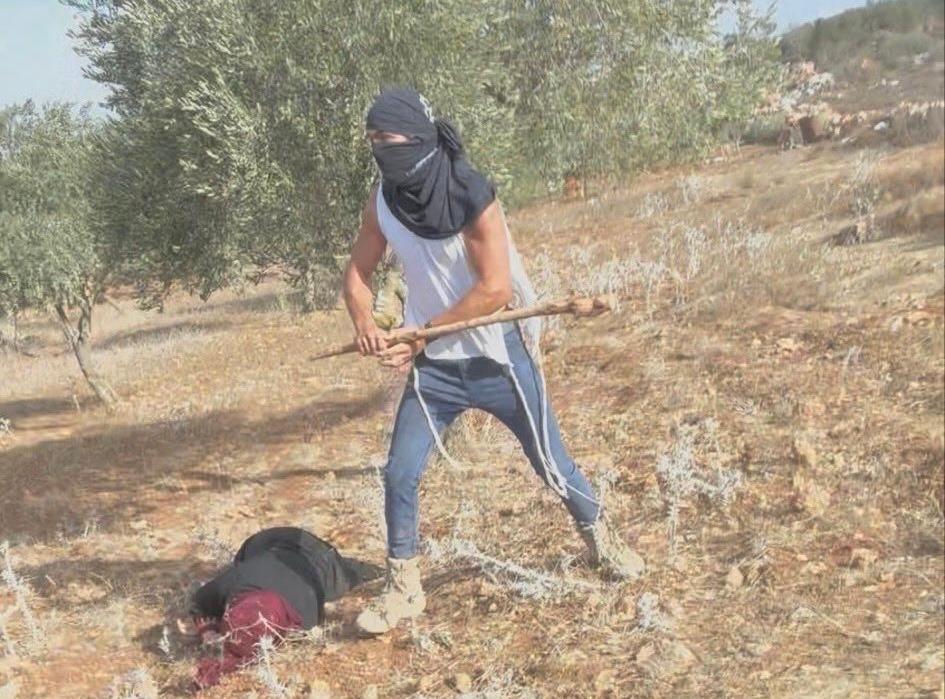
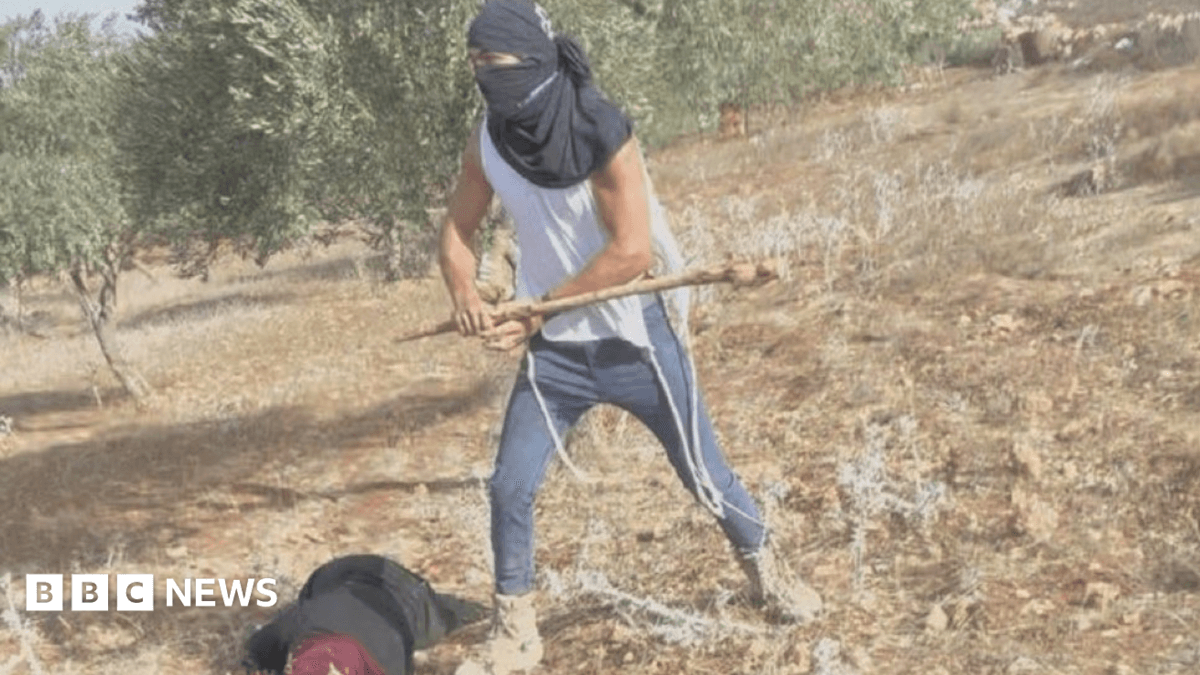
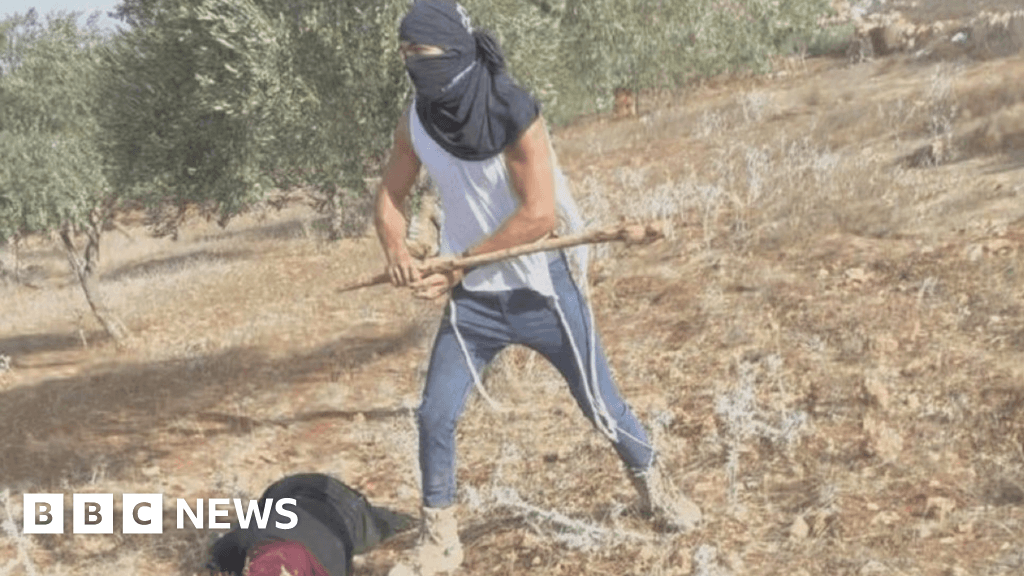
In Turmus Ayya, a video recorded by a US journalist shows a masked Israeli settler repeatedly striking 55‑year‑old Afaf Abu Alia (Umm Saleh) in the head during olive picking. The attack left her with a brain hemorrhage and in intensive care. NDTV reports that the journalist accused the Israeli Defense Forces (IDF) of leading farmers into an ambush and criticized their absence.
This disputes the IDF’s claim that they intervened. The Telegraph describes attacks in the same area, including settlers assaulting Palestinian farmers, setting vehicles on fire, and blocking exits. It alleges the IDF facilitated the raid by restricting movement and not intervening effectively.

United News of Bangladesh adds that the West Bank police chief condemned the assaults and vowed to bring perpetrators to justice. BBC notes that the US State Department has not commented specifically on this case, even as many US citizens live in the village.
Violence During Olive Harvest
The targeting of the olive harvest is systematic. India Today reports over 150 settler attacks in the first week of the 2025 harvest as settlers and residents clash around villages hemmed in by settlements and outposts. ABNA English describes coordinated attacks in Ramallah, Nablus, and Bethlehem where settlers burned vehicles, stole crops, and blocked access to olive groves.
“Jewish settlers in the West Bank carried out coordinated attacks on Palestinian farmers during the olive harvest... The settlers burned vehicles, stole crops, and blocked access to olive groves... Israeli soldiers supported these actions by setting up checkpoints and searching vehicles.”
The report also states that Israeli soldiers supported these actions by setting checkpoints. The Japan Times cites a UN official who says settler violence has sharply increased, with armed settlers burning groves, destroying infrastructure, and attacking Palestinians of all ages.
The official underscores that the harvest sustains around 100,000 families. BBC links this pattern to intimidation and land seizure, noting that only 3% of cases have led to convictions since 2005.
Settler Violence and Impunity
Impunity is deeply rooted in the context of settler attacks. The BBC reports that only 3% of investigations into settler attacks since 2005 have resulted in convictions. 5Pillars links a recent increase in violence to policy changes in Washington.
This surge is attributed to a perceived rise in impunity following the removal of sanctions on violent settlers by former US President Donald Trump, which had been imposed by Joe Biden. The BBC also confirms that Donald Trump lifted several sanctions on Israeli settlers that had been imposed by his predecessor, Joe Biden. NDTV notes that after a filmed beating in Turmus Ayya, no arrests have been made by Israeli authorities.
Dialogue Pakistan connects the unchecked settler assaults to a broader system of restrictions and killings. It states that Israeli settlers have carried out over 7,150 attacks, while Israeli forces have expanded checkpoints. Since October 7, Israeli forces and settlers have killed over 1,056 Palestinians.
Israeli Military and Settler Violence
Accounts of the Israeli military’s role diverge sharply. BBC reports the army claims to intervene and condemn such violence, but adds that critics accuse them of enabling attacks by withdrawing beforehand. NDTV reports a US journalist accused the IDF of leading farmers into an ambush.
“While the Israel Defense Forces claim to intervene and condemn such violence, critics accuse them of enabling attacks by withdrawing beforehand.”
ABNA English says Israeli soldiers supported these actions by setting up checkpoints. The Telegraph presents both lines—stating that IDF and Israel Police intervened to disperse the violence even as it reports allegations that the IDF facilitated the attack near Turmus Ayya.
United News of Bangladesh cites the West Bank police chief’s condemnation and vow to prosecute. Taken together, these descriptions portray settlers attacking Palestinians and international activists, while Israeli authorities are variously described as intervening, enabling, or promising justice.