Lebanon09 June, 20263 min read
Israeli Strikes Displace Lebanon Families, Reshaping Eid al-Adha in Marj al-Zouhour and Kfarhamam
This article is an automated aggregation of coverage from news outlets. Our editorials offer in-depth analysis curated by the NewsCord team.
Israeli attacks cause displacement and reshape Eid al-Adha in southern border villages. Thousands displaced to shelters, with Eid celebrations curtailed across affected areas.

Anadolu Ajansı was read line by line by the Watchdog: 3.1. See the score →
Eid under bombardment
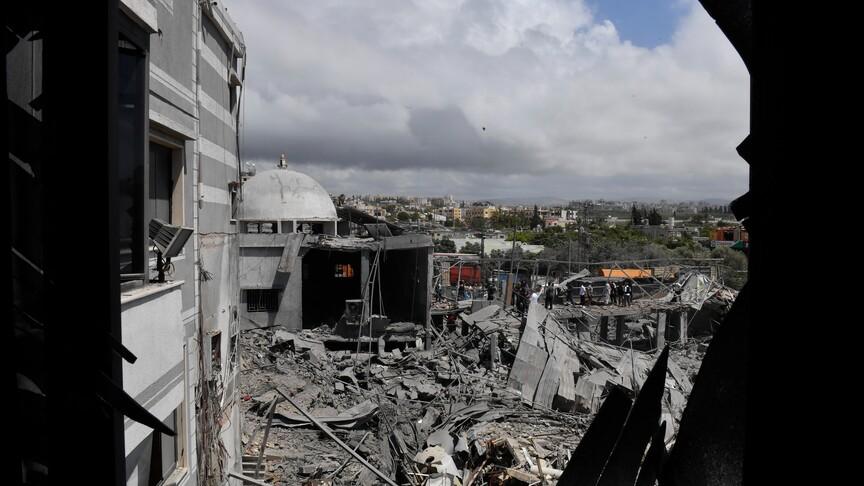
Since March 2, Israeli strikes have hit large parts of Lebanon, and the war has reshaped Eid al-Adha across southern border villages where schools have been converted into emergency shelters. In Marj al-Zouhour, 34-year-old Nasreen Abdul Aal said her family was displaced three times from Ain Arab village in the Marjayoun district and that “Families no longer gather, and children can no longer recognize the atmosphere of Eid,” as she described a holiday marked by absence rather than visits. In Kfarhamam, 60-year-old Um Najib Fares refused to leave despite intensified nighttime airstrikes and shelling, saying “We remain in our homes despite everything,” while the Kfarhamam mayor Mouad Rahhal said many displaced families hesitate to return even during religious holidays.
The Anadolu report also said Israel has conducted an expanded offensive on Lebanon since March 2, killing nearly 3,200 people, injuring over 9,600 and displacing more than 1.6 million people, according to official figures. It added that the Israeli army continued daily attacks despite a US-mediated ceasefire that took effect on April 17 and was later extended to early July.

Evacuation orders and aid
In parallel with the fighting, Israeli authorities ordered residents of a vast part of southern Lebanon and Beirut to leave, pushing more than 800 000 people into exile, according to the Lebanese government.
Omar Trad, director of the Lebanese office of Basmeh et Zeitooneh, said, “Israël a émis jeudi de nouveaux ordres d’évacuation. On peut donc s’attendre à voir le nombre de déplacés augmenter,” describing how the association has helped more than 3 000 displaced families with hot meals, food parcels, hygiene kits, mattresses and blankets.
The Secours Catholique said public schools closed to serve as makeshift shelters are “quasiment saturées,” while refugees and foreign workers—who are not admitted to emergency centers run by municipalities—sleep in cars or under tents or tarps.
In Tripoli, the community center Beit Salam, supported by House of Peace, offered hot meals, fruits, water, and clothing and laundry to more than 400 displaced families, according to the report.
In Beirut, Assabil set up reading and history-narration workshops in Arabic, French and English for displaced children, with Soraya Chenini of Secours Catholique saying it is “une manière d’aider les enfants à mettre des mots sur ce qu’ils traversent” and to continue their education.
Diplomacy and economic strain
While Eid traditions struggle under war, diplomatic efforts and threats of further escalation remain in the background, including a joint statement from leaders of Germany, Canada, France, Italy, and the United Kingdom urging Israel to refrain from sending ground troops into Lebanon.
The statement warned that “A large-scale Israeli ground offensive would have devastating humanitarian consequences and could lead to a protracted conflict,” as it framed the push to avoid a long-lasting conflict in Lebanon.
In response to Macron’s call for “direct discussions” and talks in Paris, Israeli President Isaac Herzog said, “I think it is very important that there be talks... These talks are very important, because it is time for us to have the opportunity to move forward with Lebanon,” while the same article said Israel did not appear prepared to renounce ground offensives.
On the ground, the war’s economic impact is described as choking Eid al-Adha, with remittances cited as exceeding seven billion dollars annually and a Tyre correspondent saying markets shifted to “watching” rather than buying.
The report also said about 70 percent of Lebanon’s residents rely primarily on money from expatriates, and it described arrivals before Eid al-Adha normally approaching 30,000 but in some recent days not exceeding 15,000, with earlier periods falling to between 2,000 and 3,000.