Britain06 September, 20262 min read
Jamaica’s Olivia Grange Leads Delegation to File Slavery Reparations Petition With King Charles
This article is an automated aggregation of coverage from news outlets. Our editorials offer in-depth analysis curated by the NewsCord team.
Jamaica to hand slavery reparations petition to King Charles, seek Privy Council reference three questions. Olivia Grange leads Jamaican delegation to London to file the petition.

Jamaica petitions King Charles
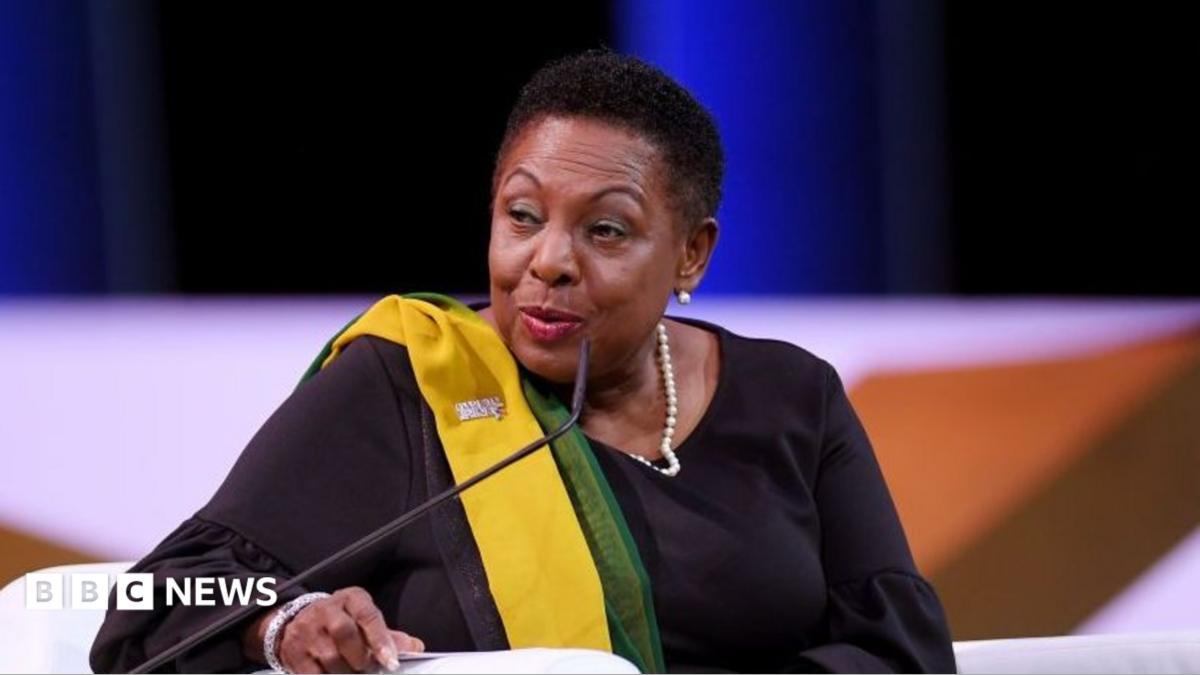
A Jamaican government delegation led by Culture Minister Olivia Grange travelled to London to file a petition on slavery reparations with King Charles, with the filing described as the first time a Commonwealth state has used this specific legal route “for the cause of reparatory justice.” The petition asks King Charles to refer three questions to the Judicial Committee of the Privy Council, including whether the seizure of Africans, their forced transportation to Jamaica and their chattel enslavement was ever lawful under English law and whether the UK has a legal obligation to offer a reparatory remedy.
“This is an unprecedented and historic moment in the global fight for reparatory justice.”
Grange said the timing is to coincide with reflections on the Zong massacre, describing that a Zong slave ship carried about 400 Africans and that 140 Africans were thrown overboard to claim insurance. The delegation is also meeting with the British Museum to seek the repatriation of indigenous Taino cultural artefacts, as it prepares for the petition to be lodged with Charles on Monday.
Privy Council legal questions
The petition will be lodged with Charles, Jamaica’s head of state, on Monday, and it asks him to use his authority to request legal advice from the judicial committee of the London-based privy council, described as the final court of appeal for UK overseas territories and some Commonwealth countries. The Guardian says the petition wants Charles to ask whether the forced transport of Africans to Jamaica was lawful, if it constituted a crime against humanity, and whether Britain is under an obligation to provide restitution to Jamaica for slavery and its enduring consequences.
BBC reports that the petition is not a demand for payment and goes to the King, who then refers it to the JCPC, and that King Charles has no personal discretion in deciding whether to make a referral. BBC also quotes Grange saying, “Once we get the answers, or once we get a response to those questions, then the next steps will be determined.”

Reparations, events, and stakes
The delegation’s programme includes a remembrance church service in Brixton and meetings with UK members of parliament, while it also plans to visit the British Museum to discuss repatriation of Jamaican artefacts.
“We are not focused on monetary value at this time. We are focused on getting answers to the questions we have asked.”
HuffPost UK reports Grange said, “We are not focused on monetary value at this time. We are focused on getting answers to the questions we have asked,” as she framed the petition as a way to determine next steps after the Privy Council response.
BBC adds that when slavery was abolished across most of the empire in 1833, the British government paid £20m to slave owners in compensation, and that the loans taken out to raise the money were paid off in 2015.
In parallel, the BBC notes that David Cameron ruled out making reparations for Britain’s role in the historic slave trade in 2015, while the palace spokesperson said Charles “has on many occasions expressed his personal and wholehearted commitment to promoting greater understanding around the issue of slavery”.