Iran03 May, 20266 min read
Japan PM Sanae Takaichi Says Iran Closure of Strait of Hormuz Inflicts Enormous Impact
Hormuz closure inflicts enormous impact on Asia-Pacific energy supplies, says Japan's prime minister. Australia and Japan signed energy-security and critical-minerals agreements following Canberra talks.

Hormuz Closure Hits Asia
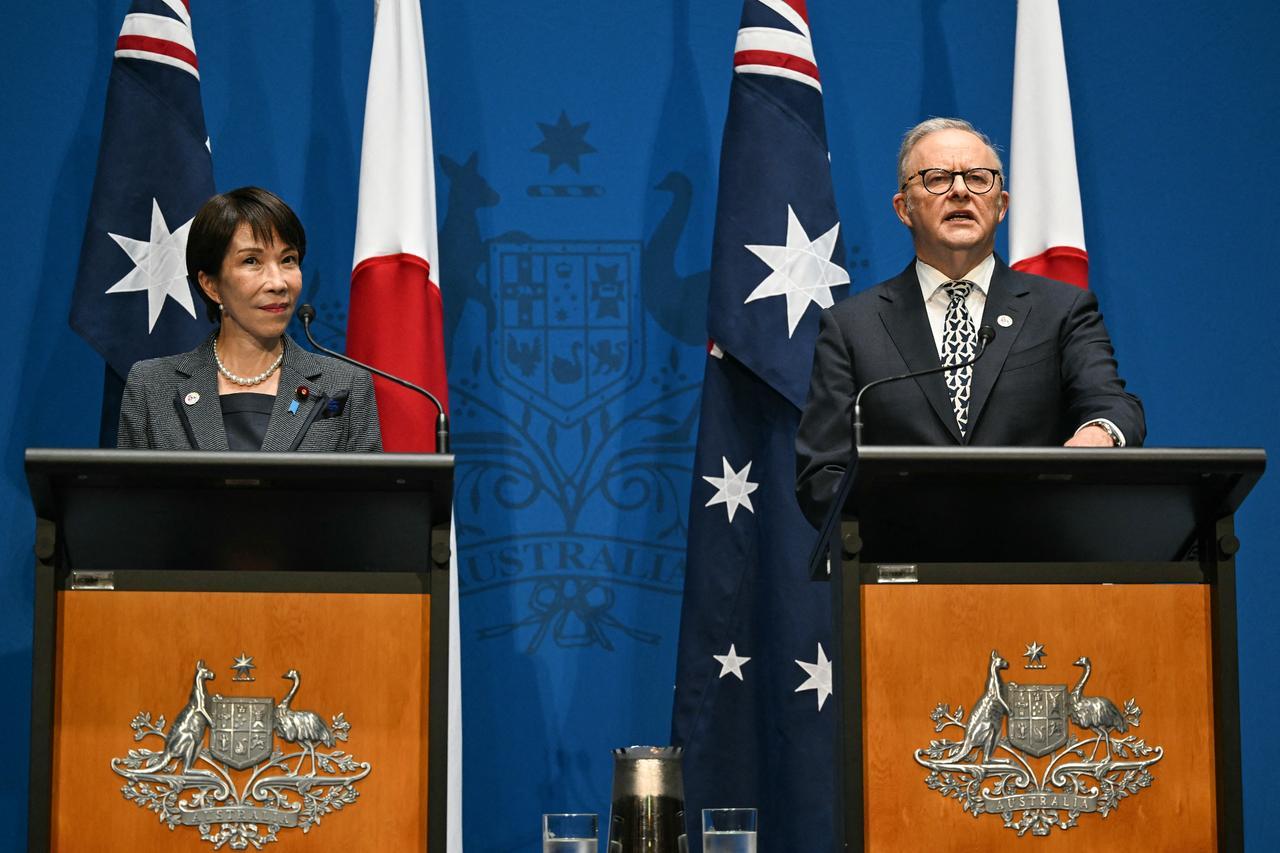
Japanese Prime Minister Sanae Takaichi said the closure of the Strait of Hormuz is “inflicting enormous impact” on the Asia-Pacific region, speaking in Canberra after talks with Australian Prime Minister Anthony Albanese. Takaichi made the remarks after Japan signed agreements with Australia covering critical minerals, energy security, and defense cooperation during the high-level talks. The Anadolu Ajansı report says Takaichi referred to Hormuz, which remains blocked by Iran, as well as the US, and it links the closure to effects across Asian nations that depend on oil supplies from the Middle East.
Türkiye Today similarly quotes Takaichi saying, “The effective closure of the Strait of Hormuz has been inflicting enormous impact on the Indo-Pacific,” and it ties the disruption to energy flows to Asia. RFI, citing AFP, also frames the situation as a global oil supply squeeze, saying it is inflicting an “enormous impact” on the Asia-Pacific region. In the same set of reporting, the Strait of Hormuz is described as a key route where shipping has been throttled by Iran since it was attacked by the United States and Israel, with the International Energy Agency figures used to quantify the stakes for Asia.

Numbers and Market Pressure
Multiple outlets tie the Hormuz disruption to specific shares of global oil flows and to the International Energy Agency’s estimates for where that oil goes. Türkiye Today says “Roughly one-fifth of the world’s oil normally flows through the Strait of Hormuz,” and it adds that “According to the International Energy Agency, 80% of that oil is destined for Asia.” RFI, again citing AFP, states that “Roughly one-fifth of the world's oil normally flows through the Strait of Hormuz,” and it repeats that “Eighty percent of that oil is destined for Asia.”
The SANA report also frames the route as vital for “roughly one-fifth of global oil and liquefied natural gas supplies,” and it says “About 80 percent of these shipments are bound for Asian markets.” Beyond the shares, the reporting also connects the disruption to the Iran war context, describing shipping “throttled by Iran since it was attacked by the United States and Israel,” and it links the closure to “conflict in the Middle East.” CNBC adds a market dimension by reporting that oil prices were volatile as investors assessed President Trump’s “Project Freedom” plan, which it says would begin on Monday, Middle East time, to free stranded ships affected by the Strait of Hormuz closure since the start of the Iran war.

Diplomacy and Defense Deals
The Hormuz-linked energy squeeze is presented in the sources as a driver for immediate coordination between Japan and Australia, and it is paired with concrete defense and critical-minerals cooperation.
Anadolu Ajansı says the two sides signed “five outcome documents,” including “a joint declaration on economic security,” following the summit between the two prime ministers in Canberra.
It also reports that “Last month, Tokyo and Canberra signed a landmark $7 billion defense agreement under which Japan will supply Australia with 11 warships,” and it describes the relationship as a “quasi-alliance.”
Türkiye Today adds that the two countries strengthened defense ties with “a 10 billion Australian dollar, or $6 billion, deal last year for Japan to provide Mogami-class stealth warships to the Australian navy.”
Anadolu Ajansı quotes Albanese’s statement that “Today, (we are) again facing an energy shock and global instability. ... Our partnership helps us secure the energy we both need,” and it includes Takaichi’s line that “We affirmed that Japan and Australia will closely communicate with each other in responding with a sense of urgency.”
The SANA report similarly says the two countries would act urgently to help ensure stable energy supplies and maintain close coordination after talks in Canberra.
Voices: Urgency and Critique
The sources include direct statements from political leaders and also from a campaign group criticizing how audits are conducted in the broader supply-chain ecosystem affected by Hormuz disruptions.
On the government side, Albanese told reporters that “For Australians, it will mean we are less vulnerable to global shocks like we are seeing right now because of conflict in the Middle East,” and he said “These agreements are to the benefit of both of our people.”

Takaichi, speaking to journalists in Canberra, said “We affirmed that Japan and Australia will closely communicate with each other in responding with a sense of urgency,” and she warned that “The effective closure of the Strait of Hormuz has been inflicting enormous impact on the Indo-Pacific.”
In the CNBC market reporting, President Trump posted that the U.S. would attempt to “free” stranded ships affected by the Strait of Hormuz closure since the start of the Iran war, and it quotes the U.S. Central Command saying “U.S. military support to Project Freedom will include guided-missile destroyers, over 100 land and sea-based aircraft, multi-domain unmanned platforms, and 15,000 service members.”
The Anadolu Ajansı report also includes a transcript quote from Albanese: “Today, (we are) again facing an energy shock and global instability. ... Our partnership helps us secure the energy we both need,” and it says the two sides will “closely communicate” in responding with urgency.
For a different kind of voice, the Guardian’s Clean Clothes Campaign spokesperson Ineke Zeldenrust is quoted criticizing audit systems as “fundamentally broken,” because “audits consistently miss the most dangerous conditions because they are announced in advance and rely on documents rather than worker testimony.”
Stakes: Ports, Insurance, and Risk
The sources also spell out potential consequences for Asia-Pacific transport and logistics if Strait of Hormuz disruptions persist, using Fitch Ratings analysis to describe credit and operational impacts. The Fitch report says “port and airport operators in the Asia-Pacific region will face credit impacts that are varied but increasingly negative if shipping disruptions and Iran-related airspace disruptions persist,” and it identifies the “main risk” as “a prolonged closure of the Strait of Hormuz.” It warns that congestion could create “a modest increase in storage and ancillary services revenue at container ports,” but it also says “weaker schedule reliability typically raises unit costs and reduces productivity, pressing profit margins for operators with high fixed costs.”
The Fitch analysis describes network disruptions such as “changes in vessel routes, cancellations, and vessel stacking,” which could create “short-term congestion and longer waiting times,” and it says these conditions may raise “re-handling costs in yards, labor and equipment costs, and may reduce berth and yard productivity.” It further links the logistics strain to downstream pricing and trade volumes by describing how “higher fuel costs and war risk insurance push up shipping and delivery prices, delaying shipping decisions and weakening trade volumes.” In parallel, the Mehr News Agency piece frames the Strait of Hormuz as a “sensitive geostrategic chokepoint” and claims that before the recent crisis “roughly 20 to 25 percent of global crude oil and more than 20 percent of LNG passed through the Strait of Hormuz daily,” equating it to “about 16 to 20 million barrels of oil per day.”