
Full story
Ballroom Halted by Appeals Court
A federal appeals court blocked construction of President Donald Trump’s $400 million White House ballroom, ruling that congressional approval is needed for the project and that the executive branch could not proceed unilaterally with changes to the historic structure.
“The ruling said that congressional approval is needed for the project.”
Judges Patricia Millett and Bradley Garcia wrote that "Each President is a temporary tenant, not the owner, of the White House and its Executive Residence," and they said the National Trust for Historic Preservation showed Congress was the only authority to approve the changes.
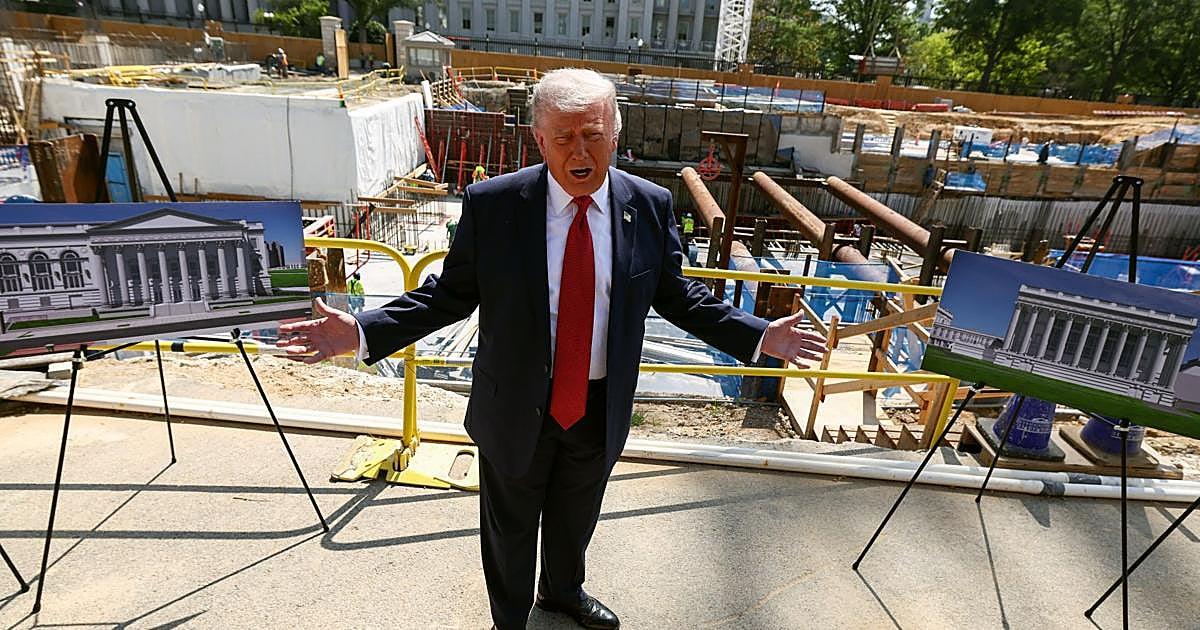
The court also said national security concerns are not an automatic exemption, writing that "Congress has not given the Park Service authority" to raze protected historic sites in the name of presidential functions or national security.
The appeals court delayed implementation of its ruling for 14 days to allow the Trump administration to appeal to the Supreme Court, while the White House announced the construction of the 90,000-square-foot ballroom last July and demolition began suddenly on the East Wing in late October.
In a dissent, Judge Neomi Rao argued that it is "likely within the President's authority to make improvements to the Executive Residence" and that the blocking construction would harm the Trump administration’s security interests.
Supreme Court Stay Allows Work
After the appeals court order, Supreme Court Chief Justice John Roberts issued an administrative stay that allowed the White House to continue construction on the East Wing ballroom project for now, with the order taking effect later in the day.
Roberts’ move meant construction could continue unabated on the project the administration described as a "military complex" that is 65% complete, even as the Supreme Court considered the administration’s emergency request to intervene.

The Department of Justice argued to the Supreme Court that the case involved "an extraordinary and unlawful injunction" that would halt the ongoing construction of an integrated military complex, including a totally secure ballroom space, at the East Wing.
In response to the legal fight, Trump said he would appeal and told reporters, "Well, we hope that doesn't happen. I can't imagine it happening," when asked what he would do if the Supreme Court ruled against him.
The National Trust for Historic Preservation, which brought the suit, insisted the president must follow federal law for federal property, while the administration argued upgrades to the White House are his prerogative and unreviewable by a judge when involving matters of national security.
What’s at Stake Next
The legal dispute centers on whether Trump can demolish and rebuild the East Wing and erect a 90,000-square-foot ballroom without congressional approval, with the appeals court majority saying the work cannot proceed during district court litigation without securing Congress’s authorization.
“Whether or not a massive ballroom should be constructed is for Congress to decide and is not a matter for Executive self-help,”
The BBC reported that the appeals court panel said "Whether or not a massive ballroom should be constructed is for Congress to decide and is not a matter for Executive self-help," and it framed the ruling as paving the way for a Supreme Court showdown.
In the Supreme Court filings and related reporting, the administration argued the project is required by national security and cited the "threat of a missile attack against Air Force One on July 8" as part of a list of recent assassination attempts against Trump.
The AP reported that the Supreme Court emergency request was tied to a deadline set by Chief Justice John Roberts, with the solicitor general petitioning to suspend the appeals court decision while litigation proceeds.
Even as above-ground work was paused by the lower courts, the district court judge stressed the White House was free to proceed with underground work, including construction of bunkers, military installations and medical facilities, and the appeals court upheld that approach by allowing some below-ground construction to continue.