Judge Araceli Martínez-Olguín Advances $1.5 Billion Anthropic Copyright Settlement After May 14 Hearing
Key Takeaways
- Settlement concerns piracy of hundreds of thousands of copyrighted books to train AI.
- Settlement near final approval; a fairness hearing occurred.
- Judge Araceli Martínez-Olguín oversaw the proceedings.
Settlement nears approval
A $1.5 billion settlement in Bartz v. Anthropic took a step closer to final approval after a long-awaited fairness hearing held on May 14 before Judge Araceli Martínez-Olguín in the Northern District of California.
“After several authors and class members raised objections to Anthropic’s $1”
The hearing went fairly smoothly, with Martínez-Olguín focusing most of her questions and concerns on the attorneys’ fees and the settlement’s cost structure rather than ruling from the bench.

Lead attorney Justin Nelson from Susman Godfrey told the court that the claims rate, last reported at 91.3% at the end of April, had risen to 92.77% and that “timely claims” had brought the total to 447,576 claimed works.
Nelson said the settlement opt-out rate was “miniscule” and that there were only 53 objections, adding that the participation spans “all types of copyright owners, from self-published authors to large publishers.”
Nelson also argued the deal provides injunctive relief including “destruction of the pirated data sets” and a certification that Anthropic did not use materials from pirated websites in commercially released models.
Objections and delays
Despite the hearing, Ars Technica reported that a federal judge delayed final approvals of Anthropic’s $1.5 billion settlement after authors and class members raised objections about widespread book piracy used to train AI.
Ars said Judge Araceli Martinez-Olguin declined to rubber-stamp the deal and wanted to better understand why some class members were objecting and opting out, including concerns that lawyers’ compensation was too high and payments to class members were a “pittance.”
One objector, Pierce Story, wrote, “Every dollar that Counsel takes from the Settlement fund is one that is not given to those actually harmed,” as he argued against the requested fee level.
Story estimated that lawyers could receive between roughly $10,000–$12,000 per hour and accused the legal team of breaking a promise to tie compensation to member payouts.
Ars also reported that some objectors asked the court to delay approving the settlement until a more reasonable plaintiff compensation plan is constructed.
Payments, destruction, and scope
Courthouse News said the parties were heading to a trial in December 2025 before reaching an agreement in late August, and it described preliminary approval granted by former Senior U.S. District Judge William Alsup on Sept. 25, 2025.
“In order to enrich its AI with textual material deemed more 'noble' than the chaotic flow of the web, Behind the polished discourse on 'responsible artificial intelligence,' court documents recently made public reveal a much harsher reality: an industry launched into a frenzied race to absorb the entire written heritage of the world”
Under the settlement terms described by Courthouse News, Anthropic agreed to pay $1.5 billion plus interest, and the article said the settlement includes approximately 482,000 works with each class member estimated to receive $3,100 per work.
Courthouse News reported that Anthropic already paid $300 million to the fund shortly after preliminary approval and that an additional $300 million was expected five days after final approval, with further payments split into $450 million on both the first and second anniversaries of preliminary approval.
The same report said Anthropic must destroy the original files of the works downloaded from the pirated book datasets within 30 days of the final judgment and certify that Library Genesis and Pirate Library Mirror datasets with pirated material were used in training any commercially released large language models.
It also said non-US-registered works are excluded from the scope of the settlement, and that more than 506,000 potential class members representing approximately 480,000 works received direct notice, while 350 class members opted out and 53 objected.
More on Technology and Science
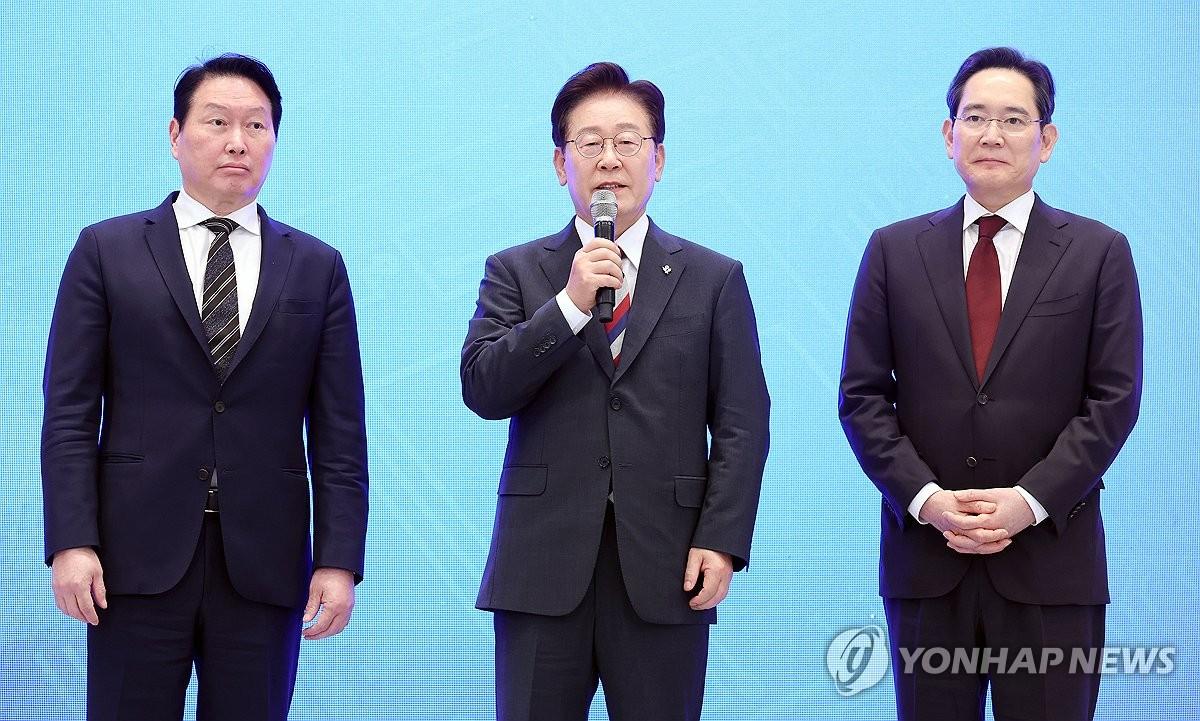
South Korea Unveils 800 Trillion Won AI Chip Strategy Led by Samsung and SK Hynix
10 sources compared

Uber Tests Premium Robotaxi in San Francisco With Lucid Air and Nuro System
13 sources compared

Three Firefighters Killed Fighting Knowles, Gore, And Snyder Wildfires Near Colorado-Utah Border
20 sources compared

WHO Links Europe Heatwave To More Than 1,300 Excess Deaths Since June 21
16 sources compared