Full story
EU weighs settlement trade curbs
EU foreign policy chief Kaja Kallas said EU countries backed a proposal to ban the import of products from Israeli settlements, describing the option as aimed at “illegal settlements that undermine the two-state solution.”
Kallas said after a meeting of the bloc’s foreign ministers that “The option that got the most support was banning the trade with the illegal settlements,” and she added that ambassadors were tasked to take the work forward.
The debate is centered on whether restrictions should be treated as a sanction or a trade measure, with the European Commission’s options paper putting forward an import-licensing system, higher tariffs, or a trade ban.
EUobserver said no decisions are expected on Monday (13 July), with the next opportunity for a potential proposal to be discussed or voted on coming on 12 October, two weeks before Israel’s elections on 27 October.
EU foreign ministers are also set to discuss “the humanitarian situation in Gaza” alongside a fragile ceasefire in Lebanon, Ukraine, Russian visas, a Black Sea strategy, and relations with the UN.
Legal fight over voting rules
The National framed the EU’s internal dispute as a legal tug of war over whether trade restrictions on Israeli settlements should be classified as a sanction or a trade measure, because the classification determines the voting threshold required.
Human Rights Watch’s associate director of EU advocacy said, “A ban is an obligation,” adding that “Anything short of that would fail to comply with international law.”

The National reported that the European Commission, backed by Germany, suggested restricting trade with settlements should be considered a sanction, a route that would require unanimous agreement from all 27 member states.
Kallas told The National that the council legal service says the issue needs QMV because “it’s a trade issue,” while EUobserver reported that the Commission has favored the foreign policy route requiring unanimity.
EUobserver also quoted an EU diplomat saying, “Everyone knows nothing will happen, and we are running out of time,” as the debate continues into October.
Gaza backdrop and next steps
EUobserver said the meeting agenda includes “the humanitarian situation in Gaza,” and it reported that with Mohammad Mustafa, prime minister of the Palestinian Authority in town, the European Commission is expected to announce additional financial pledges for the reconstruction of Gaza.
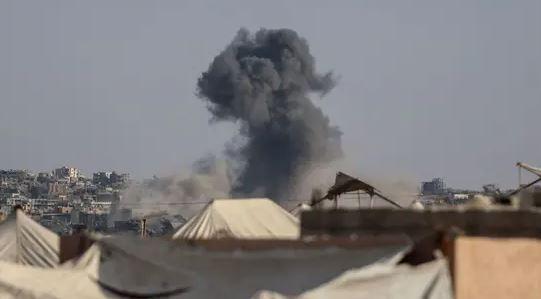
The Guardian tied the settlement trade debate to the Gaza crisis, saying the Monday meeting is “against an ongoing humanitarian crisis in Gaza,” where a UN inquiry found Israel to be committing a genocide.
The Guardian reported that the leaked European Commission paper presents three options—“a possible ban on imports from the settlements,” high tariffs, or an import licensing system—and that the 27 ministers are not expected to take decisions amid persistent divisions.
Euronews reported that closed-door discussions on Monday saw “a full ban on EU imports of goods produced in Israeli settlements” draw the most support, with an official source saying it could be passed without requiring unanimous backing.
Euronews added that EU ambassadors will now be tasked with fleshing out the Commission’s initial two-page “options paper,” and it quoted Kallas saying, “The option that received the most support was banning trade with the illegal settlements.”