
Karen Hao Says AI Scale-At-All-Costs Model Extracts Water, Energy, Data Like New Colonialism
Key Takeaways
- AI's scale-at-all-costs model extracts data, labor, land, energy, and water from vulnerable communities.
- OpenAI and other AI empires concentrate power, moving away from openness and restricting access.
- Data centers' energy demand and neocolonial framing raise democratic risk and global inequality.
Energy, Water, and Policy
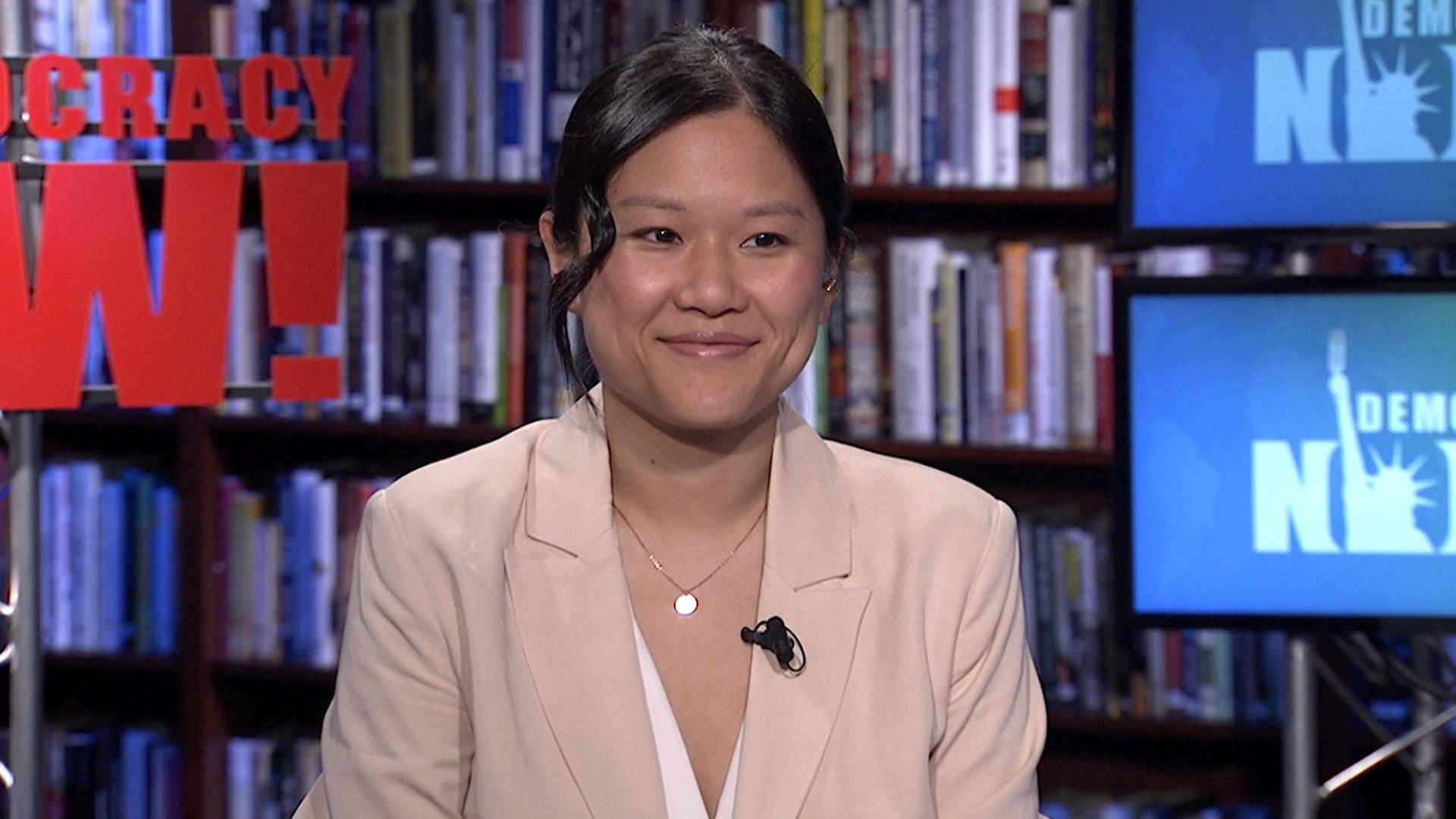
Journalist Karen Hao, in a Democracy Now! interview segment rebroadcast July 3, 2026, argued that AI’s scale-at-all-costs model amounts to a new colonialism that extracts data, labor, land, energy and water from vulnerable communities worldwide.
“As part of our July Fourth special broadcast, we continue our extended interview with Karen Hao, author of Empire of AI: Dreams and Nightmares in Sam Altman’s OpenAI”
Hao cited a McKinsey estimate that AI data centers could add energy demand equal to two to six times California's annual electricity use within five years, and she pointed to a Bloomberg finding that two-thirds of new data centers sit in water-scarce regions.
She also described a Chilean community near Santiago that blocked a Google data center after the project would have drawn roughly 1,000 times the community's annual water use, and she said the dispute escalated to Google Chile, Google's Mountain View headquarters and eventually the Chilean government, blocking the project for four to five years.
On governance, Hao raised a 2025 federal bill provision that would have barred U.S. states from regulating AI for a decade, and she said the Senate stripped the AI moratorium from the bill in a near-unanimous 99-1 vote on July 1, 2025.
Hao framed the core issue for infrastructure builders as treating community water and energy impact as a live commercial and reputational risk, not a hypothetical one, and she tied that to the Chilean dispute’s multi-year delay.
Workers, Labeling, and Accountability
Hao’s reporting described Kenyan contract workers hired by data-annotation firms to label OpenAI’s most graphic AI-generated content for a content-moderation filter, paid a few dollars an hour.
In the Democracy Now! segment, Hao said, “One of the things that you really have to understand about AI development today is that there are what I call quasi-religious movements that have developed within Silicon Valley,” and she added that the concept of artificial general intelligence is not scientifically grounded.

In the same broadcast, Hao argued that executives lay off workers because they perceive AI as capable enough to replace jobs, and she said, “OpenAI, their definition of what they call artificial general intelligence is highly autonomous systems that outperform humans in most economically valuable work.”
Hao also warned that models can cause psychological harm, saying there have been cases where children who speak to chatbots and develop huge emotional relationships with these chatbots have actually killed themselves after using these chatbot systems.
She contrasted labor-automating tools with labor-assistive approaches, and she said that if you develop an AI tool that teachers can use, rather than just an AI tutor that replaces the teacher, “your kids will get better educational outcomes.”
Data Opacity and the Race
In an interview with IBM Think, Hao said there is now no visibility into OpenAI’s datasets, and she noted that even OpenAI does not always know what its training data contain.
“Three years ago, OpenAI was an organization barely known to the general public that aimed to counter the power of Silicon Valley's giants”
Hao explained that the data are too large to be audited manually, and she warned that the inability to reliably characterize or reproduce the data undermines reproducibility, which she described as a decisive test of rigor in empirical sciences.
She said that in the early 2010s, the openness model was the norm, but by 2020 the landscape had changed as companies like OpenAI began to compete more aggressively for a commercial edge and the practice of sharing datasets fell into desuage.
Hao described a case involving Stanford researchers who audited the LAION-5B image dataset, saying the dataset contained thousands of cases of material verified or suspected of child sexual abuse.
She concluded that when a dataset is so vast and opaque that its contents are effectively unknown, there is a risk that duplicated content appears in both train and test sets, “contaminating the evaluation and inflating performance metrics.”
More on Technology and Science

NHS England Launches Marathon-A-Month Walking Challenge With Rewards for 30 Minutes Daily
15 sources compared

Aspen Acres Fire Forces Thousands to Evacuate in Colorado, Destroys 160 Structures
11 sources compared

Heat Wave Closes Great American State Fair on Washington’s National Mall, Cancels Philadelphia Parade
12 sources compared

Citizen Lab Says NSO Group Pegasus Repeatedly Infected Stelios Kouloglou on PEGA Committee
15 sources compared