Kuwait Breaks Up Hezbollah-Linked Terror Cell, Highlighting Iran-Backed Network Across Gulf
Key Takeaways
- Kuwait dismantled a Hezbollah-linked terror cell, reportedly including 14 Kuwaitis and two Lebanese.
- Iran-backed networks extend across Gulf states, including Hezbollah-linked cells.
- Gulf states face threats from Iran-backed groups amid ongoing regional conflict.
Kuwait Arrests
Kuwait authorities have disrupted multiple Hezbollah-linked terror cells operating within the country, uncovering significant evidence of subversive activities targeting national security.
“Gulf states in the current war are contending not only with the threat of missiles and drones from Iran itself, but also with threats from Iran-backed groups, including Hezbollah and Shiite militias operating from Iraq”
On March 16, Kuwaiti security forces announced the dismantling of a Hezbollah-linked terror cell consisting of 14 Kuwaiti citizens and two Lebanese nationals who were accused of attempting to undermine Kuwait's stability, sow chaos, and disrupt public order.
Authorities discovered substantial evidence including weapons, communications equipment, flags of terrorist organizations, and drones in the possession of the suspects.
Just two days later on March 18, Kuwait's Interior Ministry announced a second round of arrests, detaining 10 individuals belonging to another Hezbollah-linked group who had received training abroad.
The ministry stated these suspects had attempted to harm national security and issued stern warnings about dealing firmly with anyone involved in such activities or cooperating with terrorist organizations.
UAE Response
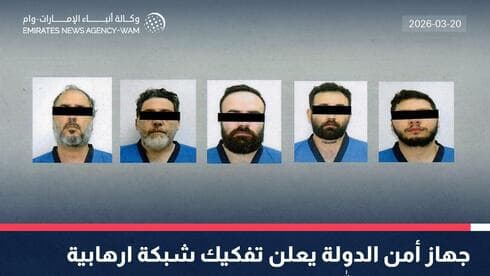
The United Arab Emirates has joined Kuwait in confronting alleged Iran-backed networks, announcing the dismantling of a terror network linked to Hezbollah and Iran.
UAE security services reported arrests of network members and stated that any attempt to exploit the national economy or civilian institutions for terrorist or subversive purposes would be met with force.
Emirati authorities emphasized their zero-tolerance policy toward outside interference threatening the country's security or stability, declaring they would tolerate no such threats regardless of their source or cover.
This development expands the scope of the crackdown beyond Kuwait, suggesting a coordinated regional response to perceived Iranian influence and Hezbollah activities across the Gulf states.
The UAE's announcement came shortly after Kuwait's revelations, indicating a pattern of concern among Gulf nations about Iran-backed operations within their borders.
Hezbollah Denials
Hezbollah has categorically denied all allegations of involvement in terror cells or networks operating within Kuwait and the UAE, dismissing the accusations as part of repeated attempts to smear the organization.
“Gulf states in the current war are contending not only with the threat of missiles and drones from Iran itself, but also with threats from Iran-backed groups, including Hezbollah and Shiite militias operating from Iraq”
The Iran-backed group issued an official statement declaring it has no presence whatsoever in the UAE or any other country under any cover, trade name or otherwise.
Hezbollah characterized the accusations as clear attempts to distort its image for purposes that have become apparent to everyone, and condemned what it called the irresponsible haste with which the Lebanese Foreign Ministry adopted these narratives published by external parties.
The group emphasized its commitment to Kuwait's security and stability and to cooperation between Kuwait and Lebanon, maintaining that it remains focused on its primary objectives rather than engaging in subversive activities across the Gulf region.
Lebanese Position
Lebanon's government has taken a firm stance against Hezbollah's alleged activities, with Foreign Minister Youssef Rajji, known as an opponent of Hezbollah, condemning the group's supposed involvement in plots against Gulf states.
The Lebanese Foreign Ministry issued a statement condemning Hezbollah's alleged involvement in what it called a plot against the UAE and expressed readiness to cooperate fully with investigations to ensure those responsible are punished.
Lebanese President Joseph Aoun further distanced himself from Hezbollah by speaking directly with UAE President Sheikh Mohammed bin Zayed Al Nahyan.
During the phone conversation, Aoun congratulated the UAE leader on Eid al-Fitr, condemned attacks against the UAE, and explicitly condemned the actions of 'partisan elements' in Lebanon - widely interpreted as a reference to Hezbollah.
In return, bin Zayed thanked Aoun and called for an end to Israeli strikes on Lebanon, suggesting a potential diplomatic channel between the two countries concerning regional tensions.
More on Iran
Iran Attacks Israeli Towns Dimona and Arad Near Israel's Main Nuclear Research Center, Dozens Wounded
43 sources compared
Iran Attacks Dimona in Retaliation for Natanz Strike
44 sources compared

Iran Attacks Diego Garcia with Long-Range Missiles, Targeting U.S.-UK Base
82 sources compared
Trump Defends Iran War by Citing Pearl Harbor
12 sources compared