
Lebanese Army Reopens Roads and Bridges in South Lebanon After Israeli Strikes
Key Takeaways
- Khardali–Nabatieh road fully reopened by Lebanese army.
- Israeli strikes destroyed key bridges in south Lebanon, prompting rapid rehabilitation.
- Displaced residents are returning as authorities continue road and bridge work.
Ceasefire and Road Reopens
On the third day of the cease-fire between Hezbollah and Israel, the Lebanese Army announced that it had reopened, or was continuing work to reopen, several access routes, roads, and bridges between South Lebanon and the rest of the country.
L’Orient Today reported that the army and the Litani Office were installing a temporary bridge over the Litani River in Tayr Felsay (Sour district), while the army said it had “completely reopened the road between Khardali and Nabatieh,” and “partially reopened the Burj Rahal–Sour bridge.”
The same report said “work is underway to restore the bridge between Tayr Filsey and Sour,” carried out in coordination with the National Litani Office to ensure connectivity between the northern and southern banks of the river.
L’Orient Today also said Israeli strikes on bridges over the Litani River, “around 30 kilometers north of the Israeli border,” had nearly isolated South Lebanon from the rest of the country.
Balkanweb added that a specialized unit of the Lebanese Army began work to remove an “earthen barrier” placed on a road near the city of Tyre, and that “a surveillance point has been set up in the area.”
Balkanweb further said work was continuing on rehabilitation of infrastructure, including the “Tayr Falsiyeh–Tyre bridge” and “the installation of a concrete structure that will allow vehicles to pass.”
In parallel, Anadolu Ajansı reported that the Lebanese army said its specialized units have “fully reopened the Khardali–Nabatieh road” and “partially restored access to the Burj Rahal–Tyre bridge,” while restoration work on the “Tayr Falsah–Tyre bridge is also ongoing” in coordination with the National Litani River Authority.
Returns After Weeks of War
As roads and bridges reopened, displaced residents began returning to South Lebanon to inspect their homes and villages, even as the ceasefire’s durability remained uncertain.
L’Orient Today described traffic as heavy on Saturday due to “an influx of displaced residents returning to Saida and Beirut after inspecting their homes and villages in the South,” and it said traffic was particularly heavy around Saida.

The report also said traffic was heavy on the road from the South toward Beirut, citing Mohammad Yassine’s photography of “Traffic between south Lebanon and Beirut, around Rmeileh, on April 18, 2026.”
The Guardian put a human face on the return, describing Mohammed Ashour speeding towards his hometown of Shaqra at 5am and saying the normally two-hour drive turned into 10 as cars stretched for miles down the Lebanese coastal highway.
The Guardian reported that Ashour had left his family in Beirut and that he said, “They told me my house was destroyed. But I wanted to come and see it for myself.”
The Guardian also described families driving cars “saddled with mattresses” and waving “Lebanese and Hezbollah flags,” while some held up “a V sign for victory.”
Yet the same Guardian account said the festive atmosphere turned sombre when residents reached their villages, including Srifa where Hassan Najdi returned to a heavily damaged home.
Warnings, Negotiations, and Hezbollah’s Rejection
While the Lebanese Army worked to restore routes, political leaders framed the post-ceasefire phase as a mix of negotiations and continued caution.
The New Arab reported that Lebanon’s military said it had “fully reopened” a road linking Nabatieh with the Khardali area and had “partially reopened the Burj Rahal-Tyre bridge,” while “Work is also underway to rehabilitate the Tayr Falsay-Tyre bridge,” as a 10-day truce held between Hezbollah and Israel.
It also said the vital Qasmiyeh bridge was reopened on Friday morning, allowing people displaced from southern Lebanon to return to check property, but it noted many residents remained hesitant with the longevity of the truce uncertain.
The New Arab quoted Hezbollah official Mahmud Qamati warning that “Israeli treachery is expected at any time, and this is a temporary truce,” and it included his instruction: “Take a breath, relax a little, but do not abandon the places you have taken refuge in until we are completely reassured about your return.”
In a separate account, جريدة القدس said Lebanese President Joseph Aoun met Prime Minister Nawaf Salam on Saturday to discuss “the Lebanese readiness for negotiations” expected with the Israeli occupation, and it said Salam expressed hope that displaced people would return safely as soon as possible.
That same source reported that Hezbollah rejected direct negotiations, quoting Mahmoud Qamati as saying the negotiations sought by the state were “failing and submissive,” and describing the party’s position that it was “not concerned with these paths, which he described as weak.”
The New Arab further described the ceasefire as following “the first direct talks between the two sides in decades,” and it said the war had “killed nearly 2,300 people and displaced more than a million.”
Yellow Line and Ceasefire Violations
Alongside road restoration, multiple outlets described Israeli actions and the creation of a “yellow line” in southern Lebanon, with claims that operations were not restricted by the ceasefire.
Hürriyet Daily News reported that the Israeli army on April 18 said it had established a “yellow line” in southern Lebanon, “similar to measures used in Gaza,” and it said the military claimed it targeted individuals approaching the area.
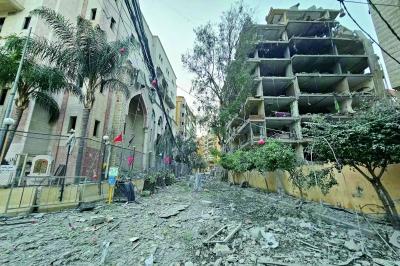
It quoted the Israeli army saying its forces in the “yellow line” zone south of the Litani River identified “a terrorist cell who violated the ceasefire understandings and approached the forces from north of the yellow line in a manner that posed an immediate threat.”
Hürriyet Daily News added that the Israeli army said its actions are “not restricted by the ceasefire.”
The Guardian’s return narrative also reflected the atmosphere of danger, stating that “The Lebanese army, the Israel Defense Forces and Hezbollah had all told residents of south Lebanon not to return, that it was still dangerous despite a ceasefire.”
In addition, جريدة اللواء described “Israeli violations continued by air, land, and sea,” and it said the “Yellow Line” was imposed as new field realities.
The Today report also said the Israeli army announced on Saturday that it had established a “yellow line” of demarcation in south Lebanon, and it described how Israeli strikes had cut the south off from the rest of the country during nearly seven weeks of war.
UNIFIL Attack and French Death
The ceasefire restoration efforts unfolded amid a separate incident involving UNIFIL forces and French personnel, which added new strain to the already fragile situation.
“Lebanese army reopens key routes disrupted by Israeli attacks Khardali–Nabatieh road in southern Lebanon fully reopened and access partially restored to Burj Rahal–Tyre bridge, says army Serdar Dincel 19 April 2026•Update: 19 April 2026 Archive ISTANBUL Following damage caused by weeks of Israeli strikes, the Lebanese army said its specialized units have fully reopened the Khardali–Nabatieh road in southern Lebanon and partially restored access to the Burj Rahal–Tyre bridge”
The البيان reported that the United Nations Interim Force in Lebanon (UNIFIL) said “a peacekeeper was killed and three were injured” after a UNIFIL patrol came under fire from light weapons while removing ordnance on a road in the village of Ghhandouriya in southern Lebanon.

It said “two of the injured were in serious condition,” and it added that “initial assessments indicate the shooting came from non-governmental actors suspected to be affiliated with Hezbollah,” while UNIFIL opened an investigation into what it described as an intentional attack.
The البيان said French President Emmanuel Macron announced the death of a French soldier serving with the force in the attack, blamed Hezbollah, and urged Lebanese authorities to take measures against those responsible.
It also reported that French Minister for the Armed Forces Catherine Colonna announced that “the senior sergeant in the 17th Engineer Regiment Florian Monturio was killed” after being directly struck by light weapons fire.
The البيان quoted Prime Minister Nawaf Salam ordering “an immediate investigation” and included his statement: “I strongly condemn the assault on elements of the French battalion in UNIFIL.”
In the same broader picture of return and uncertainty, the Guardian described residents’ fear that hostilities could resume at any time, noting that the 10-day ceasefire came with warnings from both Israeli and Hezbollah officials that hostilities could resume if either party violated the truce.
More on Lebanon
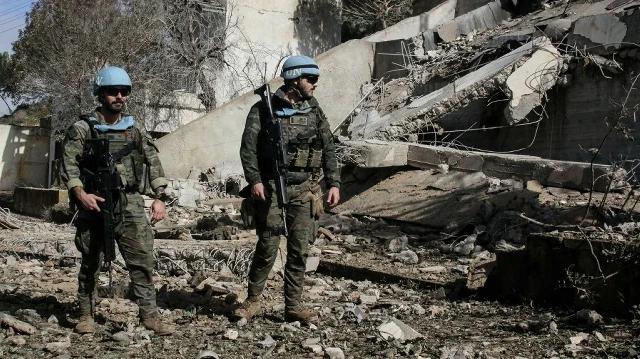
Israeli Drone Strike Kills One, Wounds Two in Lebanon’s Bekaa During Ceasefire
13 sources compared
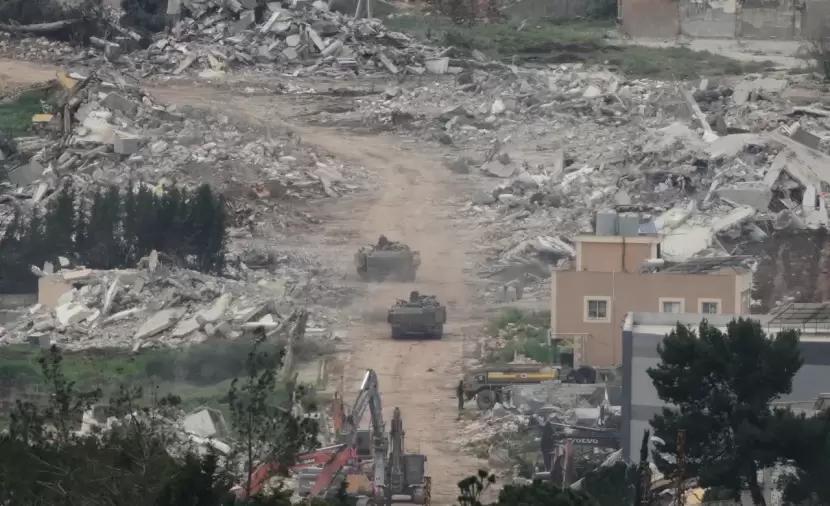
Israeli Forces Launch New Demolition Operations in Shamaa After April 17 Cease-Fire
10 sources compared
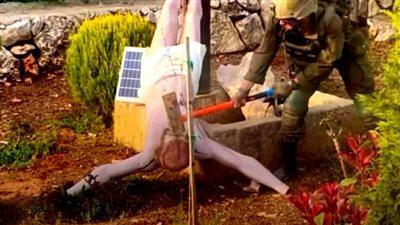
Israel Jails Soldiers After Sledgehammer Vandalism of Jesus Statue in Debl, Lebanon
29 sources compared
Macron Meets Nawaf Salam at Élysée Palace to Push Lebanon Ceasefire and Territorial Integrity
36 sources compared