Full story
Tents Empty, Homes Gone
In Beirut, Lebanon, only a few dozen blue tents remained near the waterfront as thousands of Lebanese began returning to areas in the south that bore the brunt of attacks, encouraged by an agreement to end the war between the United States and Iran that “ostensibly includes an end to Israel’s strikes on Lebanon.”
“Beirut, Lebanon – There are only a few dozen blue tents remaining near Beirut’s waterfront, a far cry from the hundreds that have sheltered Lebanon’s displaced in recent months”
An Al Jazeera account described a mother from Nabi Chit in eastern Lebanon’s Bekaa Valley who fled to Beirut’s southern suburbs known as Dahiyeh and then to the waterfront, after a battle in March between Israeli troops and local residents killed more than 40 people in Nabi Chit.

The same report said Israel’s second military intensification in Lebanon began on March 2, hours after Hezbollah fired six rockets at Israel, and that since March 2 Israel has killed at least 4,247 people and wounded more than 12,000.
Al Jazeera also reported that the war has invaded Lebanon, razing villages and displacing more than 1.2 million people, some multiple times, with people forced into schools turned into makeshift shelters and the Beirut Sports City Stadium on the southern periphery of Beirut.
Even as some displaced people left camps to try to return home, Ali Saleh, 55, told Al Jazeera he was forced to stay in Beirut because his house was destroyed, despite many displaced people leaving the stadium to return.
Return Figures and Open Centers
In a separate report from L’Orient Today, Social Development Minister Haneen Sayed announced that 400,000 forcibly displaced people in Lebanon—out of more than one million since Israel re-escalated its war on March 2—have “returned to their home regions.”
L’Orient Today said the state-run National News Agency (NNA) reported that the number of displaced people housed in reception centers has “fallen to 13,896 families, or 52,243 people,” down from a highest number of 37,439 families, or 141,440 people.
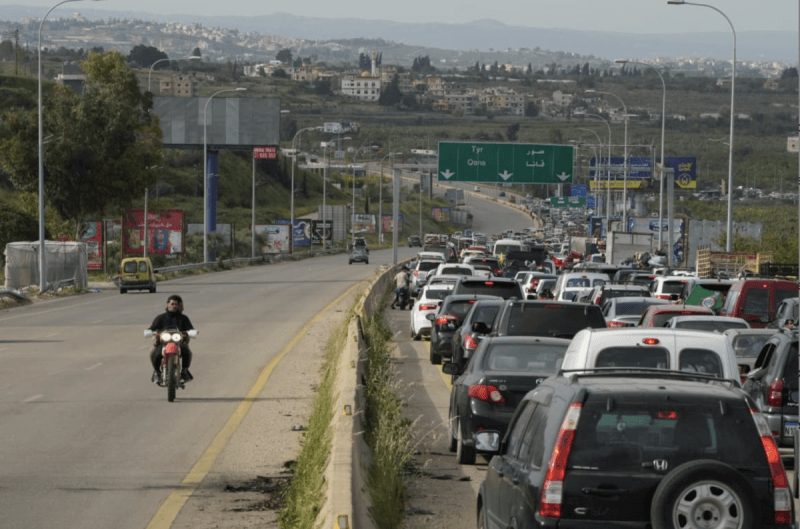
Sayed said “about 63% of the displaced have left the reception centers,” while clarifying that “some reception centers will remain open to accommodate displaced people who are not yet able to return to their homes.”
The report added that the number of reception centers has fallen from 692 at the height of the crisis to 479 today, with Beirut’s centers dropping from 150 to 100, and that additional centers have been opened in Nabatieh to accommodate displaced people wishing to remain close to their villages.
L’Orient Today also said Sayed highlighted a “clear dynamic of return,” even as Israel is preparing for a “long-term occupation” in southern Lebanon, citing remarks by Israeli Defense Minister Israel Katz.
Reconstruction Stakes and Damage
L’Orient Today reported that Sayed said the government is working on a “plan for return, recovery, and reconstruction” for the displaced, distinguishing between those needing rapid repairs, those requiring temporary housing allowance, and those who should benefit from provisional accommodations for a longer period.
“Beirut, Lebanon – There are only a few dozen blue tents remaining near Beirut’s waterfront, a far cry from the hundreds that have sheltered Lebanon’s displaced in recent months”
The same report said the plan would be carried out “in parallel with the development of a comprehensive reconstruction plan,” while Sayed affirmed that “these figures are positive, but that does not mean our responsibility has ended.”
L’Orient Today further reported that Finance Minister Yassine Jaber called on “Lebanon's friendly countries to support residents of the South” in reconstruction efforts and recalled that authorities are preparing a conference scheduled for July aimed at mobilizing nearly $1 billion.
It also cited a UNDP and National Council for Scientific Research (CNRS) study stating that Lebanon had, as of April 29, 2026, sustained damages estimated at more than $1 billion, with more than 11,000 buildings completely destroyed in the South.
In Al Jazeera’s account of the waterfront return, Rami Mustafa said he had been renting a house in Choueifat in Beirut’s southern suburbs, but lost his income when the war started and needed “to work for a month or so [to save enough money] before I can go rent a house again,” underscoring how livelihoods remain tied to the pace of recovery.