Full story
Pilot zones begin in south
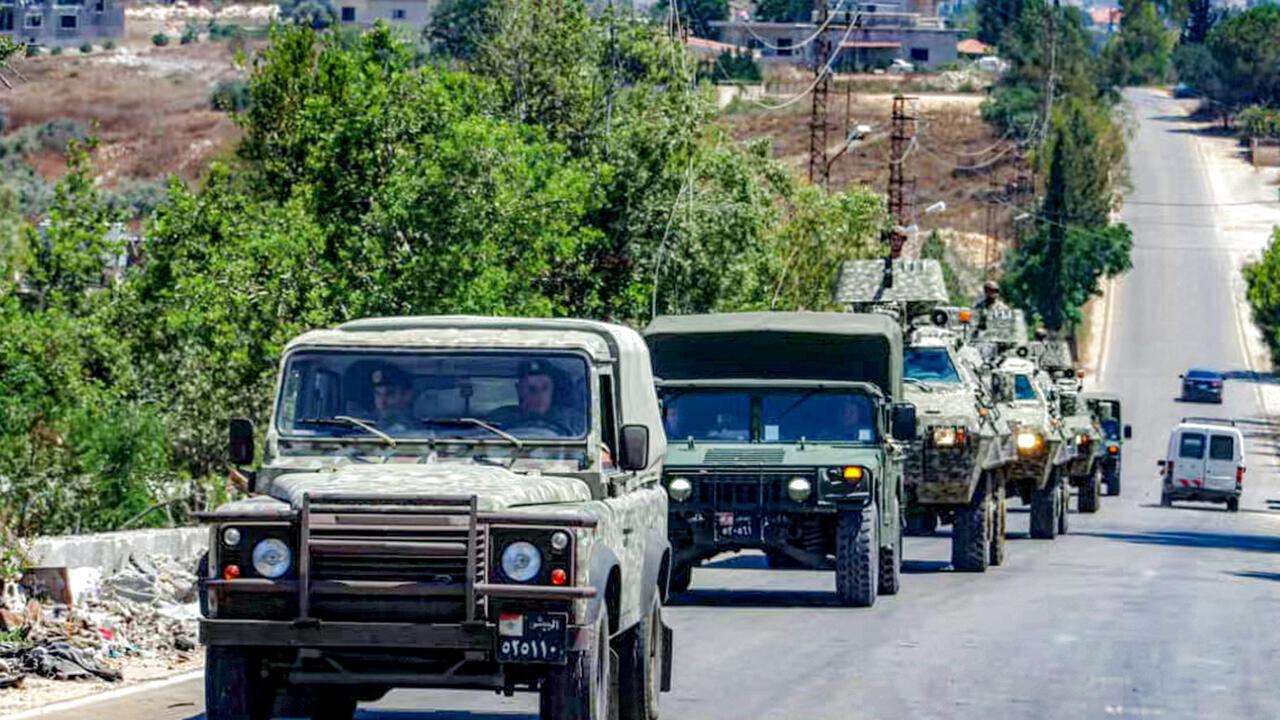
In southern Lebanon, the Lebanese Armed Forces began deploying in the first “pilot” area after Israeli forces withdrew from the town of Zotar al-Gharbia in the Nabatieh District, as the framework agreement signed on June 26 calls for the LAF to begin disarming Hezbollah.
“Toggle Play Lebanese army deployed in ‘pilot zone’ as families wait to return home Lebanon’s Prime Minister Nawaz Salam planted a Lebanese flag in one of the ‘pilot zone’ villages as Israeli troops withdrew and the Lebanese army deployed as part of a framework agreement to end the war”
France 24 reported that Lebanon’s Prime Minister Nawaf Salam said Beirut is working toward a “complete Israeli withdrawal” from areas it occupies, and he spoke during a visit to Zawtar al-Gharbiya where the Lebanese army recently deployed.

The Jerusalem Post said the “Safe Zone” pilot program began with cooperation from the US and Lebanese militaries, and it cited the US State Department saying operations in pilot zones had begun in the villages of Froun, Srifa, and Zawtar al-Gharbiya.
Le Monde described the deployment as a test of the framework agreement signed between Israel and Lebanon on June 26, with Lebanese Armed Forces blocking access behind a barrier 700 meters from the entrance to Zaoutar El-Gharbiyé.
In the same area, the Lebanese army said Israeli forces “opened fire” near its units as they were deploying in Zawtar al-Gharbiya, while Israel said troops fired “warning shots into the air” after Lebanese soldiers entered an area that was “not part of the pilot area.”
Accusations and political friction
As the LAF deployment began, residents waited for permission to check their homes, and AFP-linked reporting quoted Abbas Yaghi, 73, saying, “We will enter the town with our heads held high, thanks to the presence of the Lebanese army.”
Le Devoir reported that Wafaa Ismaïl, 64, said the prime minister “should have let the people go behind him to signal a victory,” after Lebanese troops began deploying in Zawtar al-Gharbiya.
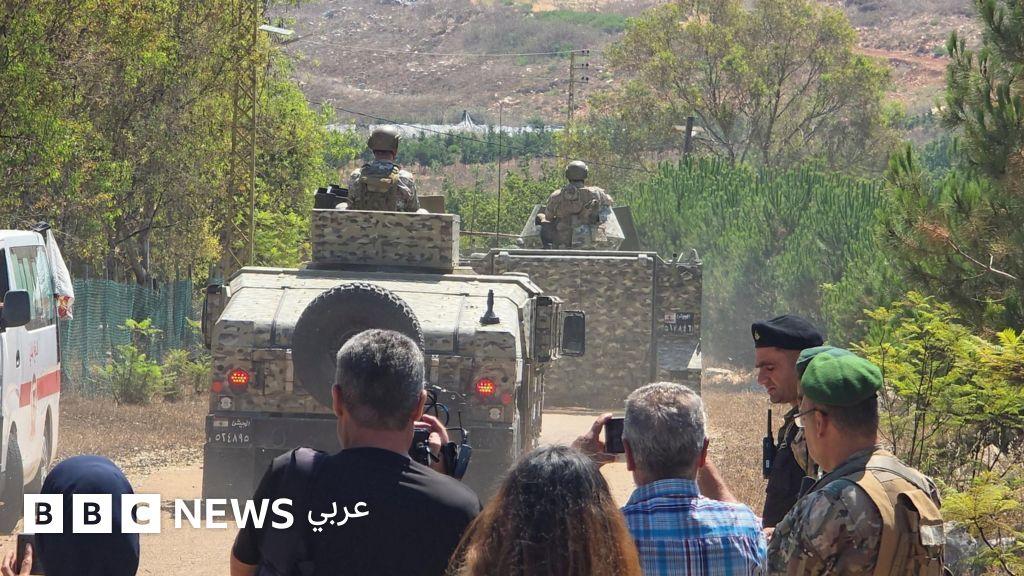
The Lebanese army accused Israeli forces of firing near its personnel as it deployed in Zoutr al-Gharbiyah, and it said the attack would hinder the implementation of the deployment steps in the experimental areas.
In response to the broader moves around the southern castles, France 24 said Lebanese Culture Minister Ghassan Salame on X called the Israeli flag-raising in Dubieh a “hostile, provocative act,” adding that Lebanon would “spare no effort to restore sovereignty” over the castles.
The Jerusalem Post also framed the pilot zones as a test of Lebanon’s ability to exercise sovereignty in practice, quoting an Israeli official saying the pilot areas would serve as “a test of Lebanon’s ability to exercise its sovereignty in practice.”
What’s at stake next
The pilot-zone arrangement is tied to Hezbollah disarmament and to Israel’s gradual withdrawal, with the Jerusalem Post describing the LAF role as clearing areas of “terrorist weapons and infrastructure,” conducting “verified clearance operations,” and holding and securing the zones so Hezbollah cannot use communities as cover.
“The first phase of establishing the 'pilot zones' in southern Lebanon, in which the Lebanese army is to take back control under a framework agreement with Israel concluded on June 26 under U”
The US State Department’s role in the process was reflected in the Jerusalem Post’s account that operations in pilot zones began in Froun, Srifa, and Zawtar al-Gharbiya “in accordance with the Trilateral Framework and under the auspices of the Military Coordination Group for Lebanon.”
Le Monde reported that Ali Atwi, a 61-year-old employee of Electricité du Liban, said young men were asking the army for permission to go see their houses for an hour and then return, as he described how all 4,000 inhabitants had been forced to leave at the start of the war on March 2.
Le Monde also said Youssef Yaghi, a 41-year-old merchant, described destruction in the village, adding, “More than 70% of the houses are destroyed, as are the water and electricity infrastructures…,” linking the pilot-zone access test to basic recovery needs.
In parallel, the Lebanese army renewed its appeal to residents not to come until the security situation stabilizes, while the Asharq Al-Awsat account said the town’s mayor Abd al-Aziz al-Din reported residents had not entered awaiting an official statement permitting people to enter.