Lebanon
EU Plans New Mission To Train Lebanese Armed Forces As UNIFIL Mandate Expires December
EU plans Lebanon mission
The European Union is planning a new military and civilian mission to support Lebanon’s armed forces as the United Nations Interim Force in Lebanon (UNIFIL) ends, with UNIFIL’s mandate due to expire at the end of December after 48 years.

Consistent coverage
Where the coverage agrees
All outlets consistently say the EU will train Lebanon, not replace UNIFIL.
At a glance
- EU plans to launch a mission to train the Lebanese army, not replace UNIFIL.
- More than 10 EU member states ready to provide personnel and resources.
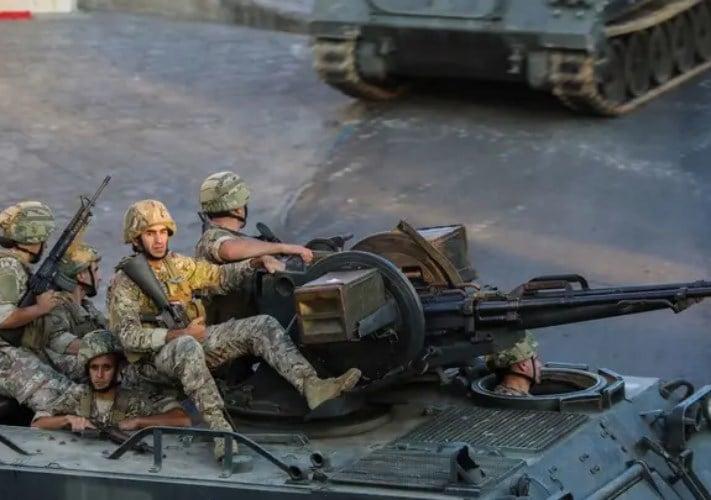
- Mission aims to strengthen border and maritime security, with civilian support, not replacement.
The Journal reports that General Seán Clancy, chair of the European Union Military Committee, said the operation would involve “a combination of a civil and military approach from the EU” and would start “relatively modest” before evolving.
Clancy said the military side would “support the Lebanese Armed Forces to free up the internal security forces to do their job,” while border-area support would help in those areas.
Kaja Kalas, the EU’s Foreign Affairs chief, said the plan is not designed “to replace UNIFIL” and instead aims to strengthen the Lebanese Armed Forces and the Lebanese government to establish order.
The Journal also said more than 300 Irish soldiers are deployed with a multinational force across locations on the contested Lebanon/Israel border, including near the Irish base UNP 2-45 in areas such as Bint Jbeil and At Tiri.
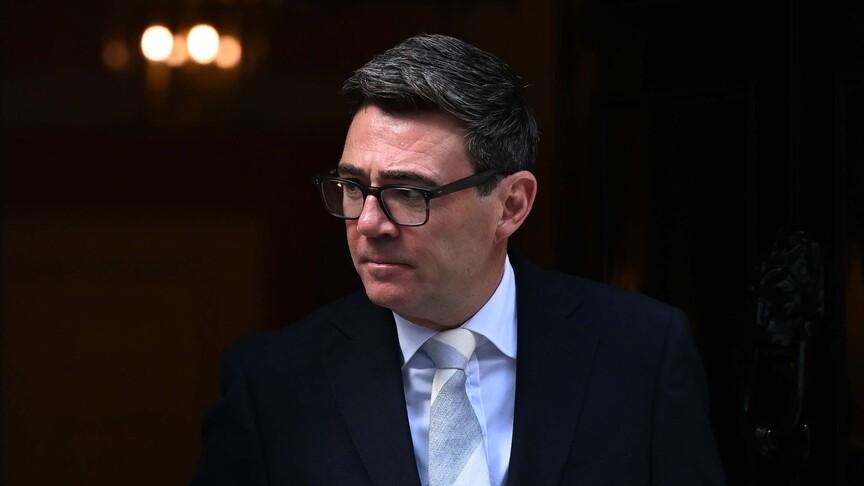
Kallas: not replacing UNIFIL
Kaja Kallas told reporters after a meeting of European defence ministers in Ireland that “The EU is not seeking to replace UNIFIL,” and said the objective is “to strengthen the Lebanese armed forces and the ability of the Lebanese state to provide security across its territory.”
AnewZ reported that an EU official said the bloc was aiming to establish the mission in mid-October, with personnel potentially deployed towards the end of 2026 or in early 2027.
Kallas said the EU was examining ways to provide training and advice to the Lebanese armed forces as the United Nations prepares to wind down its peacekeeping operation in the country.
The Journal added that Kallas said ten countries had come forward and that it is “easy to open a mission, but then it’s also what we will fill this mission with,” while Defence and Foreign Affairs Minister Helen McEntee said there must be agreement on the mission soon.
Citizen Digital likewise quoted Kallas saying the EU is “investing in Lebanon's capacity to provide security for itself,” and said planning is progressing well with some 10 countries expressing interest in participating.
UNIFIL drawdown and stakes
The Journal said UNIFIL’s mandate is not being renewed after the Netanyahu government in Israel pressured the United States to not support continuing the peacekeeping mission, and it described Israel’s bombing campaign and ground force occupation in the south under the guise of targeting Hezbollah.
It also said the expansionist move by the Israeli military has established a buffer zone where they have levelled towns and villages leaving thousands homeless, including Bint Jbeil and At Tiri near the Irish base UNP 2-45.
Limerick Leader reported that Ireland’s Minister for Foreign Affairs Helen McEntee said Ireland is “absolutely” among EU member states willing to contribute to a European mission in Lebanon, while also warning on RTÉ’s Six One News that instability would continue if the “space” left by UNIFIL is not “filled.”
The Journal said Clancy believes UNIFIL will not get a last-minute reprieve and there will be a drawdown of the more than 7,400 troops from 46 countries.
In the same reporting, Kaja Kalas said the EU has been liaising with the Lebanese government and that discussions focus on finding out exactly what President Joseph Aoun’s government needs.
Explore the original reporting
Compare all 13 sources
How each outlet frames it
Every outlet we compared, the headline it ran, and a link to the original article.
West Asian
UK's stance on Ukraine will not change 'whatever threats we face,' says premier
01 September, 2026
Europe moves to preempt UNIFIL’s end... a new mission to train the Lebanese army and secure the borders
02 September, 2026
New European military mission in Lebanon to support the army and disarmament
01 September, 2026
More than 10 European countries are preparing to participate in a mission to train the Lebanese army.
01 September, 2026
Western Alternative
More than 10 EU countries ready to support Lebanon mission
02 September, 2026
EU plans new mission to strengthen Lebanon security forces
01 September, 2026
Other
EU to Launch Mission to Train Lebanese Military, Not Replace UNIFIL
01 September, 2026
Kallas urges faster EU defence action as Russia tests Europe and capability gaps persist
02 September, 2026
Ireland ‘absolutely’ backing EU mission in Lebanon, minister says
01 September, 2026
Western Mainstream
Kaja Kallas announces that Europe will launch a training mission for the army in Lebanon
01 September, 2026
Irish General confirms EU plan for military and civilian Lebanon mission to replace UNIFIL
02 September, 2026
Read stored source text: Anadolu Ajansı
UK's stance on Ukraine will not change 'whatever threats we face,' says premier 'We do not seek escalation, but will instead stand firm in providing what help we can to enable Ukraine to defend itself,' says Andy Burnham Burak Bir 01 September 2026•Update: 01 September 2026 LONDON British Prime Minister Andy Burnham on Tuesday said that "whatever threats we face" from Russia, the UK's position on supporting Ukraine will not change. In his first speech in parliament as prime minister, Burnham said former Prime Minister Keir Starmer's stance on Ukraine is “one which I will not change, whatever the threats we face.” "We do not seek escalation, but will instead stand firm in providing what help we can to enable Ukraine to defend itself," he added. Last week, Russia said British military facilities in Ukraine "and beyond" could be targeted in response to Kyiv’s use of UK missiles to strike Russia. In response to a question regarding Israel-Palestine, Burnham recalled his previous statement that they needed to “look again at the approach that we'd taken.” "We've seen the really quite worrying statement about the E1 (West Bank settlement) extension and the settlements there, and the fast-track tender process, which I think would lead to decisions being made before the Israeli election," he said. Burnham warned that could "imperil, if not end, the two-state solution," adding these matters are urgent and they do need to be confronted. “I believe we will be updating the House soon on those matters.” The prime minister also touched on a written statement issued by his office while he was speaking in parliament, which expressed "full solidarity" with Germany after what he called Russia’s "egregious and reckless attack" at Leipzig Airport last month. He added: “It is a very, a very serious development, and it requires the most intense European cooperation in response.” Citing an announcement by the UK weather agency earlier Tuesday that summer 2026 was provisionally the warmest ever recorded in the country, Burnham said: “I can confirm to the House that I will attend COP 31 in Türkiye in November.” COP31 Summit will be held in the southwestern Turkish city of Antalya on Nov. 9-20. Burnham also noted that he will thank French President Emmanuel Macron on Wednesday in London for the cooperation that has enabled the UK to prevent over 48,000 migrants from crossing the English Channel. Turning to his early release scheme, he said that anyone convicted of manslaughter, death by dangerous driving or indecent assault will now not see any change to their prison term. The UK’s Conservative Party warned Monday that Burnham’s early-release scheme could result in dangerous prisoners being freed as the government seeks to ease prison overcrowding. The scheme was introduced after the prison system came close to running out of capacity in the summer of 2024, with fewer than 100 spaces remaining. An updated version of the scheme is due to take effect on Oct. 1. UK's stance on Ukraine will not change 'whatever threats we face,' says premier
Read stored source text: AnewZ
Overnight Russian strikes hit cities across Ukraine, the country's State Emergency Service has said. The capital Kyiv, the Black Sea port of Od... More than 10 European Union countries are prepared to provide personnel and other resources for a planned EU mission to support Lebanon’s armed forces, EU foreign policy chief Kaja Kallas said on Tuesday. The proposed mission is intended to strengthen Lebanon’s military and help the government extend its authority across the country, including as Beirut faces pressure to disarm Hezbollah. The EU has been examining ways to provide training and advice to the Lebanese armed forces as the United Nations prepares to wind down its peacekeeping operation in the country. Kallas said the EU was not seeking to replace the UN Interim Force in Lebanon (UNIFIL), whose mandate is due to expire at the end of 2026. “Our objective is to strengthen the Lebanese armed forces and the ability of the Lebanese state to provide security across its territory,” Kallas told reporters in Ireland after a meeting of European defence ministers. An EU official said the bloc was aiming to establish the mission in mid-October, with personnel potentially deployed towards the end of 2026 or in early 2027. Kallas did not say which countries would take part. Hezbollah disarmament remains key issue Strengthening the Lebanese army is closely linked to international efforts to have Hezbollah give up its weapons. Western governments have repeatedly called for Lebanon to disarm the Iran-backed group. The issue is also a central element of a ceasefire between Lebanon and Israel following a conflict that unfolded alongside the U.S.-Israeli war against Iran. UNIFIL is expected to begin a year-long drawdown and withdrawal after its mandate expires. France has separately been pushing for an international conference aimed at strengthening Lebanon’s armed forces and has proposed an international force as part of efforts to succeed UNIFIL.
Read stored source text: Citizen Digital
EU planning mission to train Lebanese army Audio By Vocalize The United Nations peacekeeping force in southern Lebanon, UNIFIL, has roughly 7,500 personnel from nearly 50 countries, and has been in place since 1978. Its presence has not prevented repeated outbreaks of conflict, with southern Lebanon seeing successive wars between Israel and Iran-backed Hezbollah. In August last year, however, the UN Security Council, under US pressure, decided to end UNIFIL's mandate on December 31, 2026. "Ministers discussed our plans for a new EU mission to advise and train the country's armed forces, including on border and maritime security," EU top diplomat Kaja Kallas said after a meeting of the bloc's defence ministers in Ireland. "The EU is not seeking to replace UNIFIL, we are investing in Lebanon's capacity to provide security for itself." Kallas said that "planning is progressing well" on the mission with some 10 countries expressing interest in participating. She said the hope was to reach a formal decision to launch the mission in October. UN chief Antonio Guterres has said that peacekeepers will be needed in Lebanon after the mandate of the current mission expires. France and Italy have previously said they want to set up a multinational coalition to succeed the UN peacekeeping force in Lebanon. The country became embroiled in the Middle East war after Hezbollah fired rockets at Israel on March 2, prompting a widespread Israeli bombing campaign and ground invasion. More than 4,300 people have been killed, though violence has decreased since a US-Iran deal and a Washington-sponsored framework agreement between Lebanon and Israel went into force.
Read stored source text: Fana News -
Home-EU to Launch Mission to Train Lebanese Military, Not Replace UNIFIL Oman, Kazakhstan Discuss Bilateral Cooperation US Airstrikes Target Iranian Missile Platforms on Larak Island MSX 30 Index Closes Higher, Up 0.092% Oman Oil Exports Reach 181.9 Million Barrels by End of July 2026 National Museum Signs Cooperation Agreement with Omani Women’s Association in Muscat Registration Opens for 13th Omani Song Festival Twenty-Three Clubs Participate in Draw of HM The Sultan’s Football Cup 2026-2027 Oman Olympic Committee Organizes “Promising Talents” Forum in Dhofar Saudi Arabia’s Voluntary Carbon Market Fuels the Shift to a Low-Carbon Under UAE President’s directives, UAE launches urgent relief response for Ghana flood victims Combating Desertification and Drought: Qatar a Model in Preserving Natural Resources, Establishing Environmental Stability UAE allocates US$30 million for emergency humanitarian response in El Obeid, calls for civilian protection, safe humanitarian aid access in Sudan Dublin, September 01 (QNA) – The European Union said Tuesday it intends to create a mission tasked with training the Lebanese military throughout the upcoming months, highlighting that it wouldn’t supersede the United Nations Interim Force in Lebanon (UNIFIL). Following the meeting of the bloc’s defense ministers in Ireland, EU foreign policy chief Kaja Kallas said the ministers deliberated on plans to launch a new EU mission to provide counseling to the Lebanese armed forces and train them in the field of border and maritime security. Kallas further explained that the EU wouldn’t compensate for UNIFIL forces but rather invest in Lebanon’s capability to provide self-security, emphasizing that the planning for this mission is moving steadfastly, as almost ten nations showed their readiness to participate in this mission. The European official clarified that the EU hopefully intends to take an official decision to launch this mission in October 2026. UN Secretary-General Antonio Guterres had affirmed that Lebanon would continue to need a peacekeeping force after UNIFIL’s mandate expires and it draws down, while France and Italy had previously expressed their desire to establish a multinational force to supersede UNIFIL. Deployed in Lebanon since 1978, UNIFIL is comprised of approximately 7,500 personnel from almost 50 countries. However, in August 2025, the UN Security Council decided to terminate its mandate by the end of 2026. (QNA)
Read stored source text: INSIGHT EU MONITORING
Wicklow, 1 September 2026 Kaja Kallas warned EU defence ministers that Russia is increasingly testing Europe through kinetic hybrid attacks while the war in Ukraine shows no sign of ending. She called for more air-defence support, tougher sanctions and faster efforts to close Europe’s conventional capability gaps, while outlining plans for a new defence high-level group, a possible EU mission in Lebanon and stronger protection of maritime infrastructure. 7 Take-aways - Russia is “testing” Europe with increasingly kinetic hybrid attacks: Kallas said the risk of attacks causing more serious consequences is rising and warned that European deterrence is weakened if political red lines are not backed by credible action. - Ukraine’s air defence remains the immediate military priority: EU ministers discussed shortages of interceptors and existing national stocks, including Patriot missiles nearing expiry. Kallas confirmed in the Q&A that no concrete commitments on additional Patriot interceptors were secured at the meeting. - EU preparing its toughest sanctions package yet against Russia: Kallas said work is under way on what she described as the biggest sanctions package targeting Russia’s military industry, including efforts to restrict access to European components still reaching Russian weapons production. - New high-level group will focus on closing European defence gaps faster: Kallas will launch a group of senior political and military figures from EU countries, the UK and Ukraine to develop practical proposals for filling identified conventional capability gaps. She stressed that it would look beyond institutional structures and draw on Ukrainian battlefield experience and private-sector ideas. - Ukraine support loan does not replace national military contributions: The EU has already disbursed €8.37 billion in defence support under the Ukraine Support Loan. Kallas clarified that calls for “frontloading” primarily concern Member States bringing forward bilateral contributions that had been planned for later. - EU plans a new security mission in Lebanon: The proposed mission would train and advise Lebanese armed forces, including on border and maritime security, without replacing UNIFIL. Kallas said more than ten Member States had indicated willingness to contribute personnel or resources, with a Council launch decision targeted for October. - Maritime security and critical infrastructure move higher up the EU defence agenda: Kallas highlighted Russian shadow-fleet operations, Houthi attacks, subsea cables and energy pipelines as growing security concerns. EU naval missions are increasing boarding activity, while the next EU maritime security exercise will focus for the first time on protecting critical maritime infrastructure. E-summary by ChatGPT, prompted by Insight EU, based on the press conference below. Informal Meeting of EU Ministers of Defence: Press conference by High Representative Kaja Kallas Wicklow, 1 September 2026 Check against delivery! Good afternoon, dear Helen. Thank you for hosting us here in wonderful Wicklow, and we have just concluded a good meeting of EU Defence Ministers. First, Ukraine. Russia’s war is becoming more ruthless and destructive, but it is unfortunately not closer to ending. Russia’s army is bogged down on the ground, and that is why they are killing civilians from the skies. And this is terror by design. In the Black Sea, Russian strikes on grain ships are deliberately putting global food supplies at risk. Russia is also hitting Europe with a wave of increasingly kinetic hybrid attacks. With this, Russia wants to scare us away from supporting Ukraine. They will not succeed. To the contrary, today also the discussions that we had, we will increase our support to Ukraine and invest in our own defence. This is the best way to stop Putin. We are also planning the most far-reaching sanctions against Russia yet. Militarily, Ukraine is putting Russia under pressure. Ukrainian drones are disrupting Russian logistics and striking refineries deep inside Russia, causing the biggest fuel crisis in Russia in decades. Russia is losing well over 30,000 soldiers per month too. Overall, it has been a rough summer for Putin. As we heard today from the Ukrainian Minister of Defence, air defence remains our top priority. But interceptors are short supply everywhere. I thank Member States for looking again at their own stocks. Especially Patriot missiles about to expire should be sent or sold to Ukraine. Member States are also looking at reprioritising orders and reaching out to partners. Every interceptor we provide to Ukraine means that a Russian missile does not reach a Ukrainian school, home, or hospital. And every support we give to Ukraine strengthens European security. The EU continues to provide strong support to Ukraine through the Ukraine Support Loan. The EU has already disbursed €8.37 billion in defence support, with more to come. However, continued bilateral support is still necessary. In addition to equipment, Ukraine needs upgraded training facilities. And earlier this year, I proposed to finance the modernisation of training sites in Ukraine. And I want to thank all the Member States and also Ireland, who announced additional funding for this today. Ministers also discussed the future of our flagship EUMAM training mission, including establishing a coordination cell in Kyiv, to better integrate the battlefield lessons and strengthen the military education. EU-Ukraine defence industrial cooperation is also growing. There are now more than 120 industrial partnerships between Ukrainian and European companies. Ukraine is the world leader in battlefield innovation, further integrating Ukrainian and European companies is in our shared interest. Space is a key enabler of defence, and that is why we were also discussing this today, from navigation to communications to missile detection and intelligence gathering. Defence depends on space systems. The EU has had significant space capabilities for decades. Galileo, our satellite navigation system is a good example. The EU Satellite Centre has consistently provided crucial support to Member States and Ukraine. Today, Ministers exchange views on what capabilities are required for Europe to remain a global space actor. This requires the EU, the Member States, civilian and military actors and the private sector to work closely together. Commissioner Kubilius and I will present the joint communication with concrete proposals by the end of the year. Finally, Ministers focused on the Middle East and maritime security. The flare-up in hostilities between the U.S. and Iran shows how fragile the situation remains. Diplomatic efforts to end the war have yet to produce a tangible breakthrough. Every day the Strait remains closed, the global economy pays the price. Freedom of navigation must be unimpeded and toll-free. This is a key principle which Member States and many of our partners around the globe agree, and which we will keep on insisting. Through ASPIDES and ATALANTA, the EU is a major maritime security provider in the region. As Houthi attacks against shipping increase, the role of ASPIDES in protecting the global trade in the Red Sea remains vital. EU naval operations are also stepping up action against Russia’s shadow fleet and are now taking the lead in boarding suspected vessels. Thanks to the diplomatic work of our EU delegations around the world, fewer countries are allowing these vessels to sail under their flags. As a result of our efforts, hundreds of ships have been deflagged. This matters. Illegal oil sales are a critical lifeline for Kremlin, and we will continue to cut them off. Ministers also looked at the broader threats at the critical maritime infrastructure. Our economies rely on subsea data cables and energy pipelines. At the same time, threats from drones, mines, and sabotage are growing. What lies beneath the sea is critical to European security above it. We need to defend it accordingly. The EU and its Member States are already allocating more resources towards maritime defence. New initiatives, including the European Defence Project of Common Interest on Integrated Maritime and Seabed Defence, can make a difference. And next week, for the first time, EU’s annual maritime security exercise will focus on protecting critical maritime infrastructure. On Lebanon, Ministers discussed our plans for a new EU mission to advise and train the country’s armed forces, including on border and maritime security. The EU is not seeking to replace UNIFIL, we are investing in Lebanon’s capacity to provide security for itself. Our objective is to strengthen the Lebanese armed forces and the ability of the Lebanese state to provide security across its territory. Planning is progressing well, and we aim for the Council decision to launch in October. Before I hand over to our host, one final announcement. Next week, I will launch a new High-Level Group on Defence, consisting of senior political and military leaders from several EU countries, but also from UK and Ukraine. Europe is investing more in defence than ever but spending alone is not automatically a guarantee for success. We have not been fast enough to cover the gaps in Europe’s conventional power within NATO that we have identified. The aim is to have some of the brightest minds on security and defence to come together and really provide out-of-the-box solutions: how can we be faster to fulfilling these gaps, and how can we be more effective, especially now that the security threat in Europe is so much more real. And under my auspices, the group will bring its findings together in a report setting out concrete recommendations for Europe’s defence. I will stop here and hand it over to Helen. Thank you very much for having us here. Link to the video: https://audiovisual.ec.europa.eu/media/video/I-293469 Q&A I have a question for you about the high-level group that you just mentioned. Could you tell us to which institution the recommendations will be addressed? Will it be for the EU, for NATO, for both? Are you able to give us a sense of what the priority topics would be and a sense of timeline? We have this launch event coming up next week, where we can discuss details. But the basic idea behind this is that majority of European [Union] Member States are also members of NATO, and there are gaps in conventional power. In NATO, that means that the Member States need to invest in those capabilities, and these things need to work together. So, we have not been fast enough, although the threat level is rising. The idea is to really look beyond institutions, but to have the brightest minds to come together to provide ideas, not on where the gaps are, but actually how we can fulfil the gaps in the shortest timeframe possible in the most effective way. That is why we are also including Ukraine in it because they have a lot of experience, and the idea is to give ideas to Member States, but also institutions, what we should do better and faster to actually really have tangible results, so that we cover the capability gaps that we have identified, considering the geopolitical situation as well. Let us continue with the group, and I know that you do not want to reveal many details, but of course it is very interesting now. We know that Italy hired ex-Defence Minister of Ukraine Fedorov to consult. Can you indicate who will represent Ukraine in this group? First, like I said before, we have the launch event when we have all the names together, and we can reveal that next week. So, a bit of patience in this regard. What is good is that we have a lot of interest in this as well to contribute, because it is also to look beyond the institutional thinking. Because what we see also from private sector there are a lot of ideas coming – why do you not do this or that so to really have these recommendations there and to move on this. But yes, the names we will reveal next week. It is to get some sort of an idea on what a mission in Lebanon may look like and what shape that would have, and obviously also funding, please. We are working on that. Today there was a lot of commitment around the table. We are not replacing UNIFIL. The idea is to really strengthen the Lebanese Armed Forces and the Lebanese government to take the order in Lebanon under control, which means also training, supporting their border control, their internal forces to actually establish order, so that it is remaining with the Lebanese government what is happening in Lebanon. We are, of course, in close contact with the Lebanese government – what they need from their side – and what the Member States are willing to contribute, but there were more than 10 countries – when I counted – who are willing to contribute resources, and people as well. Because it is easy to open a mission but then it is also what we fill this mission with. I was happy to hear that that Member States are willing to contribute. We often hear that Ireland is considered a weak link in European security and defence. Are we a weak link or are we a strong link? And what is your view on that? And in relation to your new group you are setting up, will there be any representation of any EU-neutral countries in that? Thank you for your question. I mean, the EU Military Committee is chaired by General Clancy from Cork, so I would say that the Member States actually trust also people from neutral countries to have a say in European security and defence. When it comes to concrete names in the group, then, of course you have to wait for the launch event. About the €90 billion loan and the fact that you said, Minister McEntee, that there is consensus to that I think I understand correctly to frontload some of that money. How much do you think could be frontloaded this year, and does that not maybe create a risk next year that there will be less money, obviously, left in the €90 billion pot to give to Ukraine next year? So, is that a concern? And to the HRVP, what do you think about frontloading the money? Would that be something that the Commission could and should work on? And will you also put a bit of pressure on the on the other partners tomorrow, the UK, Switzerland, etc. to do more to get up to their total of €45 billion, which I think is what the Commission estimated last year was what Ukraine would need from those partners over the next two years? On the €90 billion loan. This is a major milestone, and of course we have different parts of it. When we are talking about frontloading, then we are talking about asking the Member States to frontload their contributions that they have planned in the future, because Ukraine needs these things now. So, for the €90 billion loan we have the plans, we have the derogations, we have all these decisions that we do on the way, and we have already distributed I think it was €8.[37 for defence] billion that Ukraine has already received, but frontloading was the call mainly for the Member States. A couple of questions on the Patriot missiles. Did you get any firm commitments from the
Read stored source text: La Libre.be
"The ministers discussed our plans for a new EU mission to advise and train the country's armed forces, particularly on border security and maritime security," she said after a meeting of EU defense ministers in Wicklow, near Dublin. She clarified that the aim was to reach a formal decision to launch this mission by October. The United Nations Interim Force in Lebanon (UNIFIL) in southern Lebanon has about 7,500 personnel from nearly 50 countries. It has been deployed since 1978, but its presence has not prevented repeated upticks in the conflict, with southern Lebanon having been the theatre of successive wars between Israel and Hezbollah, supported by Iran. In August 2025, the UN Security Council, under pressure from the United States, decided to terminate its mandate on December 31, 2026. UN Secretary-General Antonio Guterres said that Blue Helmets would be needed in Lebanon after the current mission’s mandate expires. France and Italy have already indicated that they wish to establish a multinational coalition to succeed the UN peacekeeping force in Lebanon."
Read stored source text: Limerick Leader
Skip to main content !Powered by Register Sign In News Community Pictures & Videos Lifestyle Health Planning Eco Live Schools & Education Deaths Weather Nostalgia Sport All-Ireland Final 2026 GAA Hurling Gaelic Football Camogie Ladies Football Rugby Soccer Horse Racing Golf Other Sport Ryder Cup National Crime & Courts What's On Arts & Entertainment Fashion Celebrity Weddings Motoring Politics General Election Local Elections Business Sponsored Content Property Farming Opinion Celia Holman Lee Making Cents - Liam Croke Spotlight - Kieran Beville If Walls Could Talk - Paul O'Brien Ireland ‘absolutely’ backing EU mission in Lebanon, minister says By Cillian Sherlock, Press Association Published 1st Sep 2026, 19:16 BST !Minister for Foreign Affairs Helen McEntee!placeholder image Minister for Foreign Affairs Helen McEntee The operational mandate for the Unifil mission is currently scheduled to end on New Year’s Eve. Ireland is “absolutely” among EU member states willing to contribute to a European mission in Lebanon. A senior EU diplomat has said that more than 10 member states have expressed an interest in contributing to a new mission in Lebanon after the expiry of the UN mandate there. The operational mandate for the Unifil (United Nations Interim Force In Lebanon) mission, in which Irish peacekeepers are deployed, is currently scheduled to end on New Year’s Eve, with a subsequent drawdown and withdrawal expected to take place in 2027. Kaja Kallas, the EU’s High Representative for Foreign Affairs and Security Policy, told reporters on Tuesday that member states had discussed plans for a new EU mission to advise and train Lebanon’s armed forces, including on border and maritime security. Ms Kallas was speaking at a meeting of Defence Ministers in Wicklow as part of Ireland’s presidency of the Council of the European Union. !placeholder image She said: “The EU is not seeking to replace Unifil – we are investing in Lebanon’s capacity to provide security for itself. “Our objective is to strengthen the Lebanese armed forces and the ability of the Lebanese state to provide security across its territory. “Planning is progressing well, and we aim for the Council decision to launch in October.” Irish Defence Minister Helen McEntee said Ireland is “absolutely” among the countries willing to contribute, amid a “desire to ensure that Irish peacekeepers remain on the ground”. She told reporters: “I utterly regret the fact that the Unifil mission is coming to an end.” Asked at a press conference about how a mission in Lebanon would work and be funded, Ms Kallas said: “We are working on that and today there was a lot of commitment around the table. !placeholder image “We are not replacing Unifil – the idea is to really strengthen the Lebanese Armed Forces and also the Lebanese government to take the order in Lebanon under control which means also training, supporting their border control, their internal forces to actually establish order.” She added: “We are, of course, in close contact with the Lebanese government – what they need from their side – and what the member states are willing to contribute. “But there were more than 10 countries – when I counted – who are willing to contribute resources, and people as well. “Because it is easy to open a mission but then it is also what we fill this mission with.” Speaking on RTÉ’s Six One News, Ms McEntee warned instability in Lebanon would continue if the “space” left by the Unifl is not “filled”. “We have a number of proposals on the table. Ireland – working closely with Spain and Austria – have actually put forward a proposal as to what types of missions may be possible. “What’s really important is that we agree them. “But can I just say, from an Irish perspective, we need to make sure that we are in a position to be part of those missions in every way possible, and that’s something that I’ll be working with colleagues in Government on in the time ahead.” Continue Reading Most Popular Tributes paid to 'bubbly' Limerick teen who died on holidays... Deaths Tributes pour in for Limerick singer with 'beautiful voice a... Deaths Limerick stars on opposite sides in Premier Minor Hurling fi... Sport Man came to Ireland for the ‘purpose of committing crime’, c... News Limerick man walks over 23km in first days of 2,000km challe... Community Most Popular Limerick pubs feel the sting as nearly 200 pubs close in two... News Limerick trainer continues impressive run of form with two w... Sport PICTURES: Past pupils gather for 50 year reunion at Limerick... News PICTURES: Young Munster and Thomond clash in Munster Senior ... Sport Permission will aid firm's plan to create 600 new jobs in Li... News !Powered by Register Sign In Follow us © 2026 Formpress Publishing LTD. All rights reserved.Cookie SettingsTerms and ConditionsPrivacy notice
Read stored source text: Muslim Network TV
BEIRUT, Lebanon (MNTV) — The European Union is preparing a new mission to advise and train Lebanon’s Internal Security Forces, with more than 10 member states willing to provide personnel and resources, EU foreign policy chief Kaja Kallas said. Kallas announced the initiative during a briefing following an informal meeting of EU defense ministers in Ireland. She said the mission is intended to strengthen Lebanon’s Internal Security Forces (ISF) and help Lebanese authorities respond more effectively to security challenges. EU officials said the proposed mission would concentrate on advisory and training assistance designed to improve the operational capabilities of the ISF and strengthen Lebanon’s security institutions. The initiative is being discussed as the mandate of the United Nations Interim Force in Lebanon (UNIFIL) is scheduled to expire at the end of 2026. The UN peacekeeping force has operated along the Lebanon-Israel border since 1978 and has played a role in maintaining stability in the area. EU officials said the planned mission would complement wider international efforts to support Lebanese security institutions rather than replace existing arrangements. Kallas said the EU was in contact with the Lebanese government regarding the country’s needs and with member states about what they were prepared to contribute. She said more than 10 countries had indicated a willingness to provide resources and personnel. The proposed mission comes as Lebanon’s security institutions continue to face pressure from political instability, economic difficulties and the presence of armed groups, including Hezbollah. Some regional analysts have argued that strengthening the Internal Security Forces could allow the Lebanese army to concentrate more heavily on other security responsibilities, including efforts related to the disarmament of Hezbollah. That interpretation, however, has not been formally endorsed by the Lebanese government or the Lebanese army. The EU has not yet announced a deployment timetable or identified the individual member states that would contribute personnel and resources. Discussions among EU institutions and member governments are continuing. The planned mission is part of broader international efforts aimed at strengthening Lebanon’s state security institutions and improving their ability to maintain security across the country.
Read stored source text: Naharnet
EU planning mission to train Lebanese army The EU is looking to launch a mission to train the Lebanese army in the coming months -- but it said it would not replace the U.N. peacekeeping force. The United Nations peacekeeping force in southern Lebanon, UNIFIL, has roughly 7,500 personnel from nearly 50 countries, and has been in place since 1978. Its presence has not prevented repeated outbreaks of conflict, with southern Lebanon seeing successive wars between Israel and Iran-backed Hezbollah. In August last year, however, the U.N. Security Council, under U.S. pressure, decided to end UNIFIL's mandate on December 31, 2026. "Ministers discussed our plans for a new EU mission to advise and train the country's armed forces, including on border and maritime security," EU top diplomat Kaja Kallas said after a meeting of the bloc's defense ministers in Ireland. "The EU is not seeking to replace UNIFIL, we are investing in Lebanon's capacity to provide security for itself." Kallas said that "planning is progressing well" on the mission with some 10 countries expressing interest in participating. She said the hope was to reach a formal decision to launch the mission in October. U.N. chief Antonio Guterres has said that peacekeepers will be needed in Lebanon after the mandate of the current mission expires. France and Italy have previously said they want to set up a multinational coalition to succeed the U.N. peacekeeping force in Lebanon. The country became embroiled in the Middle East war after Hezbollah fired rockets at Israel on March 2, prompting a widespread Israeli bombing campaign and ground invasion. More than 4,300 people have been killed, though violence has decreased since a U.S.-Iran deal and a Washington-sponsored framework agreement between Lebanon and Israel went into force.
Read stored source text: The Journal
Sign in. It’s quick, free and it’s up to you. An account is an optional way to support the work we do. Find out more. AN IRISH GENERAL at the centre of planning for an EU mission to take the place of the UN peacekeeping mission in Lebanon said it will involve civilian assistance to the beleaguered government, border security and military personnel. General Seán Clancy, who is chair of the European Union Military Committee, said that planning is advancing for a major military and civil support operation. It is understood that Ireland along with France, Spain and Austria are involved in the behind-the-scenes work, but it will be for Clancy to work on proposals for the mission. The United Nations Interim Force in Lebanon (UNIFIL) is coming to an end in December after 48 years in the troubled Middle Eastern country. The UN Security Council did not renew the mandate after the Netanyahu government in Israel pressured the United States to not support continuing the peacekeeping mission. Currently, more than 300 Irish soldiers are deployed with a multinational force on the ground across locations on the contested Lebanon/Israel border. Clancy said that he believes that UNIFIL will not get a last-minute reprieve and there will be a drawdown of the more than 7,400 troops from 46 countries. At present Israel is engaged in a bombing campaign and ground force occupation in the south of the country under the guise of targeting Hezbollah. The expansionist move by the Israeli military has established a buffer zone in which they have levelled towns and villages leaving thousands homeless, including areas such as Bint Jbeil and At Tiri near the Irish base UNP 2-45. Criticism has been levelled at UNIFIL for not having the required mandate from the UN Security Council to confront the situation on the ground. The argument on the other side is that UNIFIL plays a critical role in observing Israeli and Hezbollah breaches of the fractured peace agreement. Clancy, who is the former Chief of Staff of the Irish Defence Forces, is now drawing up plans to deploy civilian advisers and soldiers. Speaking to The Journal in Druids Glen at the defence ministers informal meeting, Clancy would not say specifically what the mission will look like but did lay some details out in broad strokes. “It will be a combination of a civil and military approach from the EU. It will start off relatively modest with the opportunities, as I said, to evolve and grow. “The military side will be to support the Lebanese Armed Forces to free up the internal security forces to do their job and vice versa, and the border area support will also help in all of those areas. “It’s really about the totality, a holistic approach in terms of the crisis management concept which involves both the civil and the military sides approach from the EU as a whole, and that’s where we’ll see the main benefits coming,” he said. While Clancy believes there will be a mission, he said it is for the member states to decide politically the final shape of the operation. He added it is his sense that there is agreement across the bloc and is confident there will be a deployment of European civilian and military forces. The General said there will be EU “financial instruments” in the Common Security and Defence Policy to fund the mission. Frontex, the EU’s border security agency, is expected to be involved along with countries who will provide civilian officials and military to protect those working on the ground. At a press conference in Druids Glen the EU’s Foreign Affairs chief Kaja Kalas said about the plan is not designed “to replace UNIFIL”. “The idea is to really strengthen the Lebanese Armed Forces and also the Lebanese government to [get] Lebanon under control, which means also training, which means also supporting their, border control, their internal forces to actually establish order so it’s remaining with the Lebanese government what is happening in Lebanon,” he added. Kallas said that the EU has been liaising with the Lebanese government. The discussions are focused on finding out exactly what President Joseph Aoun’s government needs. Inside the EU there are also talks with member states to determine what countries are willing to contribute. Kallas said ten countries have come forward and said they will contribute resources but also personnel. “It’s easy to open a mission, but then it’s also what we will fill this mission with,” she added. Defence and Foreign Affairs Minister Helen McEntee, speaking at the same press conference, said that there must be agreement on the mission soon. Earlier, The Journal asked the minister will Ireland be able to contribute troops to the mission without a UN mandate. As the triple lock on troop deployments is still in place, the lack of a UN Security Council agreement means that Ireland cannot send soldiers. “It is essential that the Irish troops are in a position and that the Irish government are in a position to make a decision ourselves as to where we place our peacekeeping troops. “It is not for any country, in any part of the world, to decide where we put our troops. We have for many, many years a proud tradition of peacekeeping, of force protection of training missions on the ground and I hope that continues,” she added. The EU Presidency events at Druids Glen continue today with an informal meeting of foreign affairs ministers. Ed Miliband, the British foreign secretary as well as Anita Anand, the Canadian foreign minister will also attend the meeting. To embed this post, copy the code below on your site
Read stored source text: Al-Ain Al-Akhbariyah
On Tuesday, the European Union announced that it intends to launch a mission to train the Lebanese army in the coming months, clarifying that it will not replace the United Nations Interim Force in Lebanon (UNIFIL). UNIFIL has about 7,500 personnel from some 50 countries deployed in southern Lebanon since 1978. Its presence has not prevented repeated rounds of violence, as southern Lebanon has witnessed successive wars between Israel and the Iran-backed Hezbollah. But the United Nations Security Council decided in August of last year, under American pressure, to end UNIFIL's mandate on December 31, 2026. European External Action Service official Kaja Kalas said after a meeting of the bloc's defense ministers in Ireland, "The ministers discussed our plans to launch a new EU mission to provide advice to the Lebanese armed forces and train them, in the fields of border security and maritime security." She added, "The European Union does not seek to replace UNIFIL; rather, we are investing in Lebanon’s ability to secure its own safety." Kalas clarified that planning is proceeding well, noting that about ten countries have expressed interest in participating in the mission. She pointed out that the EU hopes to make an official decision to launch the mission in October. UN Secretary-General Antonio Guterres had previously emphasized that Lebanon will still need a peacekeeping force after UNIFIL’s mandate ends and it withdraws. France and Italy have also expressed a preference for forming a multinational force to replace the U.N. peacekeeping force in Lebanon. Lebanon slid into the Middle East conflict after Hezbollah launched rockets at Israel on March 2 in response to the killing of former Iranian Supreme Leader Ali Khamenei at the start of the U.S.-Israeli war on Iran, which led Israel to carry out wide-scale bombardment and a ground invasion.
Read stored source text: Jaridat al-Quds
The EU's foreign policy chief, Catherine (Kaja) Kallas, revealed broad European moves to support the Lebanese armed forces in the upcoming phase. Kallas confirmed that more than ten member states have expressed full readiness to contribute their resources and personnel to a new mission that combines military and civilian aspects. This anticipated European mission aims to provide technical advice and intensive field training to elements of the Lebanese Armed Forces. Through this step, Brussels seeks to raise the efficiency of internal security forces and the army, ensuring the state's ability to exercise full sovereignty and undertake sensitive security tasks across different areas. Reliable sources indicated that one of the strategic objectives of strengthening the army's capabilities is to enable it to carry out major security responsibilities, including disarming Hezbollah. This approach would allow the Lebanese army to focus on sovereign tasks and secure borders and areas that were under external military influence outside the state's framework. In statements made after a meeting of European defense ministers in Ireland, Kallas stressed that the European Union does not aim to replace UNIFIL, the United Nations Interim Force in Lebanon. Rather, the European endeavor focuses on building autonomous capacities within the Lebanese state to manage its security file independently and effectively. These developments come as the UNIFIL mandate nears its end, slated for December 2026, according to a United Nations Security Council resolution issued last year. A gradual reduction of the international forces stationed in southern Lebanon is expected to begin during the final year of its mandate. Diplomatic sources noted that the EU hopes to finalize administrative and political arrangements for the new mission by mid-October. The actual deployment of European personnel and advisers is set to begin in late 2026 or early 2027, in parallel with the withdrawal of international forces. Despite the declaration of readiness, Kallas chose not to disclose the names of the ten participating states until final coordination is completed. France plays a pivotal role in this file, spearheading international efforts for months to organize donor conferences aimed at ensuring the sustainability of logistical and financial support for the Lebanese army. Additionally, Western media sources quote a senior Western diplomat saying that the political scene in Lebanon will remain dependent on regional developments, particularly the anticipated Israeli elections. The diplomat noted that genuine breakthroughs in the Lebanese file remain unlikely unless the Lebanese army demonstrates a clear capacity to operate in Hezbollah-influenced areas of previous control. UNIFIL currently comprises about 7,500 troops from 50 countries and has been stationed in the south since 1978 to monitor the ceasefire. However, international pressure, especially from the United States, has led to a decision to end this lengthy mandate by the end of next year, creating an security vacuum that Europe seeks to fill. In related remarks, UN Secretary-General Antonio Guterres previously stressed that Lebanon will continue to need international security cover even after UNIFIL departs. Countries such as France and Italy are pushing for the formation of a multinational force that is more flexible and capable of supporting the security transformations required within the Lebanese arena.
Read stored source text: Gareda Al-Mal
More than 10 EU member states plan to contribute resources and personnel to a forthcoming European mission to provide advice and training to the Lebanese armed forces, in a move aimed at strengthening the Lebanese army’s capabilities and supporting the security institutions of the state, according to EU foreign policy chief Catherine (Kaja) Kalus. Reuters reported that the proposed mission comes as the European Union studies ways to bolster the Lebanese forces, allowing the army to focus more on disarming the Iran-backed Hezbollah. Kalas explained that the EU is not seeking to replace UNIFIL, the United Nations Interim Force in Lebanon, but to enhance the Lebanese state’s ability to provide security across its territory. The mission is planned to start in mid-October, with deployment of personnel to begin in late 2026 or early 2027. Kalas did not reveal which European countries intend to participate or the size of their contributions, but she said planning for the mission is progressing well, at a time when Western calls to bolster the Lebanese army are increasing. The move comes as UNIFIL’s mandate nears expiration at the end of 2026, with the UN force set to begin a gradual drawdown and withdrawal over the course of a year. Kalas stressed that the mission is not a replacement for UNIFIL, but aims to strengthen the Lebanese Armed Forces and the Lebanese state’s ability to ensure security across its territory. The issue of strengthening the Lebanese army is linked to efforts to implement a ceasefire between Lebanon and Israel, which seeks to end a conflict that coincided with the American and Israeli campaigns against Iran, amid long-standing Western calls for Hezbollah to be disarmed. France pushes for an international force. For months, France has been leading efforts to organize an international conference aimed at strengthening the Lebanese armed forces and has proposed the creation of an international force within its broader efforts to address the future of UNIFIL. However, a senior Western diplomat told Reuters that the chances of making major decisions about Lebanon’s future before the Israeli elections slated for late October appear limited. He added that prospects for progress remain weak without a clear enhancement of the Lebanese army’s capabilities, enabling it to operate in areas that were previously under Hezbollah control, making support for the military a central element in any upcoming security and political arrangements.