Lebanonupdated 47m ago3 min read
Najib Salam Meets Army Commander Rudolph Hekel On South Security And Explosives File
This article is an automated aggregation of coverage from news outlets. Our editorials offer in-depth analysis curated by the NewsCord team.
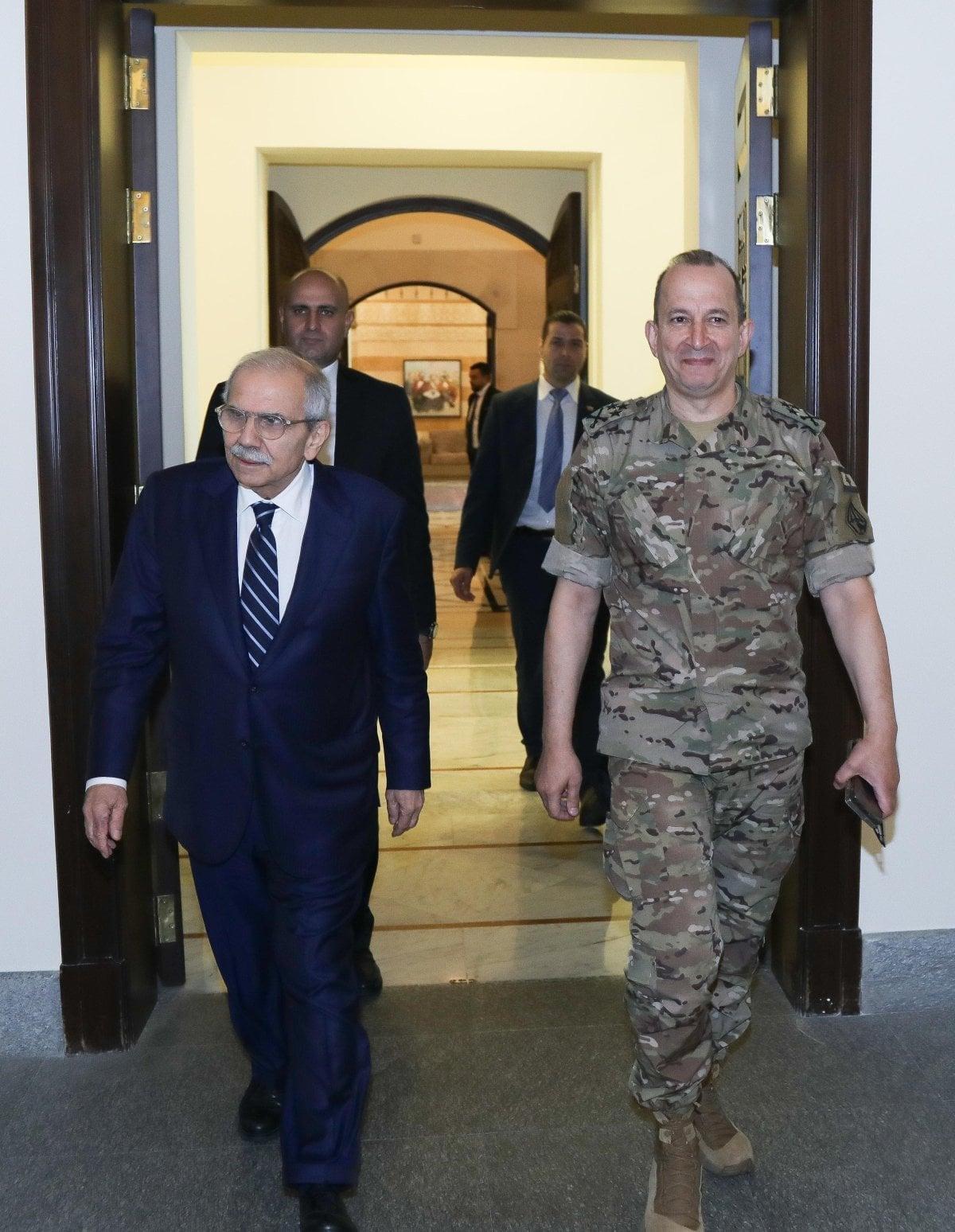
Salam met Army Commander Rodolphe Haykal to discuss south security. They reviewed the explosives file and Lebanese Army deployment to extend state authority.

5 outlets told this the same way.
Outlets did split on Hezbollah Announces Up To $14,000 Housing Allowances For Displaced People In Lebanon →
Explosives, press, waste
Prime Minister Najib Salam held meetings at the Grand Serai that centered on security, freedom of the press, and Beirut and Tripoli’s waste crises. Salam followed a series of security, media, and service-related files, and he received Army Commander General Rudolph Hekel to discuss the country’s security situation, especially in the south, and the Lebanese army’s deployment and missions to enforce the state's authority over all its territory. Salam praised the Lebanese armed forces’ efforts that led to the seizure of additional quantities of explosive materials in the Qasr- al-Harmal area, stressing the need to continue investigations to uncover all those involved and the parties behind smuggling and to refer them to the competent judiciary.
Salam also met the Secretary-General of the International Federation of Journalists, Anthony Bellanger, accompanied by the President of the Union of Journalists in Lebanon, Elsie Mafrej, and Salam said freedom of the press is “a fundamental pillar in any democratic system.” After the meeting, Bellanger said the International Federation of Journalists represents about 600,000 journalists worldwide, and he said the discussion addressed Lebanon’s commitment to fighting impunity, especially after the killing of 11 Lebanese journalists since 2023.
South security and seized explosives
Prime Minister Nawaf Salam met Tuesday at the Grand Serail with Army Commander General Rodolphe Haykal and discussed the security situation in the country, particularly in the South. Salam followed up on the deployment of the Lebanese Army and its duties in extending state authority over all its territory, the National News Agency said. Salam praised "the efforts of the Lebanese Armed Forces that led to the seizure of an additional quantity of explosive materials in the al-Qasr area in Hermel," and Salam stressed "the necessity of continuing investigations to reveal all those involved and the entities behind the smuggling operations, and referring them to the competent judiciary."
Salam affirmed his full support for the Lebanese Army in performing its duties, emphasizing "the importance of enhancing its capabilities and enabling it to protect the borders, safeguard the security of the Lebanese people, and extend state authority over all its territory." In a separate meeting, Salam welcomed a delegation from the “Development and Liberation” and “Faithfulness to the Resistance” blocs at the Government Palace to discuss the path to return, recovery, and reconstruction in areas damaged by Israeli attacks, especially projects planned in the south and in the southern suburbs of Beirut.

Reconstruction funding and political stakes
The “Development and Liberation” and “Faithfulness to the Resistance” blocs discussed projects implemented by the Council for Development and Reconstruction under the Lebanon Emergency Aid Project (LEAP), as Salam said the bids for these projects are entering the awarding phase in the southern districts. Salam expected the value of projects to be awarded before year’s end to be about $70 million of the loan allocated for the project, with residents of the south expected to see the results in the coming months. A separate meeting addressed projects to reinforce and rehabilitate damaged buildings in the southern suburb of Beirut, overseen by the Higher Relief Committee, with work to start in the coming days, according to available allocations and resources.
The meeting also covered efforts to rehabilitate infrastructure and essential facilities in affected areas, including roads, water networks, and public services, with emphasis on accelerating implementation in coordination with relevant administrations, institutions, and municipalities. In parallel, local efforts focused on removing the 'political flashpoints' of the explosive sequence that swept the country, from the explosives at Zahr al-Bidar to the boxes filled with explosives and weapons, which security forces thwarted in a plot to smuggle them from Syria to Lebanon via the town of al-Qasr in al-Hermel.