
“Liberate Their Bodies From Their Souls”: The Lies That Sell the Iran War
Key Takeaways
- Proponents frame the U.S.–Israel war on Iran as a liberation crusade.
- The Iranian regime remains in power while casualties rise and infrastructure is decimated.
- Environmental hazards proliferate as the conflict intensifies.
Global framing and Lebanon toll
From the White House to Iran’s former crown prince, proponents of the U.S.–Israel war on Iran sell it to the American people — and Iranians themselves — as a crusade for liberation.
“From the White House to Iran’s former crown prince, proponents of the U”
Instead, the regime remains in place as the death toll grows, environmental hazards proliferate, and civilian infrastructure is decimated.
As if the destruction inside Iran itself wasn’t enough, the war is starting to have serious ramifications for the global economy and, more to the point, expanding into neighboring countries.
Lebanon, in particular, has come into Israel’s crosshairs, with increasing Israeli incursions and missile strikes deeper into the country.
The number of dead there is approaching 1,000 with Israeli missiles razing entire apartment blocks in central Beirut this week and a ground invasion getting underway.
More than 1 million Lebanese people have been displaced.
“I think the Lebanese are suffering now, and there’s not really anyone who’s trying to save them,” says Afeef Nessouli, a Beirut-based journalist, speaking to The Intercept Briefing.
Experts critique of intervention framing
“It’s been really stunning to watch that so many people fall for this idea of ‘This is a human rights intervention’ — and yet it’s accomplished through massive human rights violations,” says Ali Gharib, a senior editor at The Intercept.
Commenting on Israel’s strategy of making failed states out of its adversaries in the region, he notes, the Israelis “don’t need [Reza] Pahlavi to work.
They don’t need him to go in there and become this democratic leader.
They just need him to lead a movement that damages the regime enough to put Iran into some kind of fractured state or state failure where it’s not a threat to Israel anymore.”
“We’ve had in the last 20 to 25 years, especially since the Iraq War in 2003, a lobby pushing for regime change in Iran,” says Sanam Naraghi-Anderlini, a veteran peace strategist.
“The Iraq version of regime change ended up being a catastrophe from a U.S. perspective, but actually from an Israeli perspective and from a Saudi perspective, and even from a UAE perspective, the decimation of Iraq has been a success because if Iraq had turned out to be a liberal democracy, it would’ve challenged Israel on the question of Palestine.
It would’ve challenged Saudi Arabia on the question of Islam and what is Islam.”
It’s a region in upheaval, and at the center are Israeli and American fictions about liberatory bombs.
Lebanon on-ground conditions
“I’ve been on podcasts with Israeli journalists where they’re telling me the Iranians wanted us to go in and liberate them,” says Naraghi-Anderlini, “And my response to them is: Liberate their bodies from their souls?”
“From the White House to Iran’s former crown prince, proponents of the U”
Listen to the full conversation of The Intercept Briefing on Apple Podcasts, Spotify, YouTube, or wherever you listen.
Transcript Ali Gharib: Welcome to The Intercept Briefing.
I’m Ali Gharib, and I’m a senior editor at The Intercept.
The U.S. and Israel’s war on Iran is stretching into its third week, with attacks having started on February 28.
The bombardment of Iran has remained relentless.
At least 1,400 people have been killed and more than 18,000 have been injured.
Civilian infrastructure has taken a hit too, including Iranian hospitals, pharmaceutical plants, educational centers, and civilian energy depots.
Iran, for its part, has retaliated by launching missiles and drones into Israel itself, as well as attacking U.S. bases in the region.
It has also targeted energy infrastructure in the nearby Gulf Arab states.
Meanwhile, Israel has increased its attacks on Lebanon, killing more than 900 people and displacing more than 1 million, and it’s preparing for a ground invasion against the paramilitary group Hezbollah in southern Lebanon.
On Wednesday, Israel expanded its airstrikes into central Beirut, the capital of Lebanon, where it razed residential buildings.
Afeef Nessouli, is a journalist and Intercept contributor based in Lebanon, where he has been reporting since November.
He joins me now from Beirut.
Afeef, welcome to The Intercept Briefing.
Afeef Nessouli: Yeah, thanks for having me.
Ali Gharib: Afeef, what can you tell us about what it’s actually been like in the parts of Lebanon where you’ve been reporting, since Israel increased its attacks on the country following the strikes against Iran?
AN: So I’m in an area of Beirut called Tayouneh.
Tayouneh is hundreds of meters away from the evacuation orders that have been all over the southern suburbs — it’s just right north of the southern suburbs — so it’s very loud here.
Right outside of my area, there’s hundreds of tents lined up.
It’s right outside of the park.
Horsh Beirut is this public space, and families from the southern suburbs have just lined up their tents and have had to make do with such little resources.
It’s really so hard to see so many people without shelter.
It’s just a catastrophic situation.
AG: It’s not entirely surprising to hear that, I think I read that 1 in 5 Lebanese people were displaced now, and especially with Israel expanding its attacks into Beirut and central Beirut, as we saw on Wednesday, decimating parts of central Beirut and imploding with missiles buildings in the center of town.
So what have you been seeing, what have you’ve been talking to people there, internally displaced people?
AN: So on Wednesday, Israeli airstrikes hit central Beirut.
They killed at least 12 people, wounding 41 people.
Going to the strike areas is really just awful to see and awful to witness.
Buildings are rubble.
It’s causing panic and fear among people in places that were not told to evacuate.
I talked to a mother who was displaced from the southern suburbs, a neighborhood called Bourj Al Barajneh.
She’s been staying under this huge statue of a crescent moon right outside of Al Amin Mosque in downtown Beirut.
She’s mostly just worried for her kids — worried that they’re not getting enough to eat, worried about them just being terrorized, and also it’s just so cold.
You have to understand: Everything is all hands on deck.
So a lot of schools are being turned into shelters.
The stadium has been turned into a shelter.
One I visited in Ras, Beirut, which is in northwestern Beirut, over 200 families I think were in and out of that shelter.
People are sleeping on the floors.
It’s cold; and you’re in a difficult situation.
You’re in a shelter with many people who have lost everything.
You’re trying to survive.
I spend a lot of time with an organization called Truth Be Told that’s passing out hot meals from donations and prescription medication around Horsh Beirut, where all the families are lined up in tents.
What you’re mostly hearing is that people don’t have anywhere to go.
They have nowhere to sleep.
And everywhere they do have to sleep is incredibly uncomfortable.
There are men sleeping in their cars.
There are cars everywhere.
People are struggling.
They’re struggling to survive in an economy that was already just decimated from the last few years.
AG: I’m curious, on the geopolitics, Afeef — how do you think these attacks have affected Hezbollah, the Lebanese paramilitary group from the south of the country but has become a central player in Lebanese politics and obviously a group closely linked with Iran?
Is your sense that Hezbollah has been weakened by these attacks? Is the group continuing to be diminished or are they holding pretty firm at this time?
AN: I can say that a lot of people inside of Lebanon and a lot of people outside of Lebanon had seemed to count Hezbollah out, for the most part.
They had seemed decimated, especially after the Secretary-General Hassan Nasrallah was killed.
It seemed like they were taking a long rest period.
So a lot of the criticism is, Israel had had over 10,000 ceasefire violations — and it took the Supreme Leader Ali Khamenei to be assassinated for the group to push into the war and take decisive action.
AG: And of course, you’re talking about Hassan Nasrallah, the late leader of Hezbollah who was killed by Israel during an earlier round of its war with Lebanon — [after] a pager attack that Israel lodged against Lebanon, where it loaded pagers with explosives and meticulously distributed them to Hezbollah officials, killing scores of Hezbollah officials as well as countless civilians.
AN: After the supreme leader was assassinated, I went to the public mourning in Dahiyeh.
It was literally the evening of when Israel started striking the southern suburbs, and you could tell that the emotion was palpable.
People were crying, people were wailing, people were chanting, people were angry.
It was extremely well attended, it was extremely big.
Ultimately, the same night, I was awoken in the middle of the night by two really loud strikes on Dahiyeh.
It was really clear that Hezbollah had decided to take Lebanon into the war.
And a lot of Lebanese people were pretty upset at that.
They felt like they weren’t given any consent; they were not able to consent to this sort of act.
It’s become a pretty polarizing subject.
A year ago, when Hezbollah entered the war on behalf of Gaza, I think people were more amenable to the idea.
They understood that Israel wanted to make incursions into the country and occupy land.
I think in the last year, having not really responded to a lot of ceasefire violations in the south, but responding to Ali Khamenei’s assassination was just a disappointment to a lot of Lebanese people who felt, “Well, are you acting on behalf of Iran, or are you acting on behalf of our best interest?”
It seems like they’ve lost some support on the ground.
So there is that, there is a decimation of their reputation right now, from what I am at least gathering on the ground.
But also there’s a lot of people who understand or the people who are on the front lines, they’re the ones who have to self-help when all of their houses are demolished.
And there’s military access roads for Israeli occupation soldiers to literally making their demolished houses gone forever because now there’s military access roads paved on top of them.
In Lebanon, there’s so many political opinions.
And when something like this happens, it really feels like the people of the country are pitted against each other.
It feels like this big psychological operation done to Lebanese people for decades to separate them into sects, into tribes, and to get them destabilized, while all of these outside forces are manipulating their lived experience, their day-to-day experience.
I think most people really just want to have a Lebanon that they can depend on economically, that they can depend on politically, and that they can depend on in general for having a life that isn’t burdened by cycles of violence every few months.
Sectarian manipulation and implications
Touching on that a little bit, I’ve talked to my friends, Lebanese friends, who admittedly are probably very self-selecting, but it seems they have sensed a resentment.
You were sort of touching on this, a resentment of the fact that between the so-called ceasefire between Israel and Hezbollah, and the Israeli assassination of Ali Khamenei, the supreme leader of Iran, there were some tens of thousands of Israeli ceasefire violations recorded, and none of these prompted a response from Hezbollah.
But their willingness to go in retaliation for the assassination of a foreign leader — do you sense that kind of resentment?
Is that one of the things contributing to Hezbollah’s diminishing stature?
AN: Yeah, so I spoke to one woman last night.
She’s in her mid-30s.
She has family from the south.
Someone who theoretically supported Hezbollah getting into the war on behalf of Gaza after October 7.
Someone who understands having land in the south — family homes in the south — that have been under fire for really decades.
She says that, in the last year and a half, since the so-called ceasefire was brokered, after 10,000 violations from Israel, after Hezbollah really didn’t respond to all of the violations, and yet they woke up on behalf of the supreme leader’s assassination — just doesn’t sit well with her.
She doesn’t see the reason why Lebanon would have to be in this fight.
But on the other hand completely, there’s also this sophisticated understanding, obviously, that there’s a neighbor to the south that has occupied an entire country and wants to have the Litani River be its northern border.
There is this idea that Israel has been manipulating and manufacturing this feeling for a while, that they are coming in and they were going to come in and they were attacking Lebanon much before Hezbollah had ever come around.
The fact of the matter is that Israel really does want to sow discord in the sectarian populations of Lebanon.
They have dropped leaflets a couple days ago in central Beirut saying, “Lebanon is yours. You can inform on Hezbollah” and like they shared a QR code.
And then they target residential buildings and say, “We’re coming after Hezbollah” and cause psychological damage and physical damage and ruin so much peace for so many people.
Ultimately what ends up happening is that a lot of people discriminate against people from the south, people from Shia backgrounds, because they’re basically afraid that if they let them into their buildings or try to take care of them, they’re going to be around people that are affiliated with Hezbollah and are going to be targeted.
A lot of these people are just displaced.
They’re unhoused in rain, their houses have been destroyed, and then their fellow patriots are literally just terrified that being around them or letting them in is going to result in Israel killing all of them.
That’s a real fear on the ground right now.
It’s something that feels very beneficial to Israel and the U.S. to have: sects in Lebanon fighting each other all of the time not paying attention to the slow incursions — the slow pushing forth — on the southern border.
Also, it’s probably beneficial to countries like Iran to pour money, pouring arms, have proxies that are fighting its battles.
Ultimately what happens is that the situation on the ground becomes unbearable.
Everybody’s trying to pressure the people to orchestrate some heroic political ends that is impossible for the people to do because they’re obviously being manipulated by powers much larger than them.
I think most people really just want to have a Lebanon that they can depend on economically, that they can depend on politically, and that they can depend on in general for having a life that isn’t burdened by cycles of violence every few months.
They know that.
They know that they’re just political pawns who are always at the
More on Iran
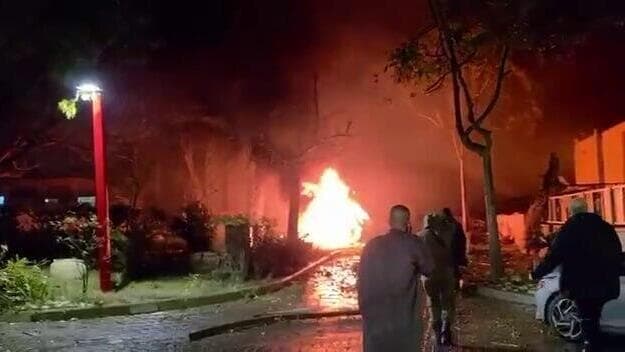
Iran Attacks Israeli Towns Dimona and Arad Near Israel's Main Nuclear Research Center, Dozens Wounded
43 sources compared
Iran Attacks Dimona in Retaliation for Natanz Strike
44 sources compared

Iran Attacks Diego Garcia with Long-Range Missiles, Targeting U.S.-UK Base
82 sources compared
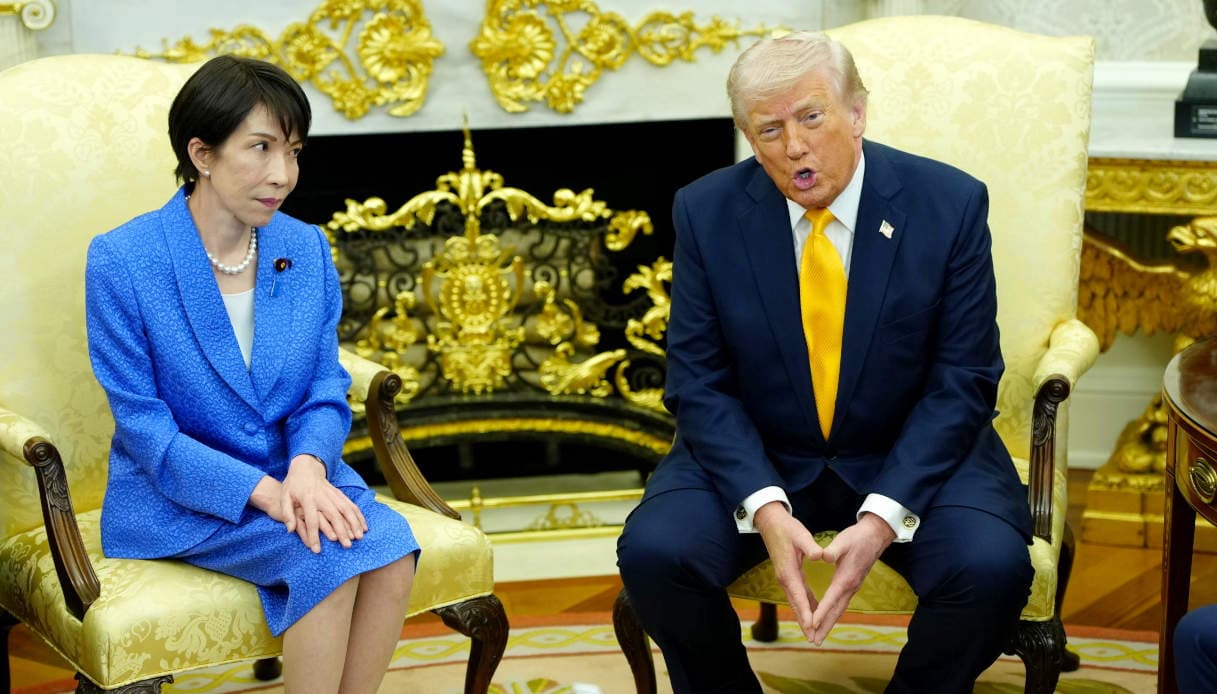
Trump Defends Iran War by Citing Pearl Harbor
12 sources compared