Africa · 05 May, 2026 · 6 min read
Libya, Algeria, and Tunisia Adopt Tripoli Declaration to Jointly Manage North Sahara Aquifer
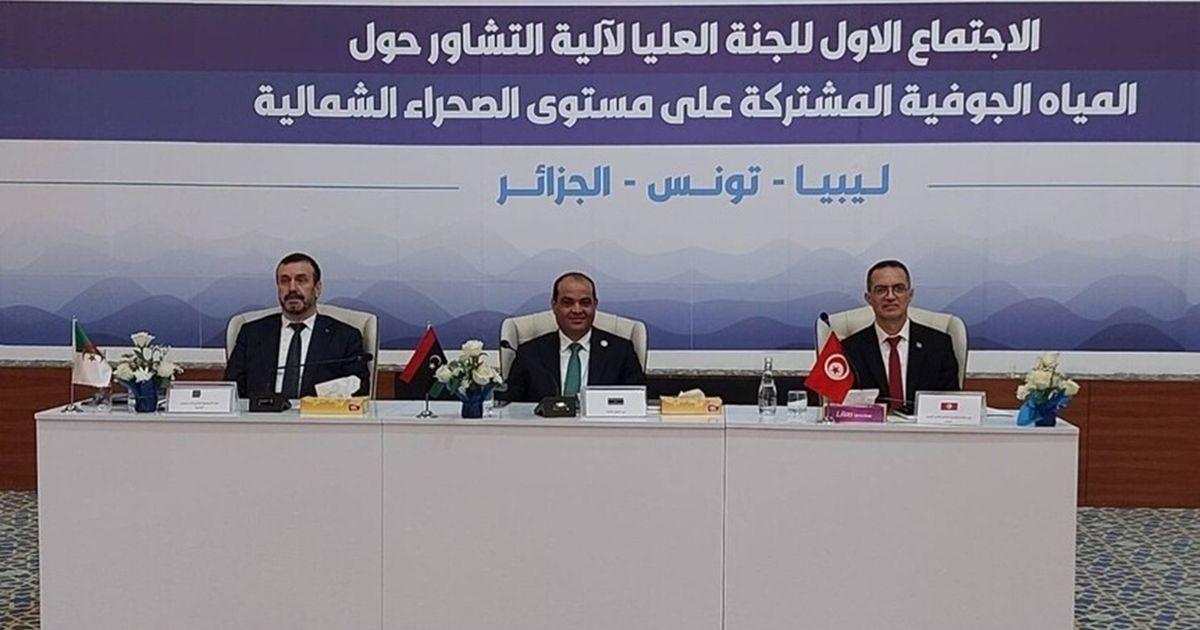
Tripoli-hosted trilateral meeting launched the Consultative Body on Groundwater for the Northern Sahara aquifer. Libya, Algeria, and Tunisia signed an agreement establishing a cross-border groundwater consultation mechanism.
How the quota/allocation concept is described (explicit quotas vs consultative/advisory council language).
11 of 12 outlets skipped it: tunisia’s Decree No. 23 of 2025 and its publication in JORT formalize entry into force of the trilateral agreement..
18outlets compared
Same story, two versions
tap a side to read it in full
APAnews
““have officially adopted the “Tripoli Declaration,” a landmark agreement establishing a framework for the equitable and sustainable exploitation of the North Sahara Aquifer System.””Read the original ↗
AAnadolu Ajansı
““agreed to begin the 'Consultative Body on Groundwater for the Northern Desert' with active work to protect the groundwater stock in the border areas among them.””Read the original ↗
One framing emphasizes a treaty-like “Tripoli Declaration” setting a governance framework, while another emphasizes operationalization—beginning active work and implementing internal regulations—shifting reader focus from principles to execution.
Tripoli Declaration and quotas
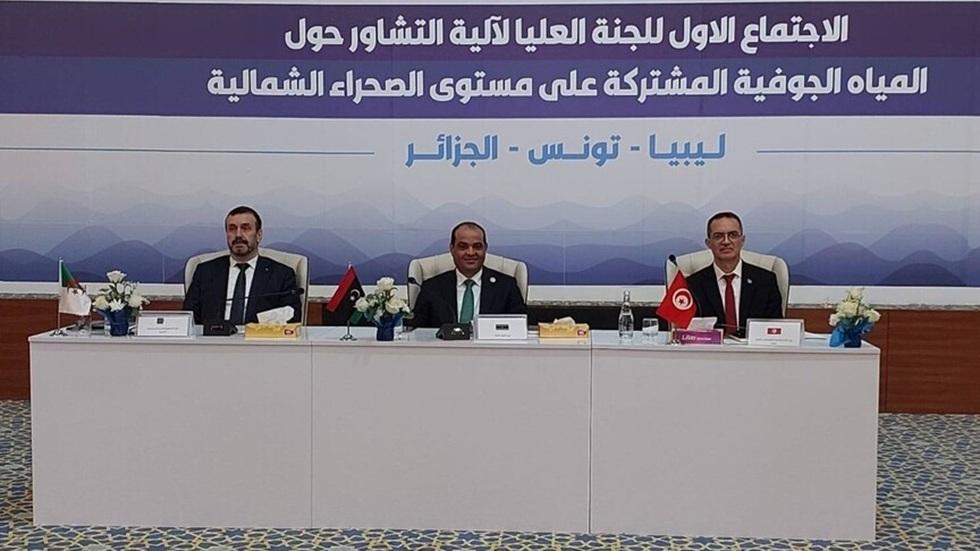
Libya, Algeria, and Tunisia moved to jointly manage the North Sahara Aquifer System after adopting the “Tripoli Declaration,” a framework for the “equitable and sustainable exploitation” of the transboundary groundwater resource.
“officially adopted the “Tripoli Declaration,” a landmark agreement establishing a framework for the equitable and sustainable exploitation of the North Sahara Aquifer System”
The agreement was announced in Tripoli on Wednesday, with the text focusing on coordination and “data-sharing mechanisms” to regulate water use and mitigate risks such as “overexploitation and pollution.”
The APAnews report says the North Sahara Aquifer System holds an estimated “40,000 billion cubic meters of water,” with “approximately 62% located in Algeria, 30% in Libya, and 8% in Tunisia.”A
It also states that rising demand has pushed drilling to depths “up to 1,000 meters,” describing the resources as “largely non-renewable.”
The framework confirms a “consultation mechanism” that will assign “specific water quotas” to each country based on monitoring models of water levels and associated risks.
APAnews adds that “Algeria will hold the rotating presidency of this regulatory body for an initial three-year term,” tying the governance schedule to an initial regulatory cycle.A
In the same report, Hussein al-Talou of Libya’s Ministry of Water Resources is quoted saying monitoring will be conducted jointly, while Libyan Minister Hosni Awedane and Tunisian Minister Ezzedine Ben Cheikh highlight the “optimal use” of the aquifer as a necessity for regional food security.
How the mechanism started
Beyond the declaration, multiple reports describe the operational start of a consultative structure for groundwater management in the Northern Sahara.
Anadolu Ajansı says that during a trilateral ministerial meeting in Tripoli, Libyan Minister of Water Resources Al-Hasani Oudan, his Tunisian counterpart Az-Din Bel Sheikh, and the Algerian ambassador to Libya, Abdel Karim Rakaybi, agreed to begin the “Consultative Body on Groundwater for the Northern Desert” to protect groundwater stock in border areas.A
The same Anadolu Ajansı account says the participants stressed the “need to coordinate efforts and strengthen regional cooperation in water resources management to face the region’s growing challenges,” and it cites a closing statement titled the “Tripoli Statement.”A
It adds that the statement emphasized “exchanging information” and “the commitment to the equitable use of transboundary waters,” while also noting adoption of internal rules and approval of annual financial contributions.
A separate report on a5r5br.net similarly describes the trilateral meeting in Tripoli and says the participants announced the “actual launch of the work of the Consultative Authority on groundwater in the Northern Sahara” and the “commitment to the equitable use of transboundary waters.”
That account also says the meeting resulted in “adoption of the internal regulations of the Consultative Authority,” “approval of the member states' annual financial contributions,” and “the presidency of the Authority for the current cycle assigned to the Algerian side.”
The Libya Observer likewise describes the same Tripoli ministerial meeting as producing adoption of internal regulations, approval of annual financial contributions, and the Tripoli Statement, with Algeria assigned the presidency “in its current term.”
Tunisia ratifies the deal
Tunisia’s role in the groundwater framework moved from participation to formal legal ratification, according to Tunisie numerique.
“Decree No. 23 of the year 2025”
The outlet says Tunisia “has formalized the ratification of a key agreement for the management of shared waters of the Northern Sahara with Algeria and Libya,” describing it as a “crucial advance in regional cooperation on water resources.”
It specifies that the step was formalized by “Decree No. 23 of the year 2025,” and it says the ratification was published in “Issue No. 4 of the Official Journal of the Tunisian Republic (JORT) on Friday, January 11.”
Tunisie numerique also states that the decree contains two main articles: “Ratification of the agreement, signed on April 24, 2024 in Algeria,” and “Publication of this agreement in the JORT, formalizing its entry into force.”
The report says the agreement aims to establish a “trilateral consultation mechanism” among the three countries for the exploitation of groundwater, with the joint management of the Northern Sahara Aquifer System at the center of concerns.
It adds that the agreement was discussed during a trilateral meeting in Algiers in April 2024, bringing together the agriculture ministers of the three countries.
The same account ties the political groundwork to a trilateral summit held on April 22, 2024 in Tunis, “in the presence of Tunisian President Kais Saied, Algerian President Abdelmadjid Tebboune, and Libyan Head of the Presidential Council Mohamed Younes Al-Manfi.”
Scientific and historical pressure
Local reporting and a longer dossier frame the groundwater agreement as a response to decades of rising extraction and the fragility of fossil aquifers.
Réalités Magazine’s dossier, “Oasis 1/2,” says the Sahara and Sahel Observatory (OSS) was set up to facilitate partnerships to tackle “the common challenges linked to the shared management of water resources,” and it describes OSS as an international African organization founded in 1992 with “33 countries” and “12 organizations representing West, East and North Africa.”

The dossier says that in partnership with Algeria, Libya, and Tunisia, and after workshops between 1994 and 1997, OSS launched studies that laid groundwork for the SASS program with support from UNESCO, FAO, IFAD, and CILSS.
It then describes the Northern Sahara Aquifer System as extending over “more than one million square kilometers,” and it states that exploitation increased from “0.5 to 3 billion cubic meters per year” over the past five decades.
The dossier warns that “this growing pressure creates many risks: cross-border tensions, degradation of water quality, the progressive disappearance of artesian conditions, depletion of natural springs, etc.”
It also describes the aquifer recharge as difficult because of depth and geology, distinguishing “fossil aquifers” from shallower groundwater bodies.
The dossier’s framing connects the governance push to the physical constraints of the system and to the need for monitoring and sustainable exploitation.
Caution, quality, and governance
Other local and regional accounts emphasize that the aquifer is not simply a resource to be expanded, but a system whose overuse can degrade water quality and alter conditions.
“the unjust exploitation of this fossil, non-renewable aquifer has affected water quality, with salinity increasing”
In diwanfm.net’s account, Hussein Al-Rihili says the “unjust exploitation” of the aquifer over the past years has deprived it of “its geological and technical characteristics, particularly with regard to the artesian aspect.”
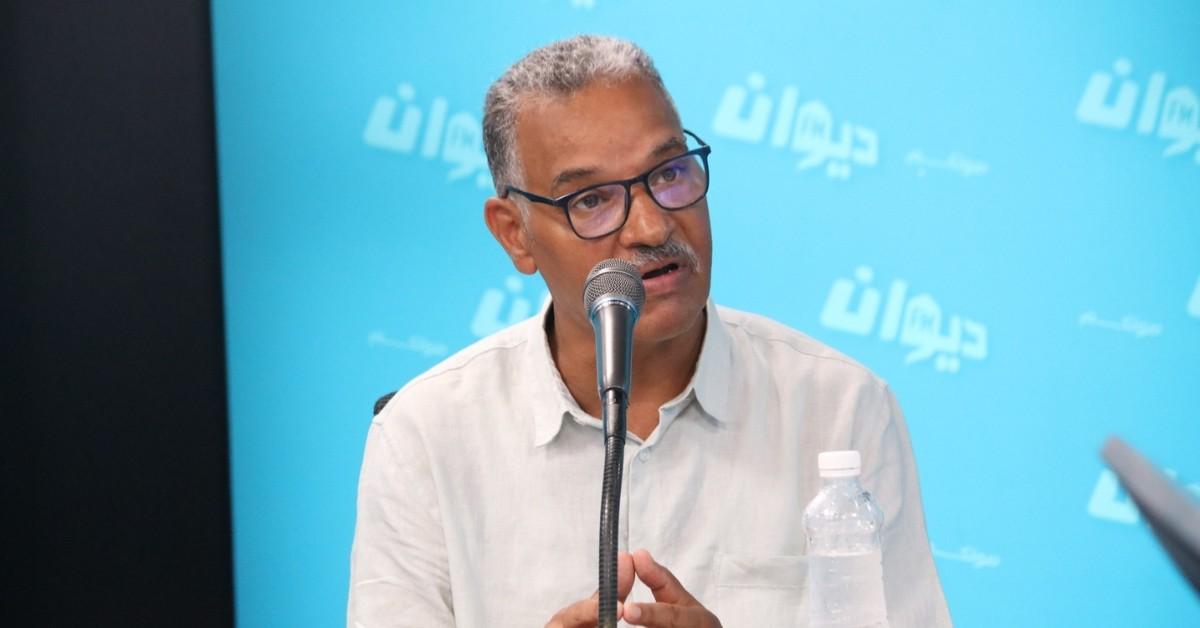
The same report says Tunisia “did not exploit these groundwater resources to a large extent compared with Algeria and Libya, due to the high cost of drilling and the energy cost of pumping,” and it links overexploitation to rising salinity, stating that “the unjust exploitation of this fossil, non-renewable aquifer has affected water quality, with salinity increasing.”
It also says the effects of overexploitation have become evident “especially in Libya and Algeria,” and it describes the agreement’s aim as supporting coordination so the states can “govern the management of these vital resources through a participatory and sustainable approach.”
The report urges “the need to develop a clear strategy on how to exploit this water aquifer and to rectify past mistakes,” explicitly tying future governance to correcting earlier patterns.
Meanwhile, the Tunisian Academy of Sciences, Letters and Arts event described by Réalités Magazine’s Beït al-Hikma focus highlights the same tension between hope and caution, saying the SASS “remains poorly renewable and cannot be exploited in its entirety without risk.”
Together with the Tripoli Declaration’s emphasis on “overexploitation and pollution” and the consultative body’s focus on exchanging information, these accounts portray governance as a response to both depletion risks and quality degradation.