Europe17 July, 20262 min read
Macron and Merz Relaunch Franco-German Defense After SCAF Failure, Merz Announces Nuclear Exercise
This article is an automated aggregation of coverage from news outlets. Our editorials offer in-depth analysis curated by the NewsCord team.
France and Germany pledge stronger cooperation on advanced nuclear deterrence and missiles. German forces will participate in French nuclear deterrence exercises.

After FCAS collapse
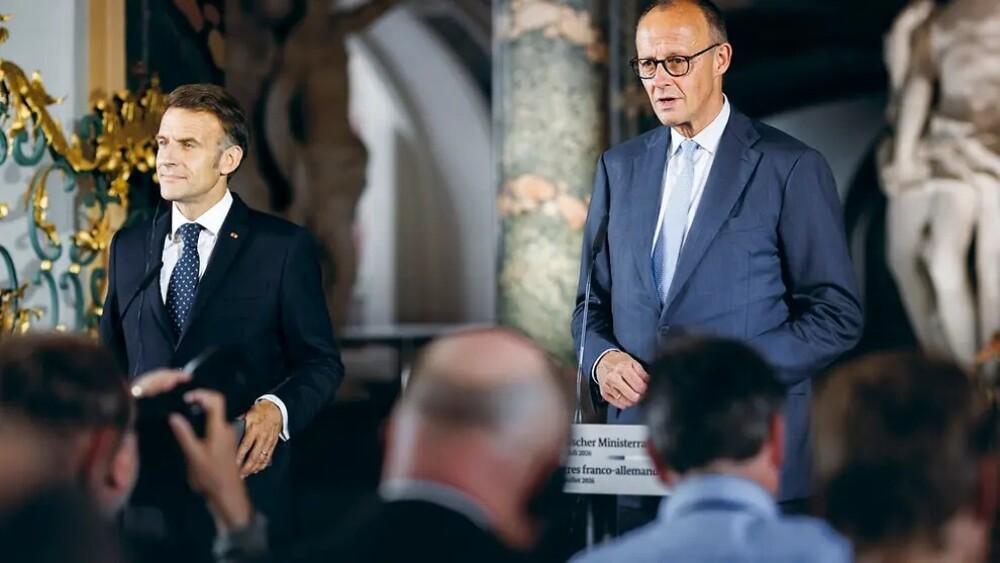
France and Germany met in Brühl near Cologne and at the Nörvenich air base after the “resounding failure” of the joint Future Combat Air System (SCAF) project, with both leaders seeking to “strengthen their cooperation in advanced nuclear deterrence and conventional missiles.” At the Nörvenich base, Chancellor Friedrich Merz announced that “Starting this year, we will take part in a nuclear exercise of the French armed forces,” linking the step to a broader push for “European deterrence.”
The talks also came with a concrete operational backdrop, as a Rafale from the French strategic forces was present at Nörvenich and the two sides said it “marks the first operational step” of the cooperation. Macron and Merz framed the effort as a relaunch of Franco-German defense momentum after the FCAS/SCAF collapse, while also tying it to conventional priorities such as “early warning” and “missile defense” discussed in the run-up to the councils.
Quotes and political timing
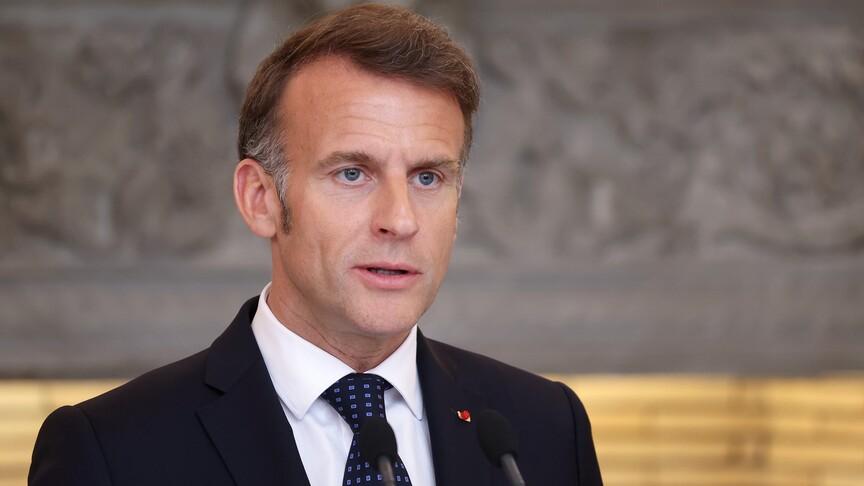
Macron told reporters that “We must be realistic; we haven't managed to implement everything we decided a year ago,” referring to the Toulon meeting held in August 2025 and the subsequent abandonment of the joint combat aircraft project. Friedrich Merz said he had “not turned a blind eye to the hard reality” and announced a “new working plan on cooperation in the defense industry,” describing it as “concrete, realistic and targeted.”
The meetings were also staged against the political calendar, with Ouest-France noting that the Franco-German defense and security council at the Nörvenich air base was set for Friday, July 17, and that the discussions were to address cooperation on nuclear deterrence and the way forward after the “near-total failure” of the joint fighter aircraft project “Scaf.” In parallel, Macron and Merz were expected to discuss European competitiveness and the EU budget, with Ouest-France saying the aim was to reach a result “by the end of the year,” and to review digital regulation and anti-disinformation initiatives.
What Europe gains next
The agreements in Brühl and at Nörvenich were presented as a way to “strengthen European deterrence” while keeping the French nuclear decision-making exclusive, with Macron’s concept of “advanced deterrence” described as involving eight European countries “without any sharing of the ultimate decision.” France 24 said the cooperation would allow partner countries to participate in French nuclear exercises using conventional means and for France to deploy, “temporarily, Rafale aircraft capable of carrying a nuclear bomb,” while keeping the “exclusive prerogative of the French president.”
Beyond nuclear steps, the leaders also tied the relaunch to conventional and industrial interoperability, with France 24 noting that after the FCAS/SCAF failure the two countries agreed to work on “a common standard to ensure interoperability” among in-flight combat systems from drones to fighter jets. Macron and Merz also positioned the effort as part of a wider European security agenda, with Ouest-France describing the meeting’s focus on establishing the multinational force in Ukraine and cooperation on nuclear deterrence as Europe faces the Russian threat and “American disengagement.”