Canada10 November, 20252 min read
Measles Outbreak Forces WHO to Strip Canada of Measles Elimination Status After 27 Years
This article is an automated aggregation of coverage from news outlets. Our editorials offer in-depth analysis curated by the NewsCord team.
Canada lost measles elimination status after over 12 months of continuous transmission since October 2024 The outbreak has caused more than 5,000 cases across nine provinces and one territory
14 outlets told this the same way.
Canada's Measles Status Loss
Canada has lost its measles elimination status after nearly three decades. Public health authorities attribute the reversal to more than 12 months of uninterrupted transmission since an outbreak began in October 2024. Multiple outlets report that the Pan American Health Organization (PAHO) formally notified Canada of the loss after continuous spread of the same virus strain.
“Canada has lost its measles elimination status due to a large, ongoing outbreak that has persisted uninterrupted since October 2024, according to the Public Health Agency of Canada and the Pan American Health Organization (PAHO).”
The Public Health Agency of Canada (PHAC) confirmed the development and reported more than 5,000 cases this year. Local reporting traces the initial case to an infected traveler who attended a wedding in New Brunswick. Regional and international outlets emphasize that this setback also undermines the Americas’ regional measles-free certification.

However, many countries in the region still retain their national measles-free status. Notably, sources consistently credit PAHO and PHAC with the decision; none attribute it directly to the World Health Organization in these reports.
Canada Outbreak Overview
The outbreak has spread across most of Canada, with reports noting more than 5,000 infections. Infections are concentrated in under-vaccinated communities and show significant variation between provinces. Ontario and Alberta are repeatedly described as the hardest hit regions.
British Columbia has reported hundreds of cases, heavily concentrated in the northern areas. The Northeast accounts for the bulk of British Columbia’s total cases.
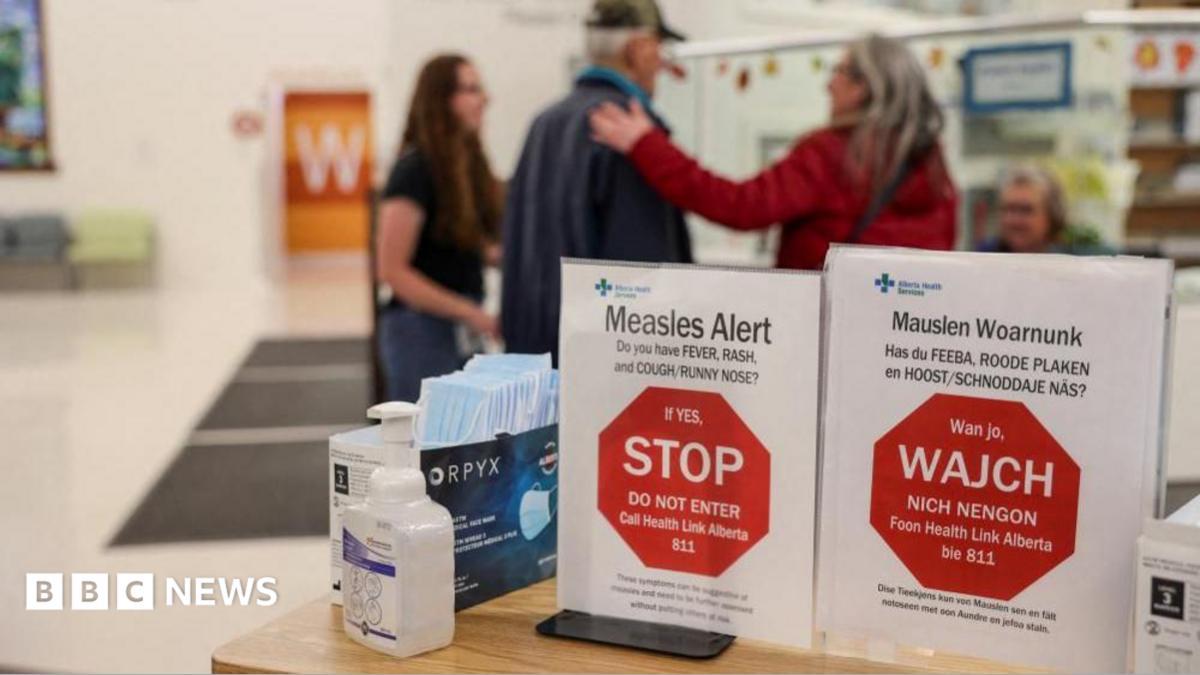
Some reports highlight severe outcomes, including infant fatalities. Sustained transmission has now crossed the 12-month threshold in multiple jurisdictions.
Factors Behind Vaccination Decline
Multiple sources point to declining vaccination coverage and access barriers as key drivers of the issue. There are also pockets of vaccine hesitancy and specific under-immunized communities contributing to the problem. Public health organizations urge achieving 95% two-dose coverage to prevent sustained transmission.
“PAHO urges Canada to increase vaccination rates to 95% to control the spread.”
Analysts describe the reversal in vaccination rates as a broader regional regression. Cross-border dynamics also play a role in the spread of the virus.
Genetic analyses link Canada’s virus to outbreaks in Texas and Chihuahua, Mexico. These outbreaks occur amid wider North American surges and falling U.S. kindergarten immunization rates.
Canada Disease Control Efforts
Authorities say the setback is reversible if Canada interrupts transmission of the current strain for at least 12 months. PHAC is coordinating with PAHO and provincial partners on vaccination, surveillance, and data sharing. Some jurisdictions report progress—Alberta has seen a notable drop in cases and increased vaccinations—while others continue to tally substantial totals.
Ontario declared its outbreak over in October even as Alberta remained near 2,000 cases. Not all officials are talking publicly as efforts continue.
Measles Resurgence in Americas
The loss reverberates across the Americas. Outlets note that Canada’s reversal undermines the region’s measles-free certification even as dozens of countries maintain theirs. Experts frame the slide as a backward step after the Americas only recently regained measles-free status by controlling Brazil’s outbreak.
“The loss of status means the Americas region as a whole no longer holds measles-free certification, although 34 other countries in the region retain theirs.”
The U.S. faces its own risk amid large outbreaks and falling kindergarten immunization. Regional data show severe hotspots—including Chihuahua, Mexico—as part of a broader resurgence.
