Full story
A rare total eclipse
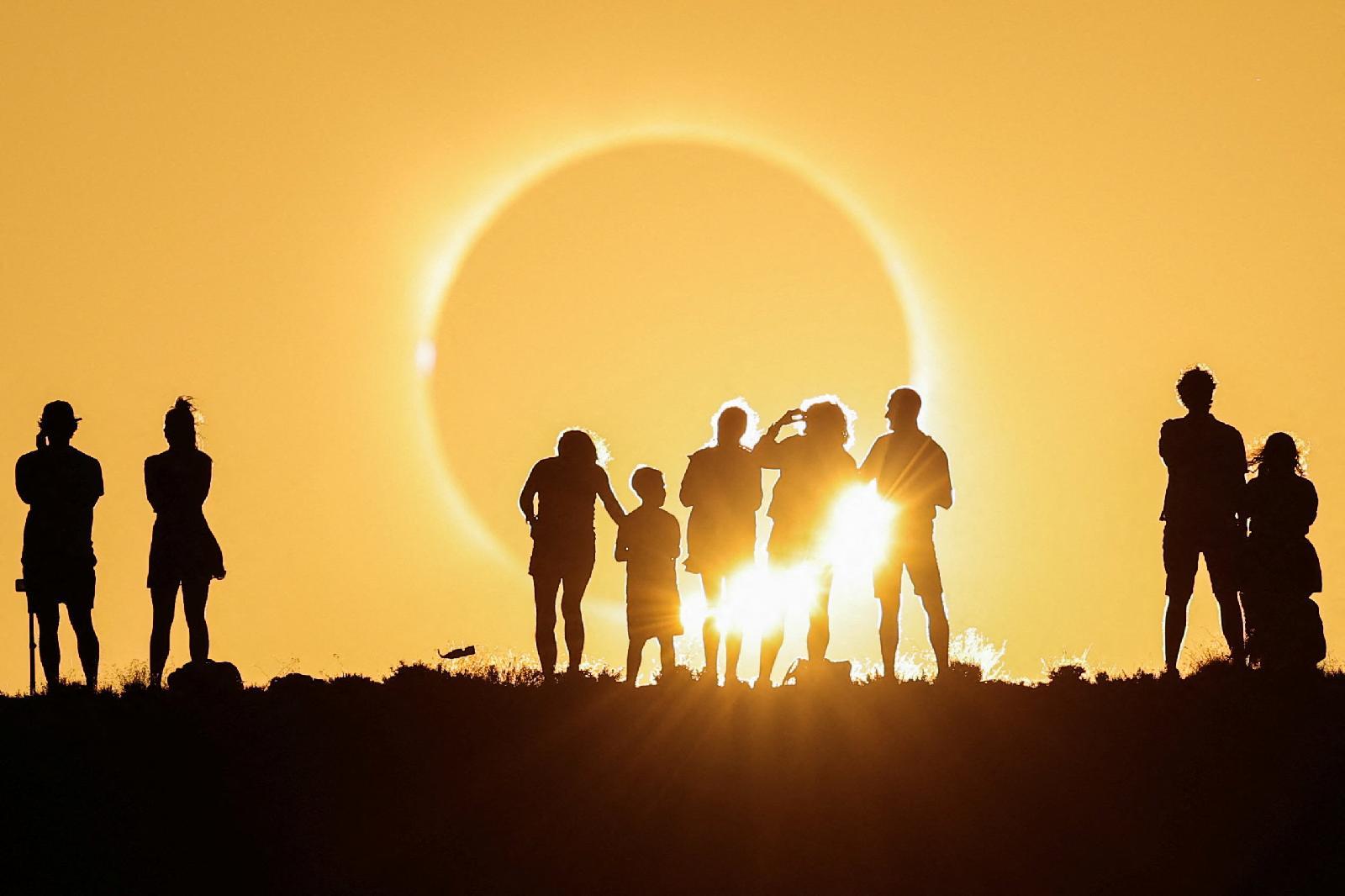
Across Europe, crowds gathered as the Sun’s light was fully blocked by the Moon in the continent’s first solar eclipse in 27 years, with totality expected to last less than 2 and a half minutes off Iceland’s west coast.
“Totality, when the Moon completely covers the Sun's light, was expected to last less than 2 and a half minutes”
ABC News & Headlines said totality reached a small patch of Portugal and then Spain just before sunset, and that the eclipse ended over the Mediterranean.

In the UK, the BBC reported that the partial eclipse peaked shortly after 19:00 BST when most saw more than 90% of the Sun covered by the Moon, while parts of Greenland, Iceland and Spain experienced complete darkness and the spectacle of a total eclipse.
The BBC also described the path of the total eclipse beginning at the northern tip of Siberia in Russia, curving around the Arctic Ocean to arrive in Iceland before sweeping southwards to treat the UK to part of its wonder.
In Spain, the BBC placed totality at roughly 19:30 BST (20:30 local time), when the Sun, Moon and Earth were perfectly aligned and the total eclipse lasted for less than two minutes.
Crowds, clouds, and safety
The BBC said large crowds at viewing sites across the UK and Europe reacted with gasps and cheers, and astronomy enthusiasts said it served as a reminder of how "amazing" the Universe is.
In Spain, the Guardian quoted reserve astronaut Sara García Alonso saying, "It was one of the most beautiful things I’ve ever seen in my life," and Pablo Álvarez Fernández adding, "It had been described to me so many times, but it was much more beautiful than what I had expected."
But in Iceland, the Asian outlet 매일경제 reported that expectations turned to regret as thick clouds and rain continued in major areas, including the capital Reykjavik, making many unable to see a decisive moment.
STV News said forecasters warned the rare partial solar eclipse in Scotland was likely to be hidden behind clouds in many areas, while the Met Office identified the west of Scotland as the best location to view the eclipse.
STV also stressed that regular sunglasses were not safe, saying only specialised eclipse glasses are safe to use, and it cited NASA’s guidance that eclipse glasses are several thousand times darker than sunglasses.
What comes next
Looking ahead, ABC News & Headlines said the next total solar eclipse is expected in August 2027 to be visible across northern Africa, and it added that in July 2028 Australia and New Zealand will also have a chance to see the skies go dark.
“the next total solar eclipse is expected in August 2027 to be visible across northern Africa”
RTVE.es set Spain’s next eclipse date as August 2, 2027, saying the Moon will once again come between Earth and the Sun and be observable in its totality in the cities of Ceuta and Melilla and in much of Andalusia.
RTVE.es also described the eclipse timing for Spain, saying it will begin at 9:30 local time over the Atlantic Ocean and end at 14:43 over the Indian Ocean, with 100% obscuration occurring between 10:45 and 10:50.
For the longer sequence, El Español said the next solar eclipse visible in Spain will be total on August 2, 2027 with a duration of 4 minutes and 38 seconds, and it added that on January 26, 2028 there will be an annular eclipse that will traverse the Peninsula and cap the so-called 'Iberian Trio'.
El Español also warned that during partial phases people should not look directly at the Sun without proper protection, while it noted that the exception occurs during totality when the solar disk is completely hidden.