Full story
Anak Krakatau activity spikes
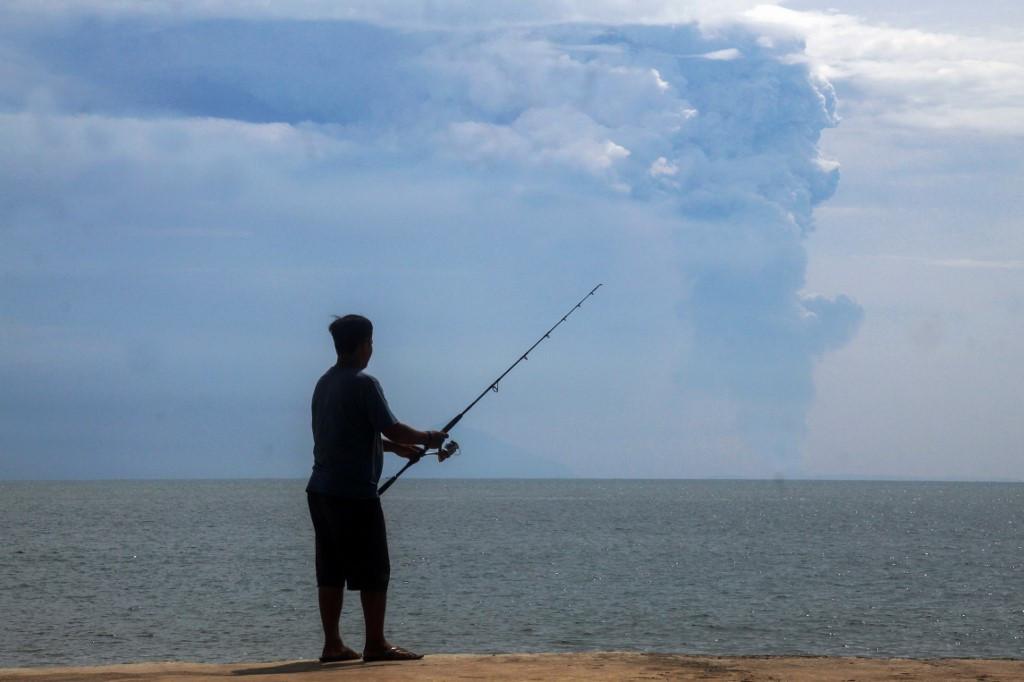
Mount Anak Krakatau has recorded a significant increase in volcanic activity since June 10, and it has erupted more than two dozen times in recent days, sending ash plumes hundreds of meters into the sky and blanketing nearby Sebesi Island in volcanic ash.
“has erupted more than two dozen times in recent days”
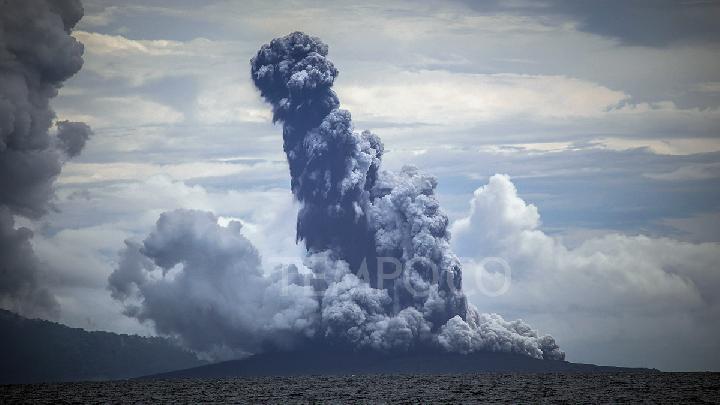
The Jakarta Post said that on Monday the volcano erupted 20 times between 1:30 a.m. and 10 p.m., with ash plumes rising as high as 400 meters above the crater.
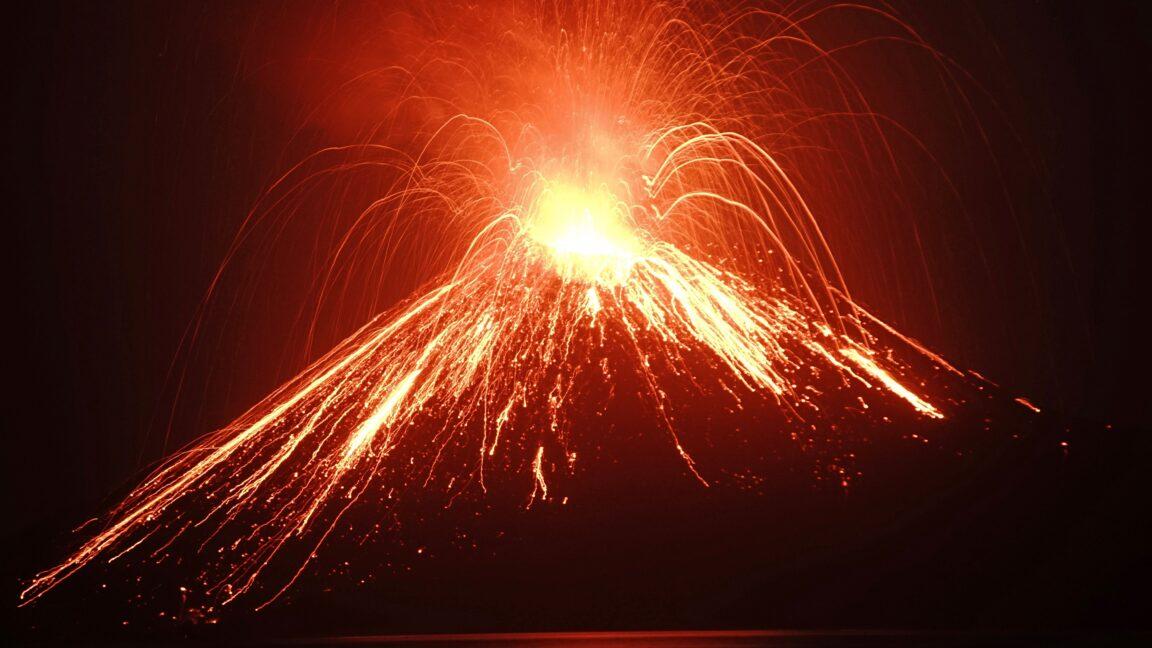
Tempo.co English reported that Indonesia’s Geological Agency of the Ministry of Energy and Mineral Resources (ESDM) recorded eight eruptions accompanied by incandescent lava ejections from Mount Anak Krakatau in South Lampung, Lampung, with its activity status remaining at Level III (Alert/Siaga).
Tempo.co English added that the eight eruptions were recorded during the observation period on Sunday, August 16, 2026, from 00:00 to 24:00 WIB (Western Indonesian Time).
Alert Level III and monitoring
Andi Suwardi, an official at the Mt. Anak Krakatau Observation Post, said the volcano’s alert status remained at Level III (watch), the second-highest level in Indonesia’s four-tier volcanic alert system, despite a recent increase in activity.
The Jakarta Post quoted Andi Suwardi saying, “Volcanic activity at Mt. Anak Krakatau continues to fluctuate, rising and falling. That is why its status remains at Level III,” as quoted by Kompas.com.
Tempo.co English reported that PVMBG instruments recorded eight eruption earthquakes with amplitudes of 43–60 mm and durations of 34–59 seconds, along with 46 emission earthquakes, 10 harmonic tremors, and 11 hybrid/multi-phase earthquakes.
Tempo.co English also said PVMBG issued strict recommendations for the public and tourists, urging them not to approach Mount Anak Krakatau or engage in any activities within a three-kilometer safe radius of the active crater.
Historical Krakatau context
Ars Technica placed the current Sunda Strait setting in a longer arc of volcanic history, recalling that on the morning of August 27, 1883, a volcanic eruption had obliterated two islands in the strait between Java and Sumatra and most of a third.
“More than 36,000 people perished”
The Ars Technica account said that “More than 36,000 people perished,” with the majority in devastating tsunamis that raced outward from the colossal explosion.
Ars Technica also described how Victorian-era telecommunications made it the first time in history that people around the globe could begin to document, in near real time, the immediate and long-term effects of a catastrophic volcanic eruption.
It further reported that in the months and years after Krakatau, average summer temperatures fell 0.6° Celsius (1.1° Fahrenheit) in the non-tropical regions of the Northern Hemisphere.