Asia24 October, 20252 min read
Myanmar Military Raids Scam Hub, Forcing Over 1,000 Chinese to Flee Into Thailand
This article is an automated aggregation of coverage from news outlets. Our editorials offer in-depth analysis curated by the NewsCord team.
Myanmar military raided one of the country’s largest scam centers this week Over 1,000 people, mostly Chinese, fled from Myanmar into Thailand following the raid

6 outlets told this the same way.
Cross-border Scam Hub Raid
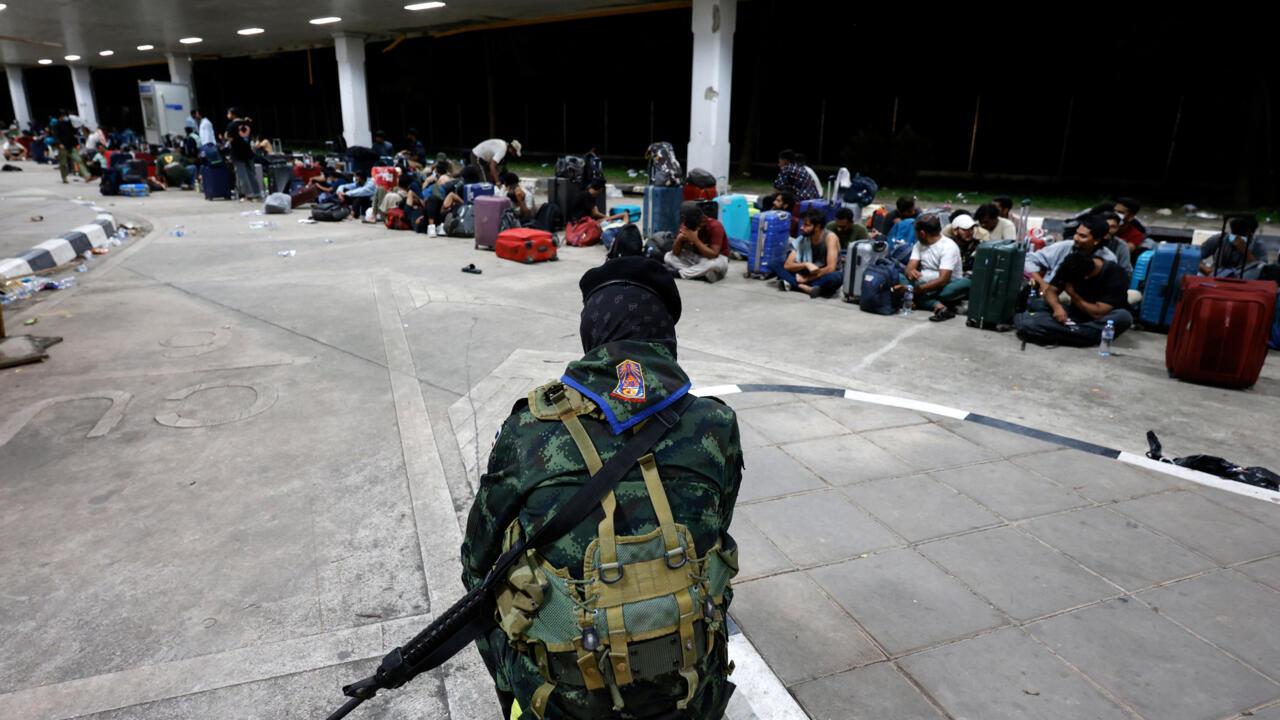
More than 1,000 people—predominantly Chinese—fled from Myanmar into Thailand after the Myanmar military raided KK Park, one of the country’s largest scam hubs near the Thai border. Reports specify that 1,049 people crossed into Thailand’s Mae Sot district between Wednesday and Friday, with Asian outlets adding the exact dates of October 22–24.
“More than 1,000 people, mostly Chinese men, have fled from Myanmar into Thailand this week following a military raid on one of Myanmar's largest scam centers, KK Park, near the border.”
Thai authorities say they are investigating but believe most of the arrivals are linked to KK Park. The exodus included nationals from India, Pakistan, Vietnam, Myanmar, Thailand, and others, reflecting the multinational nature of these scam operations along a conflict-riven frontier.

Cross-Border Scam Hubs
The outlets agree the raid targeted KK Park amid a boom in cross-border scam hubs that thrived during Myanmar’s civil war. They differ on coercion within the compounds. France 24 describes the sites as online fraud hubs in unstable border regions.
Asian and West Asian sources add that some workers were trafficked into fortified compounds. Others joined voluntarily to earn more, adding nuance to the makeup of those fleeing.

Satellite Internet and Myanmar Crackdown
A key operational detail across reports is the role of satellite internet. The Myanmar military seized widely used Starlink devices in the raid.
“The Myanmar military seized Starlink satellite internet devices during the raid, which had been widely used at these scam compounds.”
SpaceX subsequently disabled more than 2,500 devices connected to Myanmar scam operations. This aligns the immediate crackdown with a broader effort to sever the digital lifelines that enabled the compounds’ online cons.
Myanmar Conflict and Border Issues
Thai authorities continue to investigate the surge of arrivals, which they believe largely originated from KK Park. Broader reporting on Myanmar’s war offers context for the regime’s capacity to stage such raids. The Business Standard details how the junta has recently regained momentum through intensified airstrikes and new drone tactics backed by Chinese and Russian technology.
There is also a conscription drive of over 60,000, alongside Chinese support aimed at stabilizing the border and restricting rebel supplies. These developments are often absent from incident-focused accounts.
Multinational Crime and Conflict Impact
The human picture is complex: while most of those fleeing are identified as Chinese, the flows include Indians, Pakistanis, Vietnamese, and Thais. This diversity underscores how these scam hubs draw a multinational workforce—some trafficked, others participating voluntarily. Set against Myanmar’s continuing civil war and massive displacement, the KK Park raid and the cross-border flight highlight how crime, conflict, and border governance intersect in Mae Sot and beyond.
“Between October 22 and 24, 1,049 people crossed into Thailand’s Mae Sot district, including nationals from India, Pakistan, Vietnam, Myanmar, Thailand, and others.”