Full story
UNIFIL mandate under fire
Lebanese Parliament Speaker Nabih Berri warned that ending the mandate of the United Nations Interim Force in Lebanon (UNIFIL) would undermine UN Security Council Resolution 1701 and further endanger southern Lebanon.
““the greatest mistake””
In remarks to Al-Jomhouriya Lebanese daily, Berri described termination of UNIFIL’s mandate as “the greatest mistake” and “the greatest crime” committed against the south.
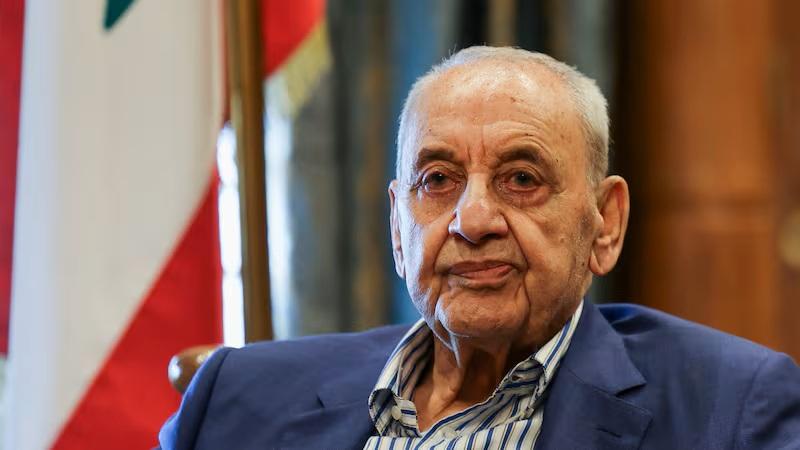
Berri said UNIFIL’s continued presence is vital to maintaining security and supporting the Lebanese Army’s deployment up to the international border, as stipulated by Resolution 1701.
He also warned of Israeli attacks on southern Lebanon, saying the bombardment of towns, villages and civilian neighborhoods is causing “very serious cracks and fissures” in the foundations of buildings and infrastructure.
Army deployment tied to Israel
Lebanese efforts to advance negotiations and implement the “Framework Agreement” continued as Berri tied the immediate deployment of the Lebanese army south of the Litani River to an end to Israel’s war, a ceasefire and an Israeli withdrawal to the international border.
Berri said only the United States and President Donald Trump could compel Israel to take those steps, telling a meeting with a delegation from the American Task Force on Lebanon (ATFL) headed by Ambassador Edward Gabriel that “The United States is the only country, and its president, Donald Trump, is the only president capable of compelling Israel to end its war, cease fire and withdraw to the international border in the south.”

Berri linked those steps to Lebanon assuming security responsibility in the south, adding “At that point, I guarantee the immediate deployment of the Lebanese army in the area south of the Litani.”
A separate report said Lebanon’s “first option” is to extend UNIFIL’s mandate, with President Joseph Aoun telling a delegation of 20 lawmakers that “If the mandate is not extended, the second option would be to adopt a formula ensuring the continued presence of international forces in the south.”
Talks, pressure, and what’s at stake
As the eighth round of Lebanese-Israeli negotiations remained unclear, ministerial sources told Asharq Al-Awsat that a date under discussion for early September “remains tentative” and that official invitations have not yet been sent.
““no high expectations for the outcome of the negotiations, especially before the next Israeli elections in October,””
Those sources said there were “no high expectations for the outcome of the negotiations, especially before the next Israeli elections in October,” while also saying Washington needed “to exert pressure to deter Israel.”
In parallel, the head of the American Task Force on Lebanon, Ed Gabriel, told al-Jadeed TV that the United States believes Hezbollah is “not yet serious enough about having this conversation,” even as he said Trump was “serious” about direct dialogue if it could help end the conflict.
Human Rights Watch UN director Louis Charbonneau warned that “Pulling the plug on UNIFIL without a robust international force in place would effectively abandon millions of Lebanese civilians to an uncertain and potentially disastrous fate,” framing the debate over UNIFIL’s future as a direct risk to civilians in the country’s south.