
Full story
Flash flood at border
A massive flash flood swept through Nepal’s Rasuwa district near the China border, killing at least nine people and leaving 41 security personnel missing, while Nepal’s tourism board said around 400 travellers including 105 Indians were missing after the deluge.
“has killed at nine people”
The flood struck the Bhote Koshi River area around 9 am local time, washing away villages and damaging roads, bridges and hydropower infrastructure, with rescue operations actively underway.
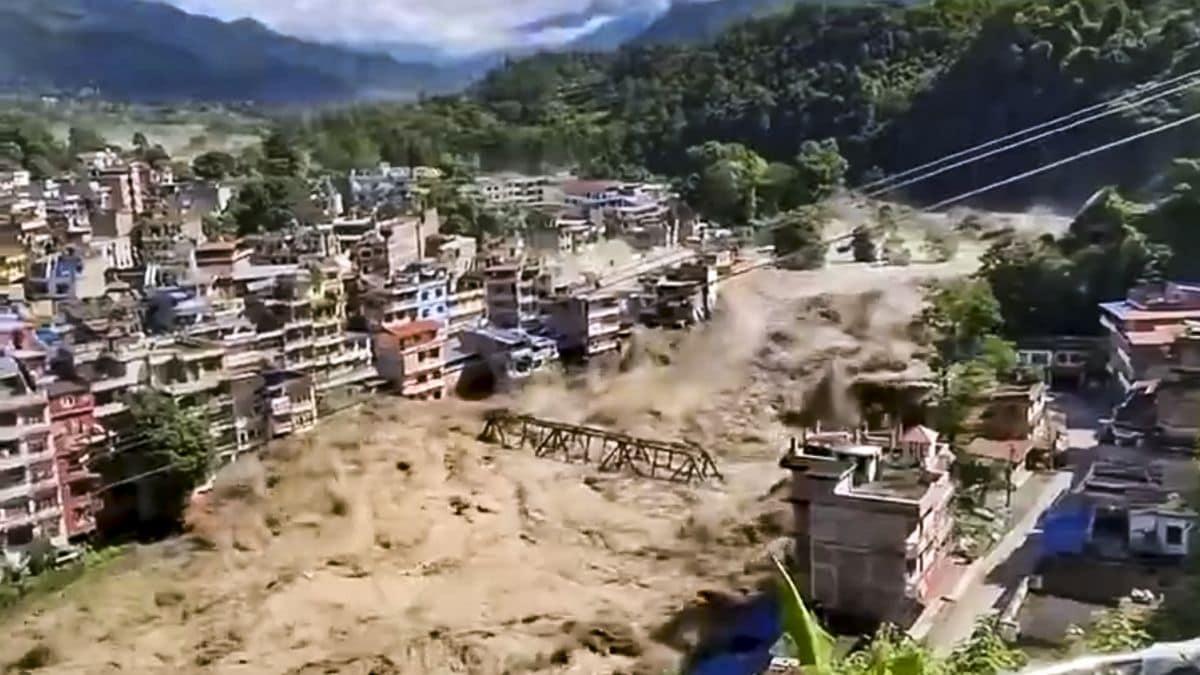
Authorities suspected a glacial burst or an upstream event in Tibet as the cause, and the Nepali Army said the sudden rise in water caused widespread destruction in Timure in Rasuwa district and the nearby Syafrubesi area.
In Tibet’s Gyirong County, a mudslide hit a major border crossing between China and Nepal, and Chinese state media reported “major casualties” with people missing in the neighbouring county of Gyirong after a mudslide hit a land crossing.
The BBC later put the death toll at “At least 18 people have been killed” while referencing a preliminary list of missing people from India and the UK, reflecting how figures varied across outlets.
Helicopters, warnings, and missing
Officials said the waters were too high for helicopters to land in Nepal’s affected areas of Syapru Besi and Timure, and district administrator Narendra Pariyar told the Reuters news agency, “But I cannot say for sure now.”
Pariyar urged those living on the banks of the Bhote Koshi River to seek higher ground, while Nepal’s Prime Minister Balendra Shah convened an emergency meeting of the National Disaster Risk Reduction and Management Authority and said, “Work has started to take necessary steps in coordination with the medical team, scouts, and Red Cross.”

Across the border, Xinhua reported that Chinese President Xi Jinping urged “all-out” efforts to search for the missing, and CCTV quoted Xi as saying, “The most urgent task is to do our utmost to search for the missing and rescue them.”
The Nepal Electricity Authority said about 430 megawatts of production capacity, including from hydropower and solar facilities, have been damaged, and it warned that the disaster damaged “the production, transmission and distribution facilities of the Authority … resulting in disruption of electricity supply.”
South Korea’s Ministry of Foreign Affairs said eight South Koreans working on a hydropower plant were missing, and it added that Nepal deployed a rescue team to search the affected area.
Science on likely triggers
Climate experts cited by Al Jazeera and other outlets pointed to an avalanche from a glacier as a likely trigger, with Saswata Sanyal saying the Lhende Khola River was “triggered by an ice rock avalanche from a glacier on the Nepal side.”
“triggered by an ice rock avalanche from a glacier on the Nepal side”
Sanyal described how the avalanche blocked the river and released a sudden surge downstream, and CNN similarly quoted Saswata Sanyal saying the avalanche likely “blocked the (Bhotekoshi River) and released a sudden surge downstream.”
The flood’s impacts extended to infrastructure and transport, with Anadolu Ajansı reporting that police said eight bodies were found in the Nuwakot and Dhading districts and that police stations, customs offices and several private houses were swept away.
Anadolu Ajansı also said Nepal Tourism Board reported 384 tourists and travellers missing, while the same incident was framed by Al Jazeera as “hundreds” missing after the flash flood swept away villages and damaged roads, bridges and power projects.
As authorities continued search and rescue, Dawn reported that ICIMOD analyst Sarthak Shrestha said a preliminary assessment showed “no anomalies” from China’s side of the border and that “We believe a rock-ice avalanche occurred in Nepal, blocking the Lhende River and causing the cascading flood event.”