West Bank09 September, 20263 min read
Palestinian Factions Reject Reconstituting National Council by Appointment, Exclusion, Unilateralism
This article is an automated aggregation of coverage from news outlets. Our editorials offer in-depth analysis curated by the NewsCord team.
Palestinian factions reject appointment-based reconstitution and unilateralism in the National Council. They demand democratic elections for council members and comprehensive national dialogue.

8 outlets told this the same way.
Rejecting National Council rework
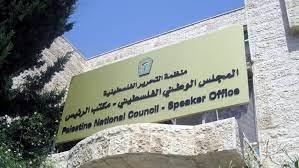
Several prominent Palestinian factions and forces rejected the ongoing procedures to reconstitute the Palestinian National Council through appointment, exclusion, and unilateralism, saying the steps contradict the foundations of national partnership and democracy. In a statement reviewed by the Yemen News Agency (Saba), the factions said they were following with deep concern the procedures to reconstitute the National Council and the accompanying practices that contradict national partnership. The statement said the factions and forces “strongly reject these practices that institutionalize appointment over elections, exclusion over partnership, and unilateralism over national consensus,” and warned that the move would attempt to subjugate the National Council and reproduce its composition.
They argued that the Palestinian National Council “is not the property of a faction, authority, or political group,” but rather a national umbrella frame that should reflect the will of the Palestinian people at home and in the diaspora. The signatories named Hamas (the Islamic Resistance Movement), the Palestinian Islamic Jihad, the Popular Front for the Liberation of Palestine, the Reformist Democratic Current in Fatah, the Popular Front for the Liberation of Palestine – General-Command, the Palestinian National Initiative, and Resistance Committees in Palestine.

Hamas on elections postponement
Hamas spokesman Hazem Qassem condemned talk of postponing the Palestinian Legislative Council elections, urging that they be held on their scheduled date in parallel with the rejection of reconstituting the Palestinian National Council by appointment and exclusion. Qassem said, “We are surprised by some statements by Palestinian Authority leaders about postponing the Legislative Council elections, and we emphasize the need to hold them on time,” and he added that talk of postponing the elections is a sign of the Authority’s continuing approach of tampering with elections. He argued that the Palestinian political system cannot be held hostage by the leaders of a particular faction, and he pointed out that this approach left the presidency without elections for more than twenty years, as well as the Legislative Council, and that the Palestinian National Council had not been elected at all.
In the factions’ joint political statement, they said they were following with great concern the ongoing procedures to reconstitute the Palestinian National Council and the practices accompanying them that contradict national partnership and democracy. The statement said the factions rejected what it described as “appointment instead of election, exclusion instead of partnership, and unilateral decision-making instead of national consensus,” and they called for halting the procedures and returning to comprehensive national dialogue.
What they say is at risk
The factions warned that reconstituting the Palestinian National Council unilaterally and away from national consensus on free and democratic elections would violate the principle of national partnership and the right of Palestinians to choose their representatives and institutions. They said the process would attempt to “control the outputs” of the National Council by reconstituting its composition, and they argued that this deprives Palestinians abroad of their right to freely, fairly, and transparently choose their representatives. They called for returning the electoral process to its correct national path by agreeing on a unified law and mechanisms for elections, ensuring participation of Palestinians in all places of their presence, foremost among them Palestinian refugees in Arab countries and diaspora states.
The factions also urged that the PLO cannot restore its role or enhance its standing as the legitimate representative of the Palestinian people except by rebuilding it on the basis of national and democratic partnership and ensuring representation of all components of the Palestinian people. In the same dispute over legitimacy, the factions held the official Palestinian leadership and the responsible leadership and executive entities within the PLO politically and nationally accountable for the consequences of the measures and for undermining the legitimacy and representative stature of the National Council.