South Americaupdated 29m ago2 min read
MapParaguay Senate Removes President Santiago Peña After Ueno Bank Collapse Locks Millions Out
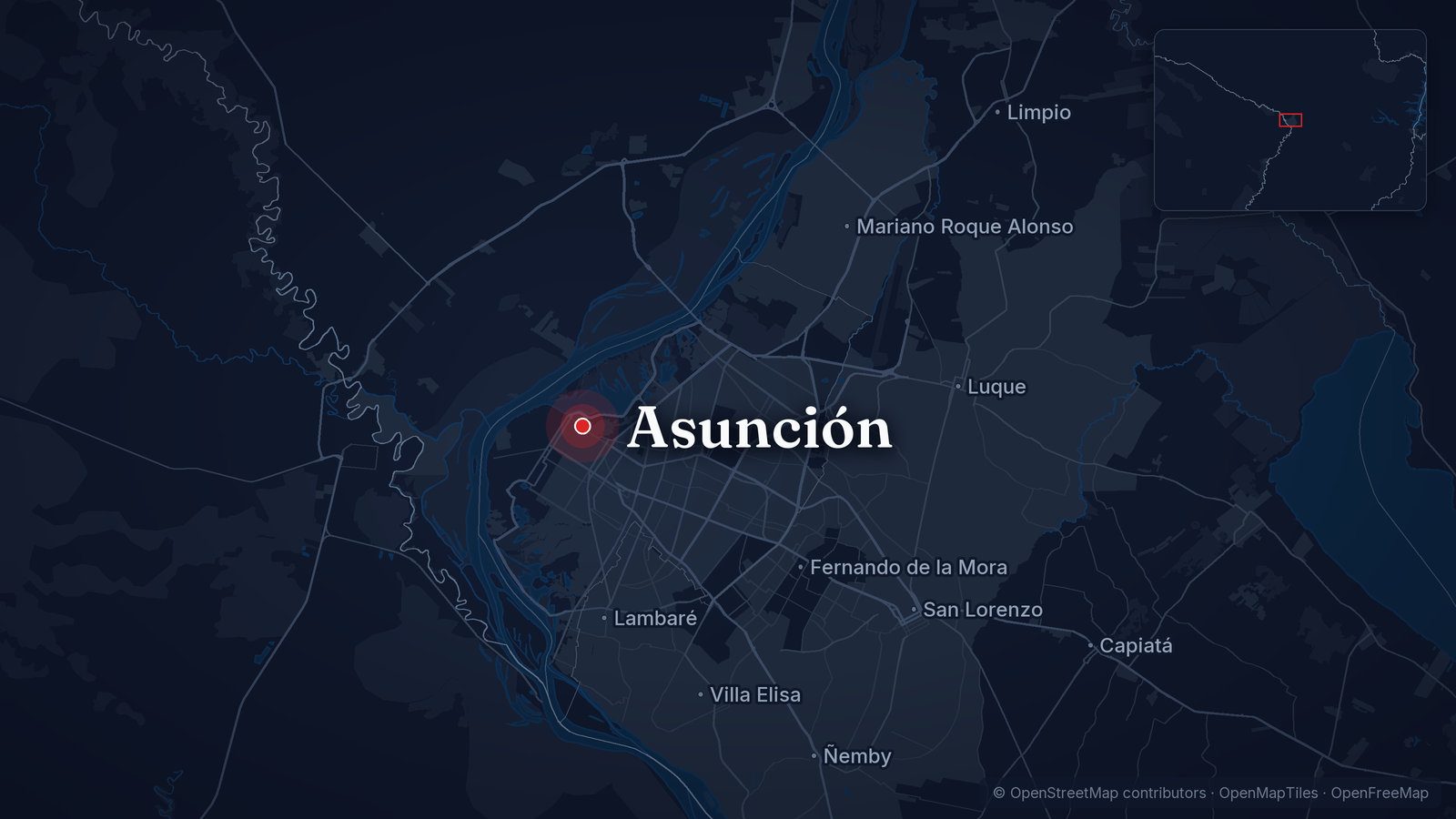
5 Western Mainstream2 Other1 West Asian1 Western AlternativeMap: © OpenStreetMap contributors, ODbL · Cropped for layout
This article is an automated aggregation of coverage from news outlets. Our editorials offer in-depth analysis curated by the NewsCord team.
Paraguay Senate impeached President Santiago Peña over the Ueno Bank collapse. Millions faced bank outages as Ueno Bank's failure triggered protests and political crisis.
Save coverage image
9 outlets in this story. Read their headlines below.
Ueno collapse topples Peña
Paraguay’s Ueno Bank collapse left millions of customers unable to access their money and helped trigger the impeachment and criminal investigation of President Santiago Peña. The collapse followed Paraguay’s central bank placing Ueno Bank under a “resolution” procedure after detecting a critical solvency problem, and the bank’s app stopped functioning as cards and branch teller services were shut. Paraguay’s Senate voted unanimously on Friday to remove Peña from office after the collapse prevented nearly three million customers from accessing their savings, and Vice President Pedro Alliana was sworn in to replace him.
NPR said Ueno Bank had 2.9 million customers, around 60% of Paraguay’s adult population, and it said almost 1.2 million customers had received an advance payment under the state’s deposit guarantee fund by Saturday. CNN reported that the bank collapse scandal in Paraguay left “millions of customers unable to access their money,” and it said the episode led to Peña’s impeachment and criminal investigation.
Protests, charges, and payouts
Protesters gathered outside Paraguay’s Congress after Ueno Bank’s services stopped, and NPR quoted Elizabeth González saying, "People don't have any trust." NPR reported that by Saturday authorities said almost 1.2 million customers had received an advance payment under the state's deposit guarantee fund, but it said many were still waiting. AP said public schoolteachers went on strike in Paraguay on Monday and took to the streets of several cities after the collapse of the bank, and it quoted Silvio Piris saying, "We want the return of that money to be a priority."
AP reported that the bank’s collapse led to the removal of President Santiago Peña, and it said prosecutors told reporters he could face up to 20 years in prison if found guilty. Al Jazeera said Peña denied wrongdoing and that his lawyer, Ricardo Preda, said, "What sets a serious country apart is not that its banks don't fail, but how it responds."
What comes next for Paraguay
Paraguay’s central bank intervention and deposit protections became a focal point, with Courrier international saying “only a small portion of deposits is protected by law” and adding that “The only legal protection is the Guarantee Fund.” Courrier international reported that the guarantee fund would cover up to 75 minimum wages with public money, and it said that measure would guarantee up to 75 minimum wages, equivalent to €32,200 per person or per entity. Newly sworn-in President Pedro Alliana told the public that the government had refunded 1.2 million Ueno Bank customers whose funds were frozen, and Alliana said approximately $158m had been paid out so far.
NPR reported that the crisis sparked doubts over the stability of Paraguay’s financial system and said the guarani had lost about 8% of its value against the U.S. dollar since Ueno was intervened. CNN said the scandal’s political fallout included Peña’s impeachment and criminal investigation, while Al Jazeera said prosecutors charged Peña with breach of trust and administration for personal gain, offences that could each carry a prison sentence of up to 10 years.