Pete Hegseth Defends Iran War Mission as Pentagon Estimates $25 Billion Cost
Key Takeaways
- Pentagon estimates the Iran war has cost about $25 billion to date.
- Hegseth testified before the House Armed Services Committee defending the Iran war.
- Lawmakers grilled him on budget priorities and the recent top military firings.
Hegseth’s first testimony
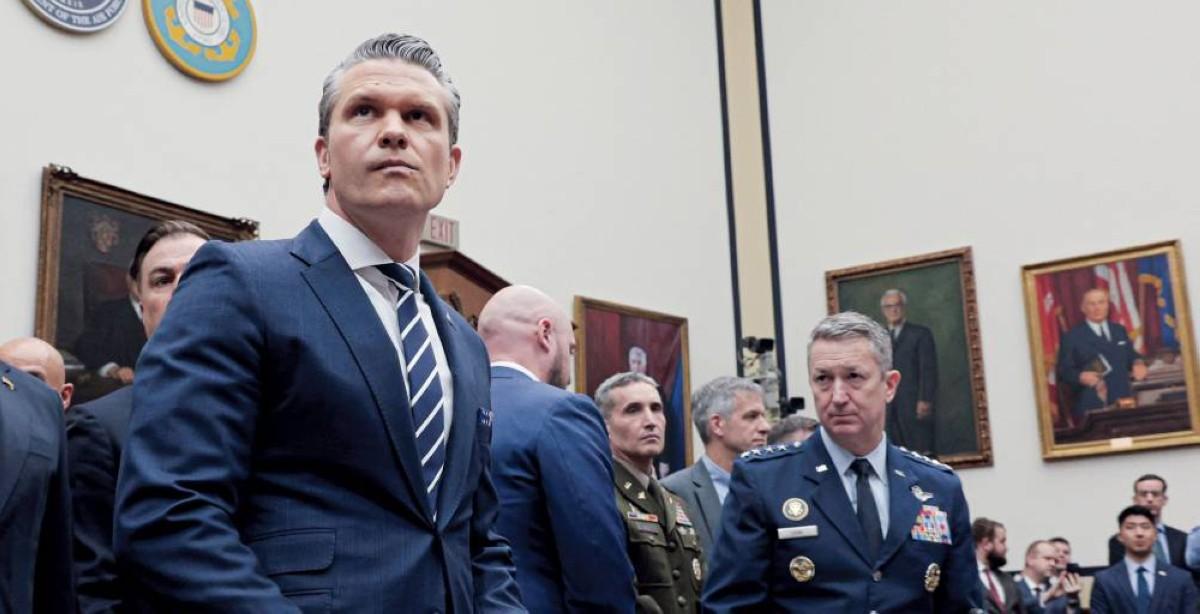
Defense Secretary Pete Hegseth used his first appearance before Congress since the Iran war started to defend the mission and push back on lawmakers’ criticism about cost, strategy, and firings.
Speaking before the House Armed Services Committee on Wednesday, Hegseth downplayed the length of the war and said the biggest “adversary” the U.S. faces at this point is the “reckless, feckless and defeatist words of congressional Democrats and some Republicans.”

He told lawmakers, “Two months in, on an existential fight for the safety of the American people, Iran cannot have a nuclear bomb, we are proud of this undertaking,” and the CNBC account says he framed the conflict as an undertaking the U.S. is “proud” to carry out.
The Pentagon’s chief financial officer, Jules Hurst III, offered the first official estimate of the war’s cost, with multiple outlets tying it to a figure of $25 billion “so far” or “at this point.”
The BBC reported that Hurst said the war had cost the U.S. $25bn (£18.5bn) so far, and that most expenses were for munitions and to replace equipment, while saying a full assessment would come later.
The Guardian similarly described Hurst telling the committee the estimated cost was $25bn and counting, “mostly from munitions and including operations, maintenance and replacing equipment.”
In the same hearing, Hegseth and Gen Dan Caine testified about the Pentagon’s 2027 budget request, with the White House asking Congress to boost defense spending to $1.5tn, which the BBC described as the largest expansion in military spending since World War Two.
Cost, munitions, and budgets
The hearing centered on money and what it was buying, with Hurst’s testimony repeatedly cited as the first public accounting of the war’s price.
CNBC said Hurst told lawmakers the war’s cost is estimated at $25 billion so far, “mostly in munitions,” and that the Pentagon will send a supplemental request once it has a full assessment of the cost of the conflict.

The Guardian described Hurst’s breakdown as including “operations, maintenance and replacing equipment,” and said the estimate was “$25bn and counting.”
Xinhua’s account likewise quoted Hurst telling the House Armed Services Committee that “Approximately, of this day, we're spending about 25 billion dollars on Operation Epic Fury,” and said most of those costs were from munitions and included operations, maintenance and equipment replacements.
The BBC added that Hurst told lawmakers a full assessment of the cost will be provided at a later time, while the AP described the hearing as focused on the administration’s 2027 military budget proposal and said the war has cost $25 billion so far according to Pentagon numbers presented to the committee.
Multiple outlets tied the budget request to a figure of $1.5 trillion for fiscal 2027, with the BBC saying the White House asked Congress to boost defense spending to $1.5tn and the AP describing it as boosting defense spending to a “historic $1.5 trillion.”
In contrast, the Mont Carlo International report said the cost of the U.S. war on Iran “has exceeded $30 billion” and that the Pentagon is seeking up to $200 billion in additional funding, citing a French site’s estimates based on closed-door data.
Strategy and nuclear claims
Beyond cost, lawmakers pressed Hegseth on the rationale for the war and what comes next, with the testimony repeatedly returning to Iran’s nuclear program and the goal of preventing a nuclear bomb.
“Hegseth will likely face question about the war and military stockpiles”
CNBC reported that ranking member Adam Smith, D-Wash., said Iran’s nuclear program was “exactly what it was before this war started,” and asked, “What is the plan to get that to change?”
When Smith pressed Hegseth on reducing Iran’s nuclear threat, Hegseth said Iran’s nuclear facilities have been “obliterated,” a line he has used for weeks, and CNBC said he described the U.S. action as necessary to destroy a “conventional shield” to safeguard Tehran’s nuclear ambitions.
The AP account described a tense exchange in which Smith challenged Hegseth’s reasoning, saying, “We had to start this war, you just said 60 days ago, because the nuclear weapon was an imminent threat,” and then asking how the administration could now say the nuclear program was obliterated.
Hegseth responded in the AP account that Iran “had not given up their nuclear ambitions” and still had “thousands of missiles,” while Smith said the war “left us at exactly the same place we were before.”
ABC News added that in another exchange, Smith pressed Hegseth to reconcile claims that Iran’s nuclear program was “obliterated” and that it posed an imminent threat used to justify launching the war, and ABC quoted Hegseth saying, “Operation Midnight Hammer was very effective.”
The BBC reported that the U.S. and Iran had agreed on a ceasefire to allow for peace talks, while the Guardian described Hegseth claiming the U.S. would “ensure Iran never has a nuclear weapon” and raising the prospect of a naval blockade until a deal is reached.
Firings and political fights
The hearing also became a forum for disputes over personnel changes at the Pentagon, with Democrats and some Republicans challenging Hegseth’s firings of senior military officials.
CNBC said Hegseth weathered intraparty criticism over his firings of top military officials, naming Gen. Randy George, the former Army chief of staff, and John Phelan, the former secretary of the Navy.

ABC News described the same conflict as Hegseth “battled with Democrats -- and some Republicans -- over the Iran war and top officials' firings,” and it quoted Hegseth saying about Phelan’s firing, “As you're evaluating whether they're running with the mission they've been given, you got to make a change,” while also quoting Bacon’s response that “You have the constitutional right to do these things, but it doesn’t make it right or wise.”
The Hill reported that Rep. Don Bacon said it “may be constitutionally right — you have the constitutional right to do these things — but it doesn’t make it right or wise,” and it described Bacon as referencing ousted Coast Guard Commandant Adm. Linda Fagan and noting a “huge bipartisan majority” that supported both George and former Navy Secretary John Phelan.
The AP account said Democrats grilled Hegseth and Gen. Dan Caine about the war and also about the bombing of a school that killed children, while also noting that the hearing stretched nearly six hours and included questions about Hegseth’s ouster of Gen. Randy George.
In that AP account, Rep. Chrissy Houlahan asked why Hegseth fired George, and Hegseth responded, “We needed new leadership,” which the AP said failed to satisfy her.
Across outlets, Hegseth repeatedly attacked lawmakers’ tone, with the BBC quoting him telling Garamendi, “Your hatred for President Trump blinds you,” and with CNBC describing him frequently interrupting Democrats’ lines of inquiry.
Oil prices and the school strike
Lawmakers also pressed Hegseth on economic fallout and on accountability for a strike that Iranian officials say hit a school in Minab during the opening phase of the joint US-Israeli campaign.
“Toggle Play US lawmakers question Pete Hegseth over budget for war on Iran US Defense Secretary Pete Hegseth testified before Congress on the Pentagon’s budget for the US-Israeli war on Iran, which officials estimated to have cost $25 billion ‘at this point’”
CNBC reported that Rep. Ro Khanna questioned Hegseth on economic costs borne by Americans, saying oil prices have spiked globally and that energy prices cascade into other parts of the economy, including food and transportation.
CNBC also provided specific price points, saying U.S. crude on Wednesday hit $106 per barrel and the global benchmark Brent rose to $118 per barrel, and it said Hegseth bristled at Khanna’s question by responding, “I would simply ask you what the cost is of an Iranian nuclear bomb,” while accusing Khanna of “playing gotcha questions about domestic things.”
The BBC described the same dispute as part of the hearing’s discussion of international economic ramifications, including the rise in global oil prices and knock-on impacts for other goods.
The BBC also said Iranian officials say the Minab strike killed 168 people, including about 110 children, and it noted that US media reported in early March that investigators believed American forces were likely responsible but had not reached a final conclusion.
In the BBC account, Adam Smith said, “We made a mistake and that happens in war... two months after it happened we refused to say anything about it, giving the world the impression that we just don't care,” and it said Hegseth told the committee that the “unfortunate situation remains under investigation” and that he “wouldn't tie a cost to that.”
The Guardian similarly described Smith raising the strike on a school in Minab and said Iranian officials say at least 168 people were killed, most of them children, during the opening phase of the joint US-Israeli campaign.
More on Iran

Trump Prepares Extended Blockade of Iranian Ports for Months, Aides Discuss Pressure Measures
12 sources compared
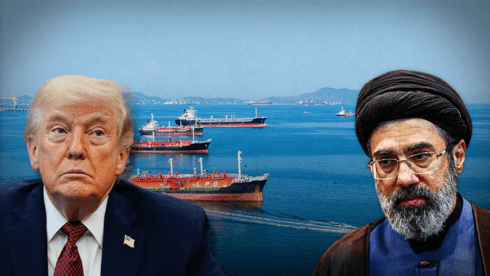
Donald Trump Vows To Keep Iran Naval Blockade Until Nuclear Deal Is Reached
18 sources compared

Trump Tells Aides to Prepare Extended Blockade of Iranian Ports as US-Iran Talks Stall
23 sources compared
Donald Trump Posts AI Image With Rifle, Threatens Iran With “No More Mr. Nice Guy”
13 sources compared