Russiaupdated 22m ago2 min read
MapPoland Issues Air-Alarm After Russian Drone Intrudes, Orders Sheltering in Lublin Region
3 Western Mainstream2 Local WesternMap: © OpenStreetMap contributors, ODbL · Cropped for layout
This article is an automated aggregation of coverage from news outlets. Our editorials offer in-depth analysis curated by the NewsCord team.
A Russian unmanned aerial vehicle briefly entered Polish airspace, triggering an air alert in Lublin. Three Russian missiles landed in Poland days earlier, escalating tensions and NATO consultations.
Save coverage image
5 outlets in this story. Read their headlines below.
Drone, missiles, and alerts
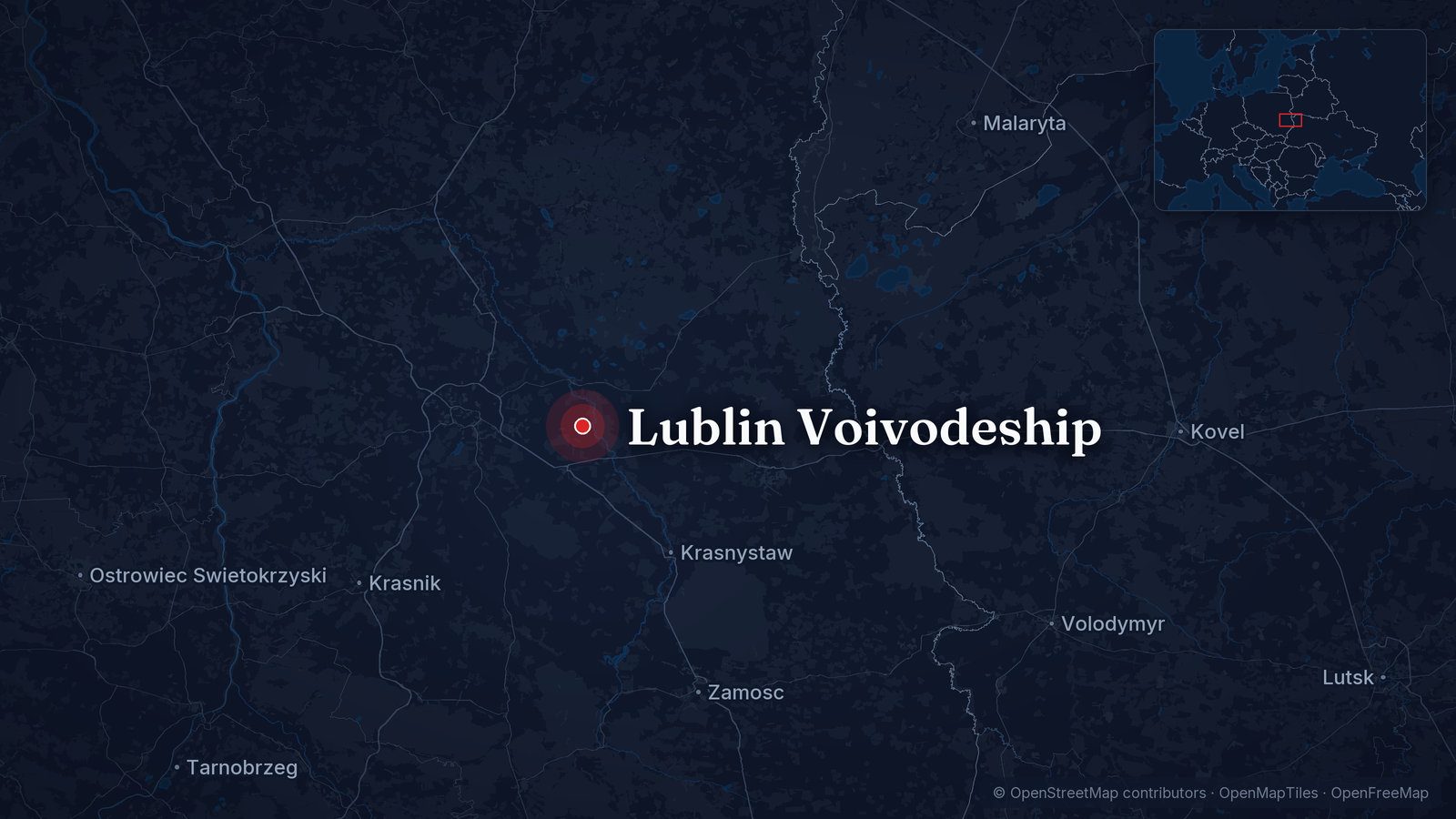
Poland’s government urged residents of border areas in southeastern Poland to seek shelter in shelters after an air alarm was triggered by the intrusion of a Russian drone.
“The government urged residents of border areas in southeastern Poland to seek shelter in shelters.”
Poland’s Operational Command said Polish forces were authorized to shoot down the object, but they refrained after it turned east, citing “in consideration of the potential threat to civilians and the possible consequences of shooting down the object.”
Around 11 p.m. local time, Poland's Government Security Center issued an air-attack alert in parts of the Lublin region on Nov. 22, and the alert ended about an hour later.
Poland’s air defense system was activated as a preventative measure and Polish armed forces tracked the object, described as a Russian drone or missile.
The incursion came just three days after three Russian missiles slammed into eastern Poland, prompting international outcry and ramping up tensions between Russia and NATO member states.
NATO response and political pressure
NATO spokesperson Allison Hart said NATO deployed an early-warning aircraft to Poland and was considering sending more forces and assets after Russian missiles violated Polish airspace. Hart said “SACEUR is now examining the deployment of additional assets as he continues to assess our deterrence and defense posture in Poland and elsewhere,” after ambassadors discussed the November 20 violations. Polish Prime Minister Donald Tusk asked the heads of government of the Visegrád Group, Poland, the Czech Republic, Slovakia, and Hungary, for help at a Visegrád Group meeting.
Tusk said, “Russian aggression has crossed the border into Ukraine,” and he asked for “a united European action to support Ukraine, because this is an expression of solidarity with Poland, not only with Ukraine,” according to the Polish news agency PAP. NATO Secretary General Mark Rutte condemned Russia’s attack after a conversation with Tusk, writing on X, “This incident is clearly dangerous — a consequence of Russia's ongoing war against Ukraine.”
What comes next for Poland
Poland’s deputy defense minister Pawel Zalewski said an AWACS early-warning aircraft would be made available to Poland after NATO meetings in Brussels. Zalewski said, “This is a very good system that gives us even deeper... operational awareness which allows us to respond better to this kind of threat.” Poland’s armed forces were authorized to shoot down the object but let it leave Poland’s airspace due to concerns about causing damage by downing the aircraft.
“Poland’s government announced it would summon the Russian ambassador.”
NATO simultaneously increased airspace surveillance on its eastern flank and Poland’s government announced it would summon the Russian ambassador. Allied airborne early-warning aircraft were already reinforcing Polish airspace after three Russian objects entered Poland early on November 20 during a large-scale attack on western Ukraine.