
Poland’s Presidential Runoff Sunday Pits Rafał Trzaskowski Against Karol Nawrocki
Key Takeaways
- Trzaskowski, Warsaw mayor, faces Nawrocki in a June 1 runoff.
- First round: Trzaskowski 31.4%, Nawrocki 29.5%.
- Nawrocki is PiS candidate; Trzaskowski is liberal, pro-European.
Poland’s presidential runoff
Poland’s second round of the presidential election is set for this Sunday, June 1, pitting the liberal, pro-European candidate Rafał Trzaskowski against the ultra-conservative nationalist Karol Nawrocki, with the issues at stake described as including “Institutional gridlock, the EU, social rights, support for Ukraine, and the economy.”
“- Diplomacy & Geopolitics 'Economic Fury': the new chapter in Iran's war - Diplomacy & Geopolitics Threats, AI”
tv5monde says polls indicate a tight race, and it frames the runoff as decisive for the future direction of the country, including the possibility of “strengthening the rule of law and reforming the Polish judicial system” and “supporting Ukraine’s accession to NATO and to the EU.”
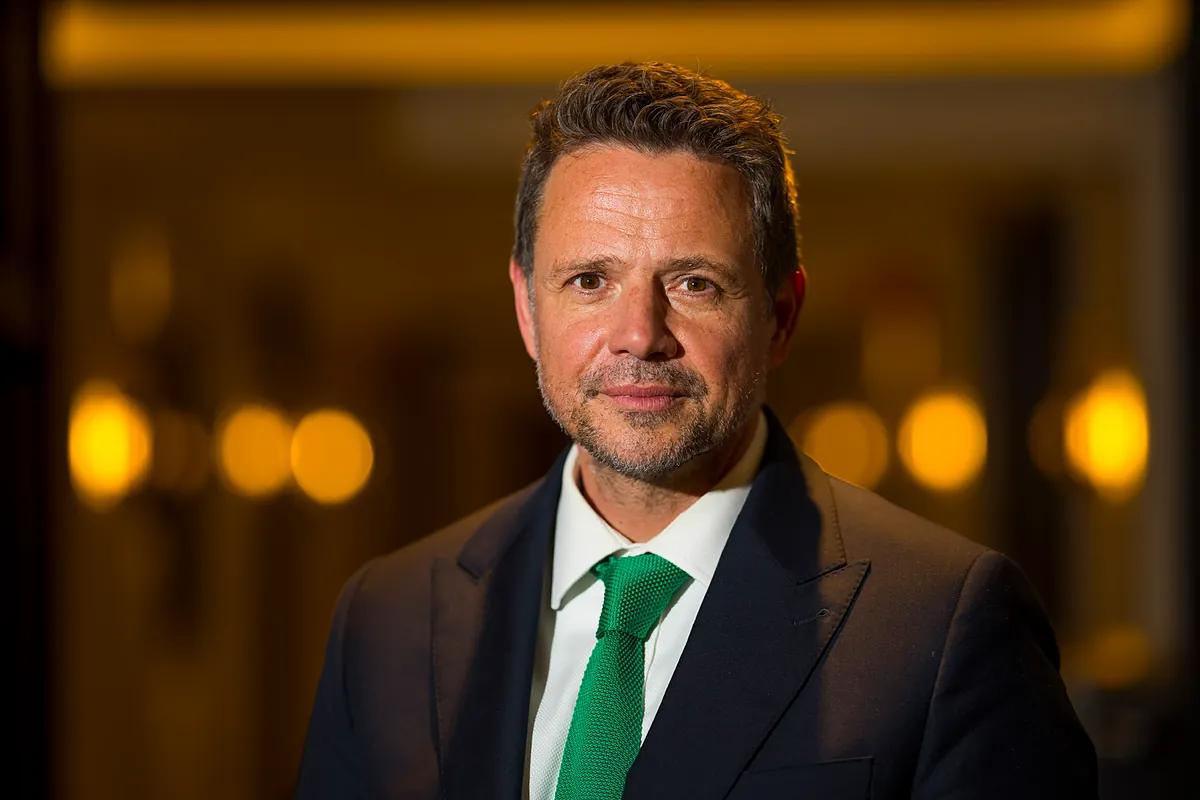
It also says Trzaskowski, 53, has served as “a Member of the European Parliament” and “as Minister of Administration and Digitization,” and that “Since 2018, he has been the mayor of Warsaw.”
tv5monde adds that Trzaskowski was elected in the first round with “56.67% of the votes” and re-elected in 2024 with “57.41%,” while it reports that in the first round of the presidential election on May 18, Trzaskowski came out on top with “31.36% of the votes.”
Le Grand Continent, meanwhile, places the first-round vote at “31.4%” for Trzaskowski and “29.5%” for Nawrocki, and it says Trzaskowski will face Nawrocki “on Sunday” in the second round.
Le Grand Continent also emphasizes that polls in the final stretch were mixed, noting that “in the three polls from last week, one named Trzaskowski the winner, another gave Nawrocki the win, and the last showed a tie.”
Two candidates, two futures
The two outlets describe the candidates’ backgrounds in sharply different ways, but both tie the runoff to competing visions of Poland’s relationship with Europe and security policy.
tv5monde says Karol Nawrocki, 41, is “a historian, former director of the World War II Museum in Gdańsk, and president of the Institute of National Remembrance,” and it adds that “Since 2021, he has been the president of IPN (Institute of National Remembrance), elected by Parliament.”
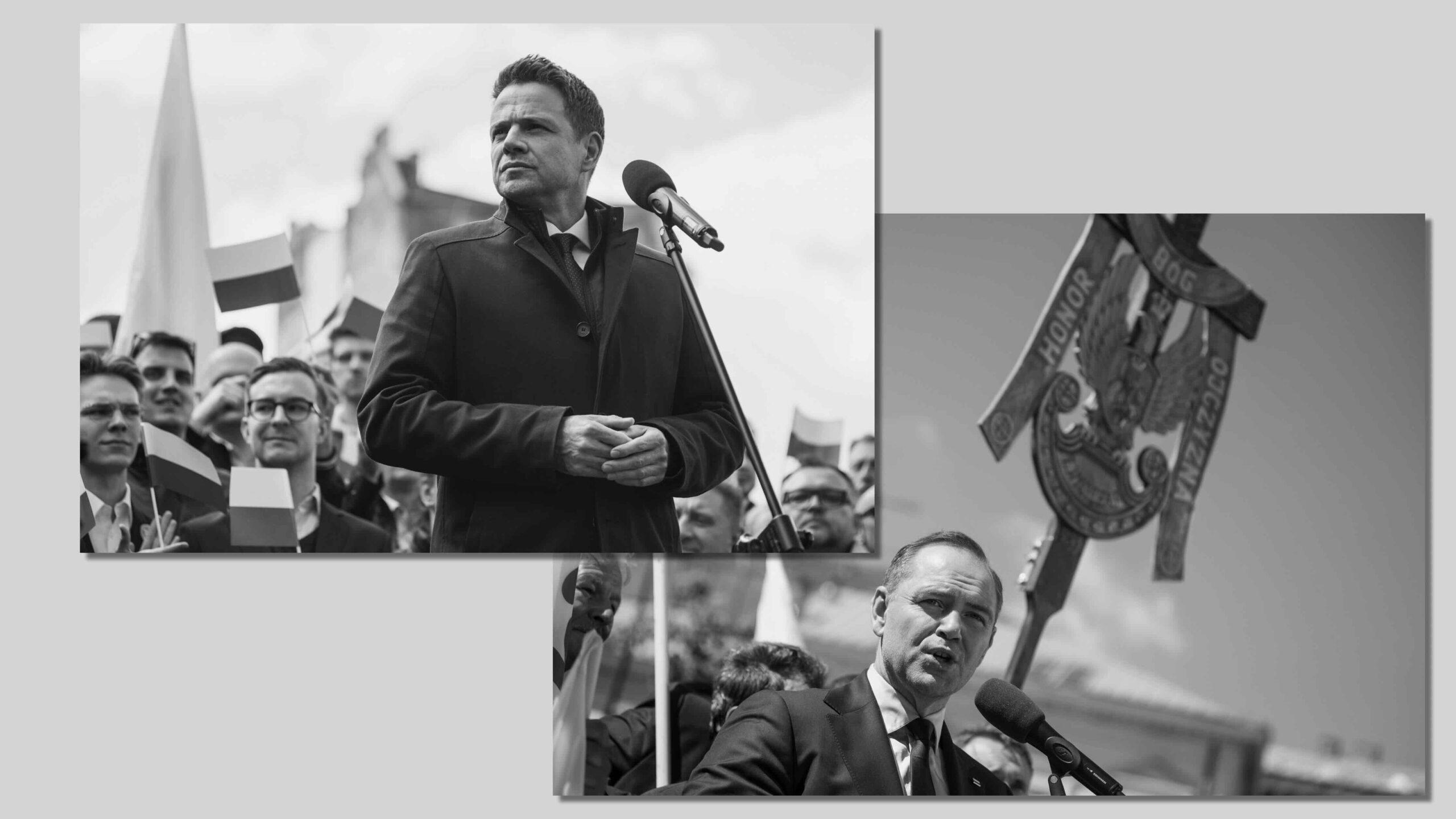
It also says Nawrocki is “supported by the Law and Justice (PiS) party,” and that in the first round he obtained “29.54% of the votes,” while Le Grand Continent reports “29.5%” for Nawrocki.
Le Grand Continent frames Nawrocki as “the candidate backed by the national‑conservative Law and Justice (PiS) party,” and it says the campaign has been “not free of scandals,” with Nawrocki “close to MAGA circles.”
It also provides a detailed contrast in education and language, stating that Trzaskowski “studied in Paris, in Oxford, and at the Natolin College of Europe,” and that he “speaks English, French, Spanish, Italian, and Russian,” while it says Nawrocki “has a PhD in history and an MBA.”
Le Grand Continent further says Nawrocki has been “pursued by Russia since February 2024 for his support for removing monuments to the Red Army from Polish soil,” linking his biography to a broader geopolitical narrative.
Trzaskowski on polarization and promises
In an interview published by El Mundo, Rafał Trzaskowski discusses his focus on Warsaw while also arguing that the presidential contest has implications for Poland’s national direction.
“The second round of the presidential election in Poland will take place this Sunday, June 1”
He tells the interviewer, “My job is to transform Warsaw and make the city as livable as possible,” and he links that to “solve the people's problems, with regard to high housing prices or the mental health crisis among young people.”
Trzaskowski also describes how he believes polarization is driven by social networks, saying, “Poles are very polarized due to social networks, where algorithms only fuel conflict and negative emotions,” and he adds that “That is why we teach our children in schools to develop that instinct to verify the information they see.”
When asked about running again, he says, “It is hard to imagine such a situation. Now I focus on the city,” but he insists that his party’s experience in the election should be used to change how it communicates.
He argues that “the main one is that people under 35 do not respond to the usual messages,” and he says, “We need to be much more active on social media.”
Trzaskowski also frames the election as a referendum on whether the government keeps promises, stating, “But in turn it sends a very clear message to the Government that it must keep its promises,” and he adds that his candidacy was judged because “we have not fulfilled all the promises.”
Defense, Ukraine, and vetoes
Trzaskowski’s interview also places the presidential race inside a defense and Ukraine framework, arguing that Poland’s security consensus is threatened by the incoming president’s actions.
On the question of whether Polish society is united on defense, he says, “Yes,” and he specifies that “As far as strengthening our armed forces, strengthening our ties within the Atlantic Alliance and helping Ukraine, the majority of Poles agree.”
He then contrasts the previous president’s posture with what he describes as the new president’s reluctance, saying, “The previous president, also from the Law and Justice party, was populist,” but that “on issues such as support for Ukraine, support for our defense industry, our relations with NATO and good relations with our European partners, he was in the same line as this Government.”
Trzaskowski argues that “Unfortunately, the new president is reluctant even on that,” and he points to a specific example: “For example, he vetoed the European SAFE program, which would allow us to use a large amount of EU loans to invest in our armed forces and in our defense industry.”
He adds that the veto was justified “with the argument that it would make us dependent on Germany,” and he uses that to argue that “some of the populists are now even questioning it, which goes against Poland’s national interest.”
tv5monde’s framing similarly links Nawrocki’s program to Ukraine policy, saying “the refusal to back Ukraine’s accession to NATO” and warning that “A Nawrocki victory could undermine Poland’s unwavering support for Ukraine against Russia.”
How outlets frame the contest
The sources also diverge in how they present the election’s meaning, particularly around Europe and the candidates’ political identities.
“Key points - The first round held on May 18 put Rafał Trzaskowski, the liberal mayor of Warsaw and a member of Prime Minister Tusk’s Civic Coalition, in the lead with 31”
tv5monde frames the contest as a clash between a “liberal, pro-European candidate Rafał Trzaskowski” and an “ultra-conservative nationalist Karol Nawrocki,” and it highlights institutional and policy stakes such as “strengthening the rule of law and reforming the Polish judicial system” for Trzaskowski and “the opposition to increased European integration” for Nawrocki.
Le Grand Continent, while also describing Trzaskowski as “a pro‑European liberal,” emphasizes the uncertainty in the polls and the idea that the first-round result showed Nawrocki “had closed the gap,” even though Trzaskowski had been “considered the favorite” earlier.
It also frames the campaign’s narrative through personal profiles, describing Trzaskowski as a “seasoned candidate” and Nawrocki as a “political beginner,” and it adds that Nawrocki is “an initially unknown figure to the general public” who “gradually raised his profile.”
El Mundo, by contrast, centers the interview on Trzaskowski’s own priorities and messaging strategy, with him saying, “Now I focus on the city,” and arguing that “people under 35 do not respond to the usual messages.”
El Mundo also uses a direct critique of the presidential system, with Trzaskowski describing the president as “whose main task is to make life difficult for the Government and block any initiative,” and he says “This president vetoes many measures presented by the Government simply because he does not want the Government to fulfill its promises.”
More on Europe
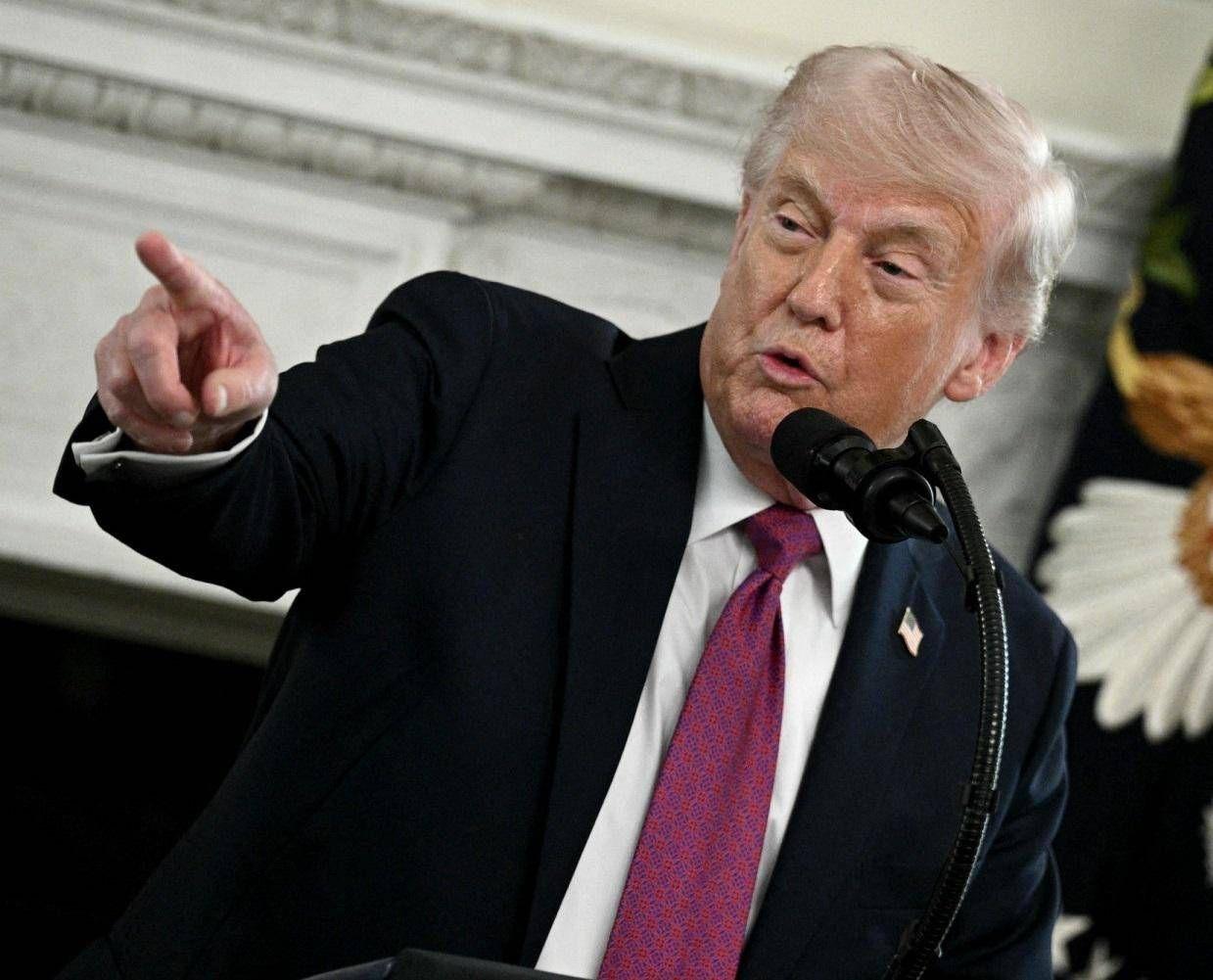
Trump Orders US To Cut Troops In Germany, NATO Seeks Clarification
19 sources compared
Trump Links Greenland To U.S. National Security, Says NATO Becomes More Effective
21 sources compared

Tangier Med Port Prepares More Ship Arrivals as Strait of Hormuz Crisis Reroutes Traffic
12 sources compared
Venice Biennale Jury Resigns Nine Days Before Opening Over Russia and Israel Awards Ban
24 sources compared