South Americaupdated 22m ago2 min read
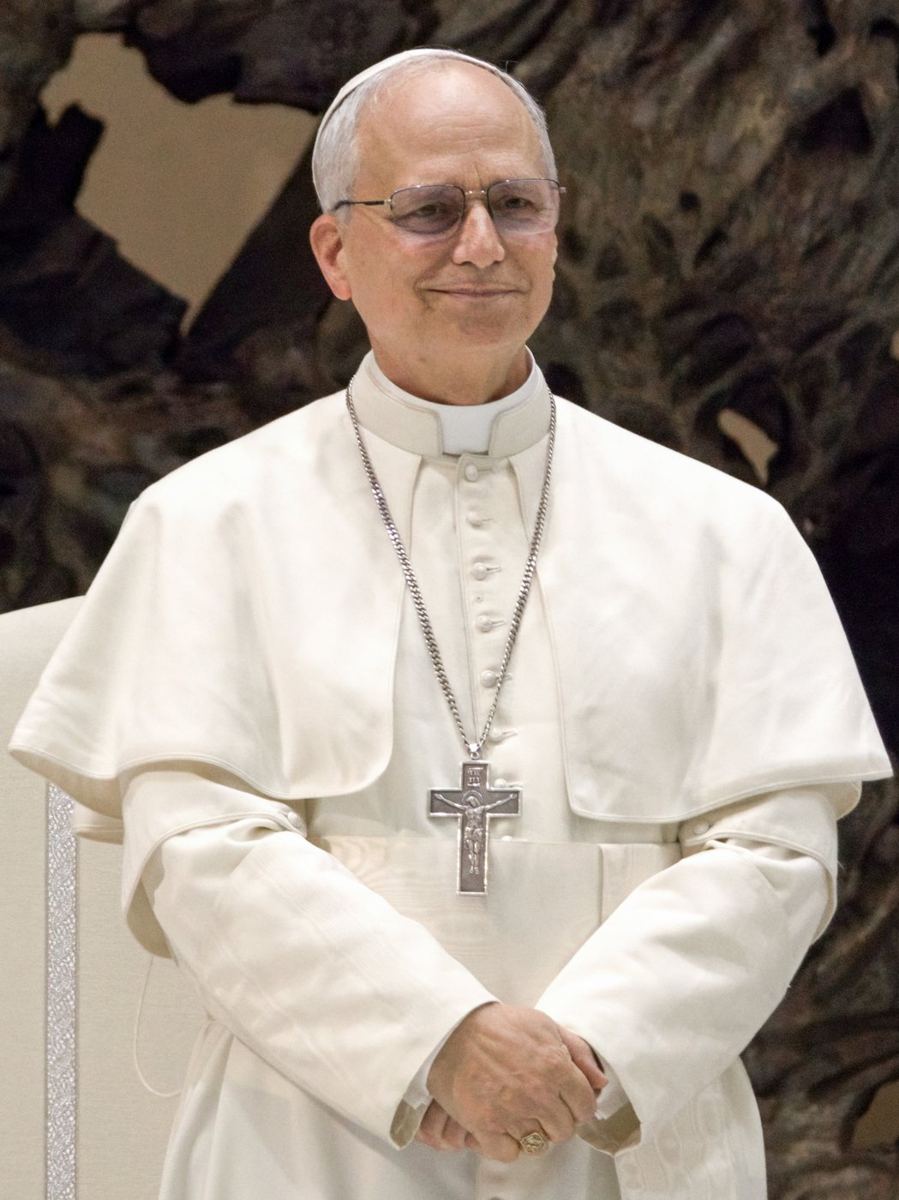
Archive photo · 12 May 2025Pope Leo XIV Tells Javier Milei Argentina’s Economy Must Serve People
“Argentina’s president, Javier Milei, has made wide-ranging cuts to disability funding.”
“Pope Leo XIV has said Argentina's economy must benefit everyone including the poor, in a diplomatic but pointed critique of President Javier Milei's austerity measures.”
Photo: Edgar Beltrán / The Pillar, CC BY-SA 4.0 · Cropped for layout
This article is an automated aggregation of coverage from news outlets. Our editorials offer in-depth analysis curated by the NewsCord team.
Pope says Argentina's economy must benefit the poor and all people. Veiled rebuke of Milei's austerity measures.
Save coverage image
Pope vs Milei
Pope Leo XIV arrived in Argentina and delivered a pointed message that the economy must serve people, not the other way around, as President Javier Milei faced criticism over austerity measures. DW said 2.5 million people crowded into the streets of Buenos Aires on Monday (11/09/2026) to see the pope, and the visit left “little doubt about his influence in Argentina.” Pope Leo XIV told Milei’s government that “The economy must serve people, not the other way around,” and he stressed the plight of those who, “despite hard work, nonetheless struggle to meet their household's needs.”
Milei responded by saying his government was working to avoid “punishing the Argentines of tomorrow in order to benefit the Argentines of today,” while he also defended his approach as consistent with Argentina’s constitution and Western democracies. The BBC described the pope’s remarks as a “veiled rebuke” of Milei’s austerity measures as the trip became the most politically sensitive part of a 12-day Latin America tour.
Disability home flashpoint
Pope Leo XIV visited a charitable institution in Claypole, about an hour from Buenos Aires, where the home houses 410 residents with severe disabilities and where the pope said “The progress of a nation is measured by the welcome it gives to all people with disabilities or with special needs.” Fernando Montero, the facility’s coordinator, said, “The government] cut off the supply of medications, special foods and diapers,” and Montero added, “They haven’t delivered any since last November.” The Guardian reported that the pope and Milei had “completely opposing ideologies,” and it quoted Montero saying the pope and Milei “have completely opposing ideologies”.
Milei struck a conciliatory tone on Sunday by calling Pope Francis an “exceptional figure” and “undoubtedly the most important Argentine in history,” even as the pope’s visit focused on social cuts. Buenos Aires archbishop Jorge García Cuerva said Leo XIV would find “a divided Argentina and a large number of very poor brothers and sisters.”
What comes next
The pope’s visit set up a broader confrontation over policy priorities, with the Guardian describing disability funding as a “flashpoint between church and state” and citing a dispute involving a funding law that remained in limbo. Argentina’s conference of bishops wrote to the health minister, Mario Lugones, on 1 April, denouncing “the serious situation facing numerous institutions dedicated to the care and support of people with disabilities in our country.” Justin McLellan, Vatican correspondent for the National Catholic Reporter, told viewers from Buenos Aires that “The public’s opinion about his visit is overwhelmingly positive,” and McLellan added, “I think people are great admirers of León XIV.”
Amnesty International wrote to the pope about Argentina, warning of its “concern about government decisions that affect the exercise of fundamental rights.” DW said the long-term question was whether the pope’s alleged criticisms of Milei would make a difference in Argentina’s general elections in October 2027, and it quoted Jocelyne Cesari saying, “there is no clear, direct impact on elections.”