Los Angeles Times
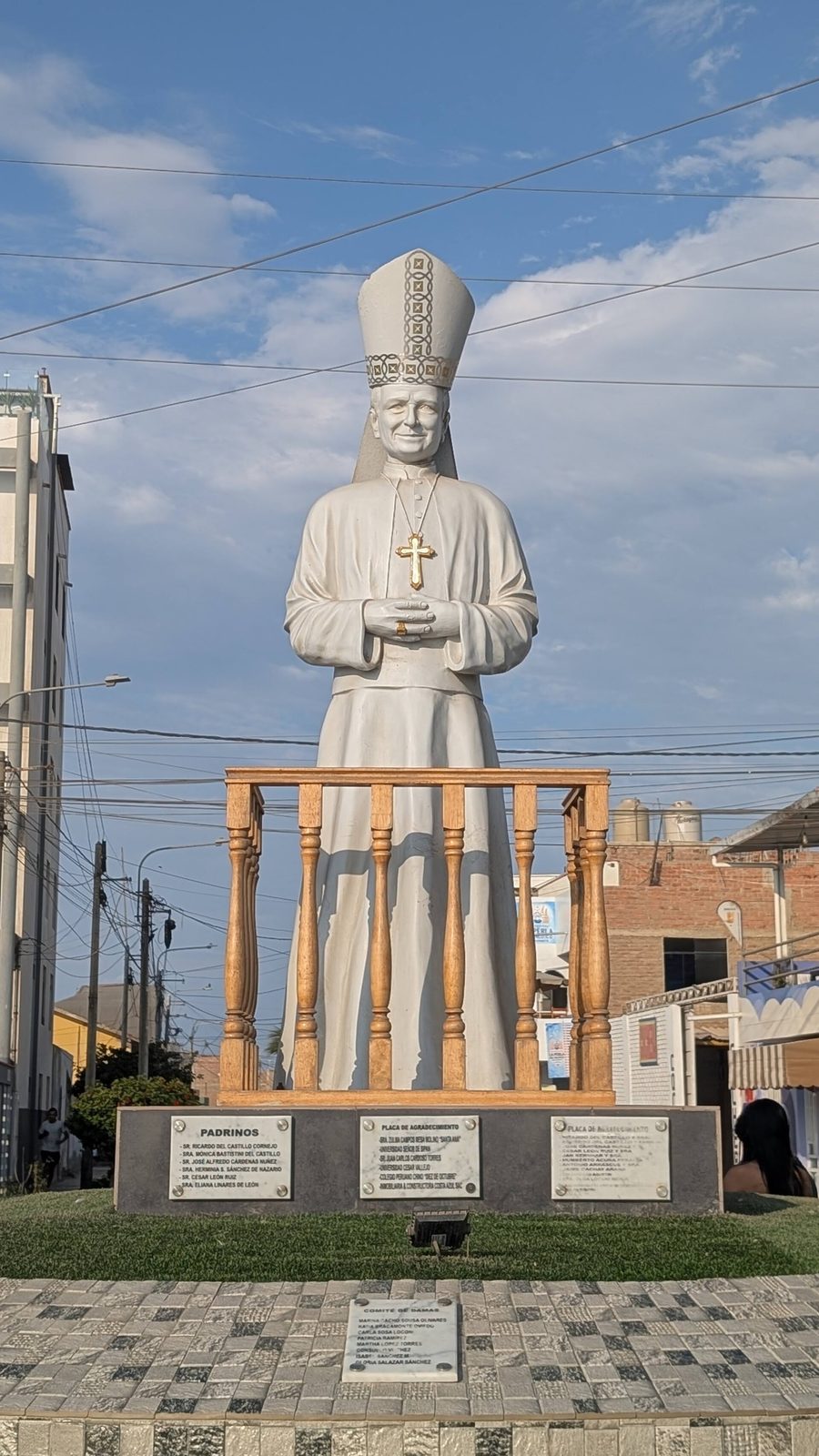
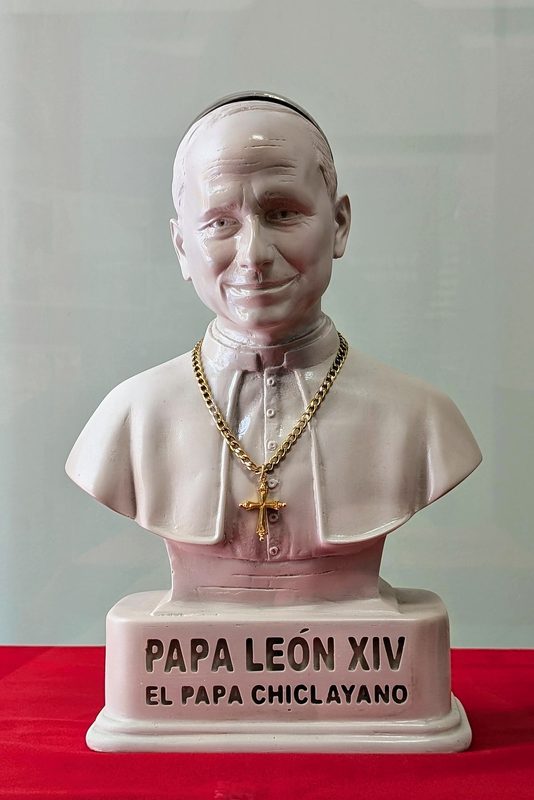
CHICLAYO, Peru — The pope León XIV returned on Friday to his beloved diocese of Chiclayo, and he said it was a “joy” to be home, an emotional return that highlighted his love for his Peruvian faithful and their pride that their shepherd now leads the Catholic Church. The pope, known here as “padre Roberto,” arrived at Chiclayo airport on the Pacific coast and immediately moved to a vast, dusty field on the outskirts of the city for his first Mass on Peruvian soil. The Vatican estimates that 1 million people lined the route of his caravan to the Mass and that 500,000 faithful attended. The crowd cheered as the pontiff arrived and moved among them in his papamobile, under a scorching sun and temperatures of 31 °C (88 °F). “What a joy to return to Chiclayo!” León said. “It is a blessing for me to be with you again,” he stated, not without thanking the faithful especially for their prayers during his recent hospitalization for lung cancer. He declared that “with God’s help, I’m overcoming” the scare of the illness. Chiclayo, with a population of 700,000, is the commercial center of Peru’s Pacific north coast. But much of the world heard of it the night of León’s election, May 8, 2025, when he mentioned Chiclayo, in Spanish, from the loggia of St. Peter’s Basilica. And on Friday, the city welcomed back its former pastor. “I’m extremely excited. He decided to come to Chiclayo, and we have him at home,” said Julie Albujar, who woke before dawn with her sister to travel to the Mass site to collect the collection. “Here a celebration is being lived. And it is a sign of faith and love.” Beloved for his closeness to the poor The pope, formerly known as Robert Prevost, spent two decades as a missionary priest and bishop in Peru and attributes to the place and its people the teaching of how to be a pastor. Pope Francis sent the Augustinian born in Chicago to become bishop of Chiclayo in 2014, and he remained there until the late pope called him to Rome in 2023 to lead the Vatican bishops’ office. In hindsight, the move to Rome in 2023 indicates that Francis saw Prevost as a possible successor, since the post is one of the most important in the Church and would give the current pope the Vatican experience many consider necessary to be a viable papal candidate. But Prevost’s heart is in Chiclayo, where he remains highly loved for advancing social justice causes and for his closeness to the people, especially the poor, during times of crisis. He faced several during his tenure: COVID-19, devastating floods, and a surge of Venezuelan migrants as the humanitarian situation worsened in that country in 2018. “I’m glad he’s returning,” said Rolando Antonio Mendoza, who sold posters with the pope’s image in front of the cathedral where León used to celebrate Mass. “Even though he is now Pope León XIV, he hasn’t forgotten his homeland.” Nearby, the El Trébol restaurant proudly bills itself as the pope’s restaurant, and its image appears in framed photos of Prevost riding a horse, walking through mud in rubber boots, and celebrating his birthday with a cake. A sign at his favorite table—the No. 3—with a view of the cathedral reads: “blessed table.” Like many other places in the city, the restaurant sells “papaletas” with León’s image in white chocolate. Just steps from the restaurant, a life-size cardboard figure of the pope now welcomes visitors to his former residence in the diocese, where an exhibit shows the zucchetti (amaranth purple, scarlet, and white) that he wore as bishop, cardinal, and now pope. A pope exultant in his homeland Since León stepped on Peruvian soil on Wednesday, the world has seen a pope quite different. Normally reserved and serene, León, 71, has at times appeared openly exultant and overwhelmed by emotion to tears, as happened on Friday. Chiclayo seminarian Darwin Sánchez, who wore the pope’s mitre during the Mass, said León greeted all the altar servers before the ceremony and was very moved. It wasn’t the first time Sánchez had met León. He recalled a Mass when, as a young altar server, he mishandled the censer and handed it to the bishop of Chiclayo. After the service, Prevost called him aside and kindly told him to be a bit more careful. Prevost burned his hand when the chain fell onto the hot coal, but continued carrying it and did not complain or admonish Sánchez in front of others. “He is approachable, joyful, and he gave me the strength and encouragement to pursue my vocation,” Sánchez said. When the Mass ended, the crowd erupted in a chant reaffirming pride in calling their spiritual leader of more than 1.4 billion Catholics theirs: “The pope is Chiclayan!” they shouted with joy. A prayer in a chapel dedicated to Romero After Mass, León went to pray in a chapel dedicated to Saint Óscar Romero, beloved by the working class and the poor for defending them against the repression of the Salvadoran army. The chapel’s construction was driven during León’s time as bishop, and its renovation was achieved thanks to the efforts of Reverend Edgar Rimaycuna, the pope’s personal secretary. León’s decision to go there may have had symbolic intent. When Prevost first arrived in Chiclayo, priests of the conservative Opus Dei movement had long maintained a kind of monopoly over the diocese’s parishes, keeping faithful more inclined toward social justice away from Romero, according to NPR journalists Daniel Burke and Scott Detrow’s new biography, American Pope. Not wanting to alienate Opus Dei priests, Prevost worked hard to push for changes in the diocese so that it would be less clerical in the Opus mold and more a model empowering laypeople and especially watching over the poorest, they wrote. It was a dynamic Prevost had adopted in the Trujillo, Peru diocese, where he worked as a young missionary priest, said Reverend John Lydon, an Augustinian who lived with Prevost in Trujillo in the 1990s. He said many Augustinians in Peru at that time were devoted to Romero, including Prevost. Lydon noted in an interview that this was before he was canonized by Pope Francis, but they always referred to him at the Trujillo house as Saint Oscar de las Américas, thus canonizing him before the Church did. ___ AP journalist Mauricio Savarese contributed from Lima. ___ This story was translated from English by an AP editor with the help of a generative AI tool.