
President Donald Trump Escalates Iran War, Signals More Troops and Funding
Key Takeaways
- White House signals expansion of Iran war with more troops and money.
- Administration weighs lifting Iranian oil sanctions amid conflict.
- Trump and Israel launched the war, killing Ayatollah Ali Khamenei.
Military Escalation
President Trump is escalating military operations against Iran, with the Pentagon requesting $200 billion in additional funding for the ongoing conflict.
“American policy is showing a striking paradox: waging war on Iran while at the same time easing restrictions on its oil exports, in a move aimed at curbing the rise in global energy prices, according to reports published by The Washington Post and The New York Times”
Secretary of Defense Pete Hegseth bluntly stated that 'it takes money to kill bad guys' when questioned about the massive funding request.
Meanwhile, multiple news outlets including Reuters have reported that the Trump administration is considering deploying thousands of U.S. troops as part of the next phase in the campaign against Iran, despite Trump publicly dismissing these reports.
The U.S. military has already begun deploying thousands of additional troops, including Marines, to the Middle East region to support the escalating operations.
Economic Impact
The escalating conflict with Iran has significant economic implications, particularly for global oil markets and American consumers.
While Brent crude oil prices have stabilized around $103 per barrel, gas prices have surged toward $4 per gallon nationwide, representing about one dollar more than a month prior.
In a recent Reuters/Ipsos poll, 55% of respondents reported their household finances had been affected 'at least somewhat' by rising gas prices, with 21% saying they were impacted 'a great deal.'
The Trump administration is considering easing sanctions on Iranian crude oil to combat these price increases, with Energy Secretary Chris Wright noting that removing sanctions on stranded Iranian oil would get supplies to Asia within three or four days.
Regional Consequences
The U.S.-Iran conflict has triggered widespread instability throughout the Middle East, with Lebanon particularly affected by the spillover violence.
“Despite promises of the war with Iran ending soon and broad disapproval of further U”
According to Lebanon's Ministry of Public Health, over 1,000 people have been killed in Lebanon due to the conflict, with more than 2,500 wounded.
The UN Refugee Agency reports that 822,000 people in Lebanon have been displaced as of March 12, creating a humanitarian crisis.
France's Foreign Minister Jean-Noel Barrot expressed pessimism about a quick resolution, stating 'there is no obvious short-term way out of the ongoing regional escalation, which has in some ways been unfolding since October 7, 2023,' while emphasizing the need to continue working toward diplomatic solutions.
Meanwhile, Ukraine has deployed drone defense equipment to five Middle Eastern countries to help protect against Iranian drone strikes, leveraging their expertise in drone combat developed during their ongoing war with Russia.
Trump's Stance
President Trump has adopted a confrontational stance toward international allies while expressing skepticism about diplomatic engagement with Iran.
He publicly labeled NATO members 'COWARDS' after several countries rejected his demands that they send naval vessels to the Strait of Hormuz, declaring that 'Without the U.S.A., NATO IS A PAPER TIGER!' on his Truth Social platform.
Regarding Iran's leadership, Trump claimed there's 'nobody to talk to' in the regime, stating: 'Their leaders are all gone. Their next set of leaders are all gone. And the next set of leaders are mostly gone. And now nobody wants to be a leader over there anymore.'
This hardline stance is reflected in public opinion, with a Reuters/Ipsos poll showing that while 65% of Americans believe Trump will send troops into a large-scale ground war with Iran, only 7% of respondents support the idea.
Cyber Actions
In addition to military and economic actions, the Trump administration has taken aggressive measures targeting Iran's cyber capabilities and has made strong statements about Iran's future reconstruction.
“American policy is showing a striking paradox: waging war on Iran while at the same time easing restrictions on its oil exports, in a move aimed at curbing the rise in global energy prices, according to reports published by The Washington Post and The New York Times”
The Justice Department announced the seizure of four websites allegedly used by Iran's ministry of intelligence and security to conduct hacking operations, psychological warfare, and repression.
These domains targeted Iran's adversaries by claiming credit for hacking, posting sensitive stolen data, and calling for the killing of journalists, regime dissidents, and Israelis.
Regarding Iran's future, Trump predicted it would take the country 10 years to rebuild but suggested Tehran might never recover if it refuses to capitulate on nuclear weapons development.
'I think I could leave right now and it would take them 10 years to rebuild. But I don't think that's an acceptable situation,' Trump stated, adding that 'if we stay longer, they'll never rebuild.'
More on Iran
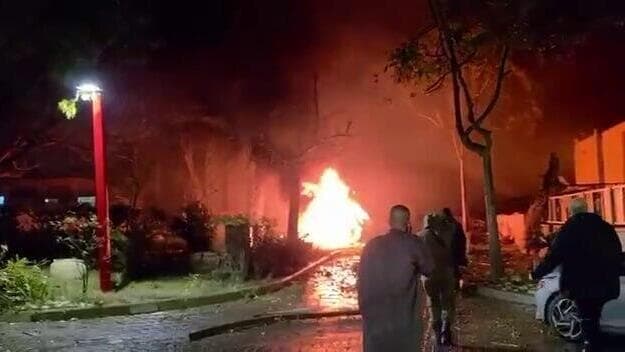
Iran Attacks Israeli Towns Dimona and Arad Near Israel's Main Nuclear Research Center, Dozens Wounded
43 sources compared
Iran Attacks Dimona in Retaliation for Natanz Strike
44 sources compared

Iran Attacks Diego Garcia with Long-Range Missiles, Targeting U.S.-UK Base
82 sources compared
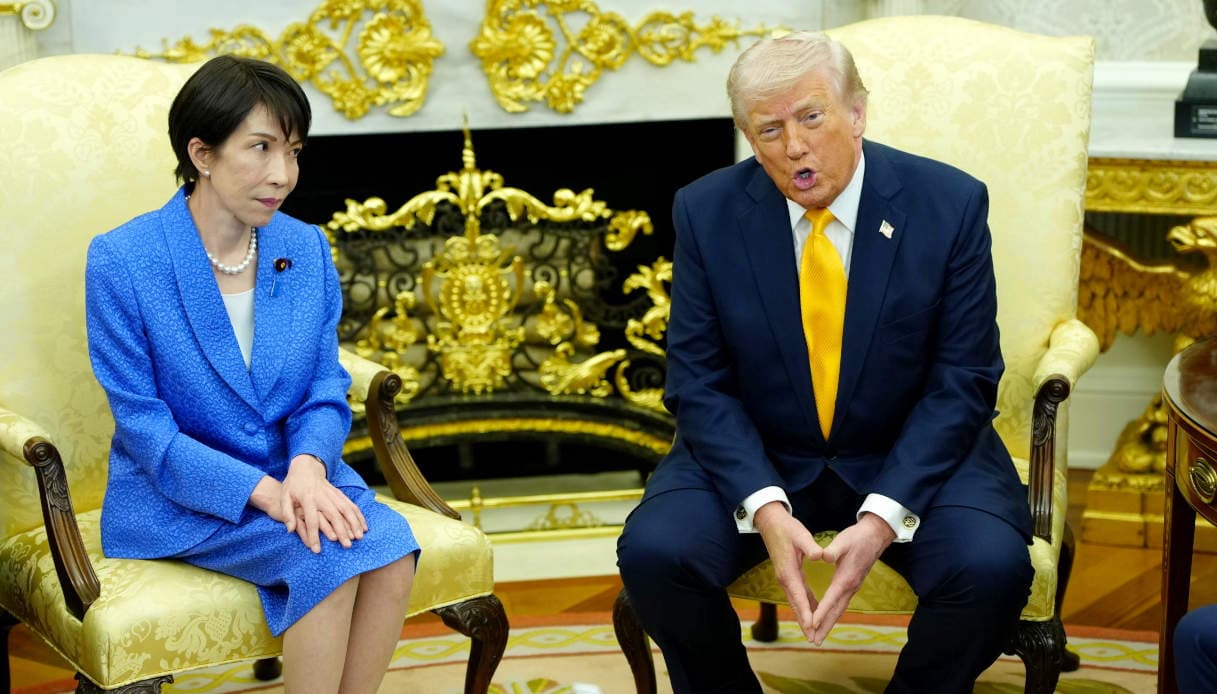
Trump Defends Iran War by Citing Pearl Harbor
12 sources compared