Iran19 March, 20263 min read
President Trump Seeks to Reassure Americans as U.S.-Israeli Attacks on Iran Enter 20th Day
Trump says the United States had no knowledge or involvement in the South Pars strike. He warned the US would destroy Iran's South Pars field if Iran attacks Qatar.
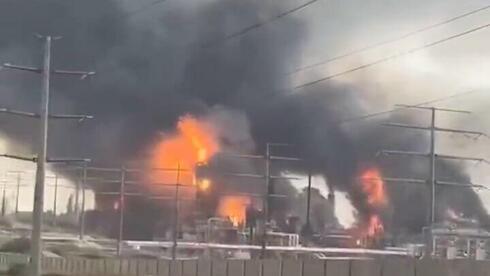
Trump's Reassurance Efforts
President Donald Trump is attempting to reassure Americans as the U.S.-Israeli war against Iran enters its 20th day. The conflict has been marked by spiraling energy prices and growing public concern about its duration and cost. Trump sought to project confidence that the crisis would be temporary, stating 'It will be over with soon.'
“'It will be over with soon,' he said, even as the Pentagon sought $200 billion in funding for the war — a significant sum adding to the costs of an already divisive campaign.”
Even as the Pentagon requested $200 billion in additional funding for the escalating military campaign. The campaign has already lasted nearly three weeks since the conflict began on February 28.

Global markets have experienced significant volatility with oil prices surging to $119 a barrel before settling at $108.65. This represents an almost 50 percent increase in less than three weeks.
Energy Market Disruption
The conflict has severely disrupted global energy markets across the Gulf region. Attacks on critical infrastructure have caused widespread economic fallout. Iran's retaliatory strikes hit energy facilities in Qatar, Saudi Arabia, and the United Arab Emirates.
Qatar's Ras Laffan Industrial City sustained 'significant damage' from missile attacks. This reduced Qatar's natural gas export capacity by 17 percent. The attacks caused an estimated $20 billion in annual revenue losses for Qatar.

The damage to these strategically vital energy sites has sent shockwaves through international markets. Experts warn prices will not decrease until regional security is restored. Infrastructure repairs could take three to five years according to Qatar's energy minister.
Trump's Contradictory Statements
Trump has publicly distanced himself from Israel's attack on Iran's South Pars gas field. This has created confusion about U.S. involvement in the escalating conflict. The president claimed Israel 'violently lashed out' at the facility 'out of anger.'
“U.S. President Donald Trump moved to distance himself from Israel's strike on Iran's South Pars gasfield Wednesday, describing his Israeli allies as having 'violently lashed out' at the facility and insisting the U.S. had no prior knowledge of the attack — even as the Wall Street Journal reported that Trump had in fact approved it in advance.”
Trump insisted that 'the United States knew nothing about this particular attack.' He claimed both the U.S. and Qatar had no prior knowledge of the strike. However, these statements contradict multiple reports about Trump's actual involvement.
Sources indicate Trump approved the Israeli strike in advance. Coordination occurred between Netanyahu and Trump to deter Iran from disrupting oil supplies.
The Wall Street Journal reported Trump was aware and supported the strike. CNN reported it was carried out in coordination with the U.S.
Political Fallout
The escalating conflict is taking a significant political toll on Trump. His approval ratings are reaching new lows as the war grows unpopular. Polling data shows Trump's net job approval dropped to a new second-term low of minus-15.3 percent.
His job approval average stands at 40.4 percent with disapproval at 55.6 percent. This is lower than any president at this point in their first term since World War II. The war itself is deeply unpopular among the American public.
Support ranges from just 22 percent among those under 30 to 33 percent overall. Sixty-four percent of Americans oppose the introduction of U.S. ground troops.
The administration faces growing criticism for its handling of the conflict. Questions remain about the lack of robust debate before the strike decision.
International Reactions
International reactions to the escalating conflict have been mixed. Some allies express concern while others take more confrontational stances toward Iran. The Arab League Secretary-General condemned Iran's 'flagrant' attack on Qatar's Ras Laffan facility.
“Arab League chief condemns Iranian attacks on gas facility in Qatar Arab League Secretary-General Ahmed Aboul Gheit has condemned what he described as a 'flagrant' Iranian attack on a major gas facility in Ras Laffan Industrial City in Qatar. He also condemned Iran's attacks on Saudi Arabia and United Arab Emirates on Wednesday, and warned against the 'dangerous escalation' caused by targeting oil and gas facilities in the Gulf.”
He called it a 'dangerous escalation' that crossed 'all red lines.' Czech Prime Minister Andrej Babiš called Israel's attack 'incomprehensible.' Babiš stated the move has been 'totally damaging the markets.'

This highlights growing international unease about the conflict's economic impact. Companies like Cathay Pacific have been forced to suspend flights to the region.
The airline announced it would halt flights to Dubai and Riyadh until end of April. This was due to 'the developing situation in the Middle East.'