Protester Throws Red Liquid at Exiled Iranian Crown Prince Reza Pahlavi in Berlin
Key Takeaways
- Exiled Crown Prince Reza Pahlavi was splashed with red liquid in Berlin.
- Police detained the attacker; Pahlavi was escorted away by security.
- The attack followed his criticism of the Iran-US ceasefire.
Tomato Juice Attack
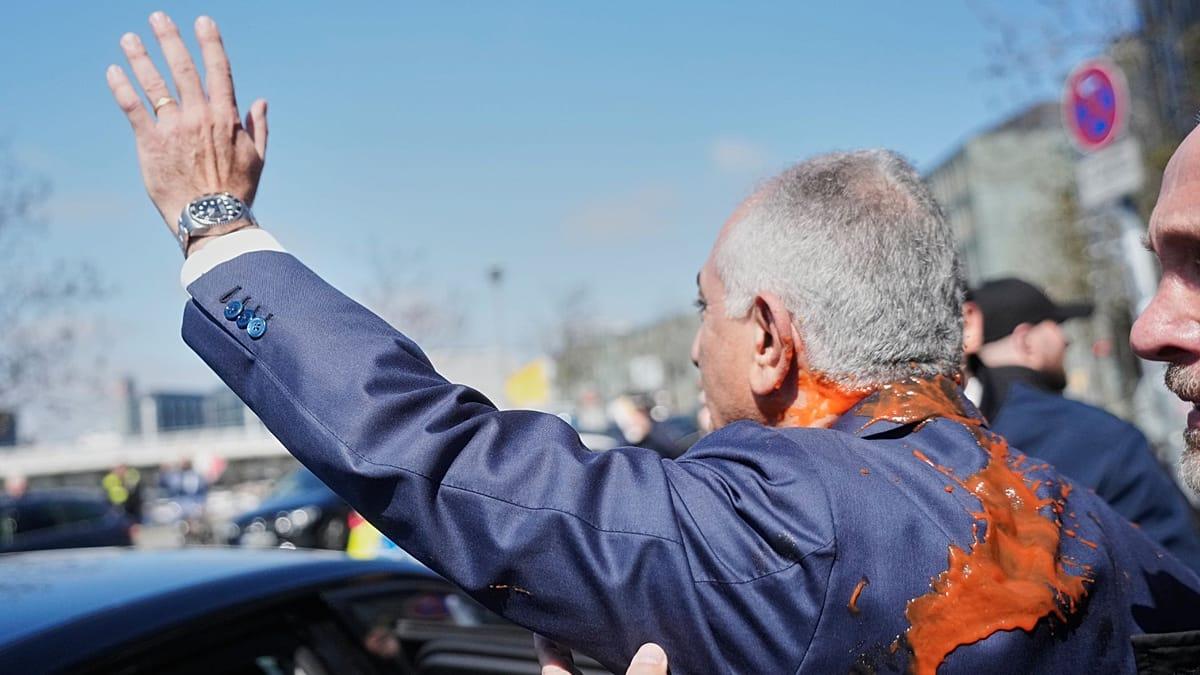
Exiled Iranian Crown Prince Reza Pahlavi was splattered with red liquid in Berlin on Thursday as he left a building after a news briefing, according to Associated Press reporting.
“Toggle Play Protester hurls red fluid at Reza Pahlavi during Germany visit The exiled former crown prince of Iran Reza Pahlavi was splashed with red fluid by an activist during a visit to Berlin, in an apparent protest over his stance on the war in Iran”
The AP said the incident occurred outside Germany’s federal news conference building, and that Pahlavi had just departed a news briefing where he criticized the ceasefire between the United States and Iran.

Police told AP that the liquid appeared to be tomato juice, and the alleged perpetrator was immediately detained by police.
AP reported that Pahlavi appeared unhurt by the liquid coating the back of his blazer and neck, and that he waved to his supporters before getting into a car that drove away.
The Times of Israel described the same moment as a protester throwing red liquid at Pahlavi as he left Germany’s federal news conference building, with police arresting the suspect immediately afterward.
The Hill added that footage showed security guards attempting to remove what appeared to be the protester who splattered Pahlavi’s suit while others escorted him away from the crowd.
Multiple outlets tied the attack to Pahlavi’s remarks about the ceasefire, including his statement that “I don’t see that happening,” and his insistence that “diplomacy has been given enough chance.”
Ceasefire Clash
Pahlavi’s Berlin appearance centered on his criticism of the ceasefire between the United States and Iran, which he framed as a process that assumes Iranian behavior will change.
The Associated Press reported that he criticized the ceasefire during a news briefing before the red-liquid incident, and it quoted him saying, “you’re going to deal with people who all of a sudden have become pragmatists.”

In the same AP account, Pahlavi said, “I don’t see that happening,” and added, “I’m not saying that diplomacy should not be given a chance, but I think diplomacy has been given enough chance.”
The Times of Israel similarly tied the attack to his remarks, quoting him as saying, “The whole narrative of ceasefire and negotiation is still based on thinking that ⦠youâre going to deal with people who all of a sudden have become pragmatists.”
The Hill reported that Pahlavi echoed those calls during a Wednesday press conference in Berlin and advocated for “free elections” in Iran while pushing for Europe to provide more support to those working on the ground to overthrow the Islamic Republic.
The Hill also quoted Pahlavi telling reporters, “The choice is yours. With or without the world, with or without Europe, with or without Germany, our fight goes on,” and “We will not rest until our nation is free, until our people have their dignity restored, until justice is served.”
In parallel, DW reported that Pahlavi urged European governments not to appease Iran’s leadership, saying continuing to negotiate would only keep the current power system in place, with his line: “If you think you can make peace with this regime, you are sorely mistaken.”
European Outreach and Claims
Alongside his ceasefire critique, Pahlavi used the Berlin visit to press European governments on how to respond to Iran’s leadership and to argue for a democratic transition.
“Iran’s exiled crown prince Reza Pahlavi splattered with red liquid in Berlin Iran’s exiled crown prince Reza Pahlavi splattered with red liquid in Berlin BERLIN (AP) — Iran’s exiled Crown Prince Reza Pahlavi was splattered with red liquid on Thursday as he left a building in Berlin”
DW reported that Pahlavi called on European governments not to appease Iran’s leadership and said continuing to negotiate would only keep the current power system in place, adding, “There will never be stability, even if a watered-down version of this system survives.”
DW also quoted Pahlavi saying, “Europe faces a choice "between a dying regime that endangers us all and a free Iran,"” and described the regime as “a wounded beast.”
The Associated Press reported that Pahlavi called on Europeans to do more to support Iranian people fighting for democracy, and it quoted him asking, “Will the free world do something, or watch the slaughter in silence?”
In the AP account, Pahlavi claimed “19 political prisoners were executed by Iranian authorities in the past two weeks and another 20 people have been sentenced to death.”
DW echoed the same claim about executions, stating that Pahlavi said there were no pragmatists or reformers and that he claimed “19 political prisoners were executed by Iranian authorities in the past two weeks.”
The Times of Israel added that Pahlavi called on European governments to “stop appeasing the regime” and take steps including helping Iranian citizens access the blockaded internet.
German Officials and Meetings
The Berlin visit also became a dispute over whether German officials would meet Pahlavi, with multiple outlets describing that he was not invited to meet government representatives.
The Associated Press said Pahlavi “was not invited to meet with any government representatives during his visit to Berlin,” and it reported that German Chancellor Friedrich Merz released a statement welcoming the extension of the ceasefire.
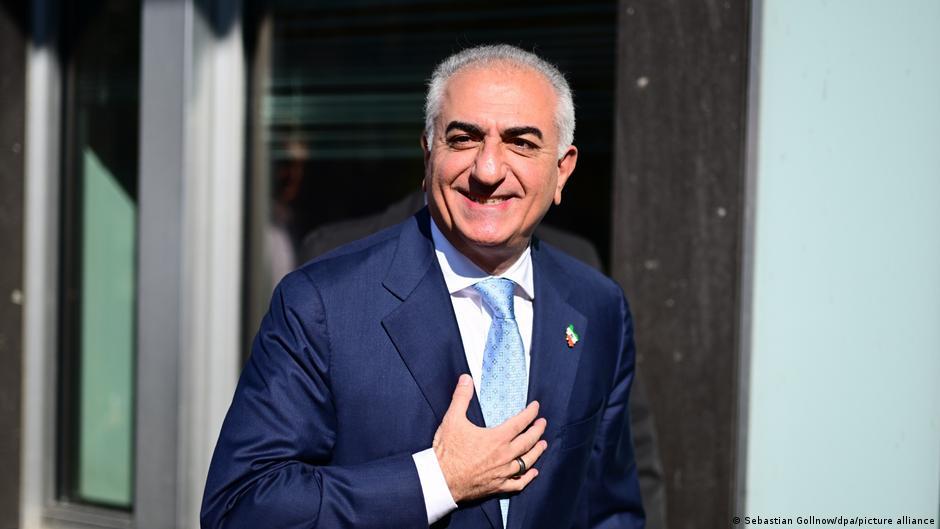
In that AP statement, Merz’s government said, “This presents an important opportunity to resume diplomatic negotiations in Islamabad with the aim of making peace and averting further escalation of the war,” and it added, “Tehran should seize this opportunity.”
DW reported that Pahlavi was expected to meet with Armin Laschet, a lawmaker from Chancellor Friedrich Merz’s conservative Christian Democratic Union (CDU), as well as foreign policy figures from other parties, but said there were no plans for him to meet a member of the government.
DW also quoted Foreign Minister Johann Wadephul, who said Pahlavi was coming to Germany as a private individual and was “also engaging in political discussions,” while adding that it was “not the federal government's role to hold such talks.”
DW reported that when asked why that was, Pahlavi called it “a disgrace.”
The Hill reported that Pahlavi was not officially invited by German officials to speak, and it described his appearance as a dissident event in Berlin.
Competing Narratives and Stakes
The incident and Pahlavi’s visit were framed differently across outlets, including how they described the liquid and how they positioned him within Iran’s future.
“Man throws red liquid at Iran’s exiled prince Reza Pahlavi in Berlin: Video The incident took place as Pahlavi exited Germany’s federal press conference building after addressing reporters”
The Associated Press said police believed the liquid appeared to be tomato juice, while the Jerusalem Post reported that police stated the substance appeared to be tomato juice but also noted “other reports claimed it was red paint.”
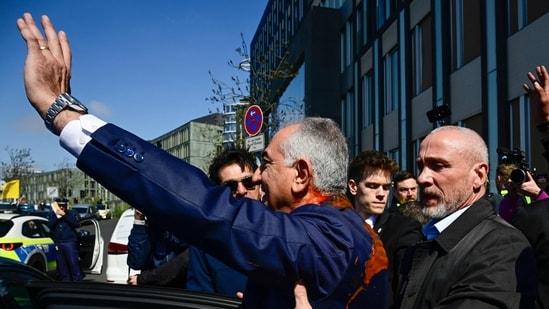
DW described the incident as a splashing with tomato sauce by a protester and said authorities initially described it as an attack involving a tomato but later said only that a red liquid had been thrown, while Pahlavi’s team said it was tomato sauce.
In terms of political framing, DW portrayed Pahlavi as urging regime change and said he put himself forward as someone who could lead a democratic transition in the event that Iran's leadership is toppled, while also quoting his claim that “There will never be stability.”
The Hill described some Iranians’ disdain for Pahlavi, including a reference to his father dismantling the country’s democracy in 1953 by ousting elected Prime Minister Mohammad Mosaddegh, and it said Pahlavi attempted to position himself as the next U.S.-approved leader of Tehran.
The Associated Press described Pahlavi as the son of Iran’s former shah and said he was trying to position himself as a player in his country’s future, though it was unclear how much support he has in Iran after nearly 50 years in exile.
Looking ahead, DW reported that Pahlavi was jockeying for a return to power should the Shiite theocracy fall, and it said “a change in Iran's leadership has appeared increasingly unlikely.”
More on Iran

U.S. Naval Blockade of Iranian Ports Pressures Tehran in Strait of Hormuz Standoff
14 sources compared

Iran Grants Russia Strait Of Hormuz Transit Fee Exemptions, Ambassador Kazem Jalali Says
16 sources compared
Russian General Yevgeny Ilyin Praises Iran’s Defense Against US-Israeli Aggression
13 sources compared
U.S. Naval Blockade Pressures Iran’s Maritime Trade as Strait of Hormuz Stays Closed
34 sources compared