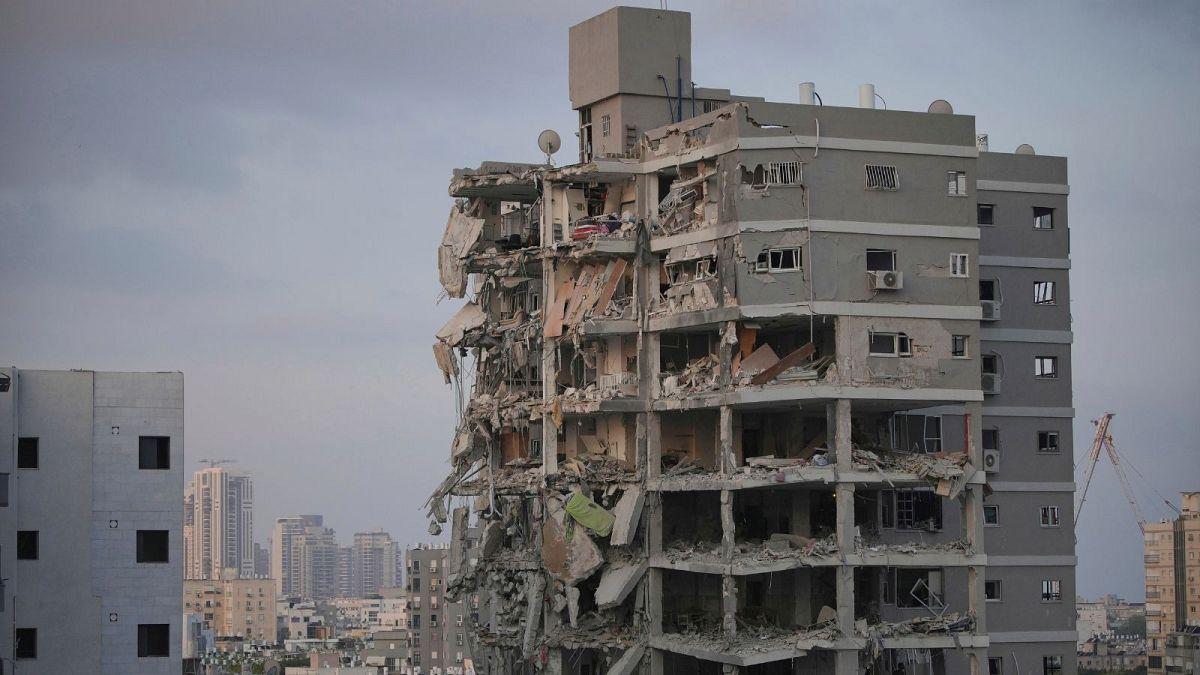
Russian General Yevgeny Ilyin Praises Iran’s Defense Against US-Israeli Aggression
Key Takeaways
- Iran launched missiles and drones in retaliation, escalating fighting into the region.
- Media describe US-Israeli strikes on Iran as the trigger for the conflict.
- Russian Major-General Yevgeny Ilyin praised Iran's defense as a shining example.
Escalation and claims of aggression
Iran’s National Army Day ceremony in Moscow became a focal point for competing narratives about the war, with Russian officials praising Iran’s “firm resolve” while other outlets and analysts disputed the legality and targeting of strikes.
“Iran announces the killing of seven more senior military leaders in the American-Israeli aggression”
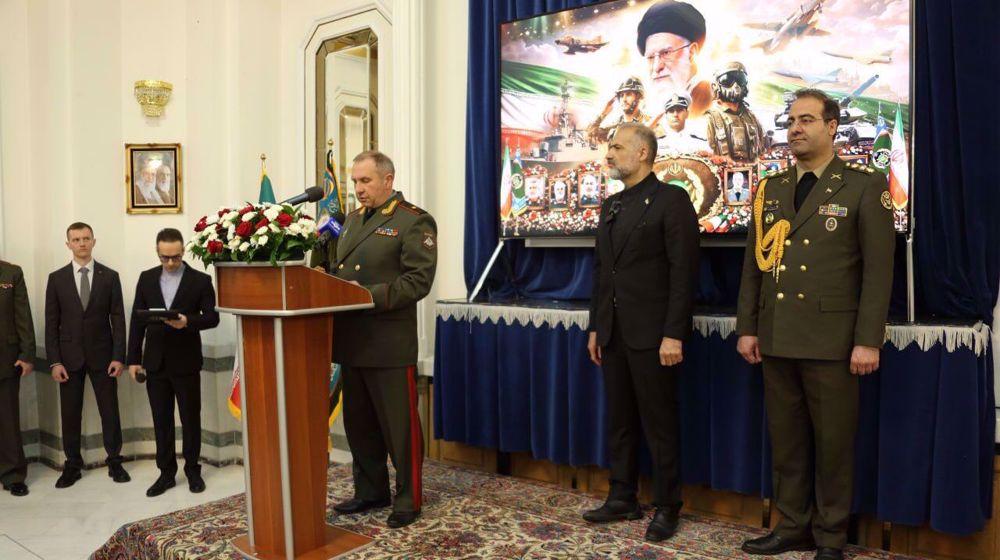
PressTV reported that Major-General Yevgeny Ilyin, described as the first deputy head of the Main Directorate of International Military Cooperation of the Russian Defense Ministry, hailed Iran’s “shining example” of defense during the “recent illegal US-Israeli war of aggression.”

The same report said Iran marks National Army Day as “parades are cancelled due to US-Israeli aggression,” and it placed the start of the conflict on February 28, describing “airstrikes that assassinated senior Iranian officials and commanders.”
PressTV also asserted that “Iranian armed forces unleashed 100 waves of successful retaliatory strikes” against “sensitive and strategic American and Israeli targets throughout the region.”
Mehr News Agency, through spokesman Esmaeil Baghaei, rejected Arab League claims and said Iran’s actions were “strictly defensive,” framing them as “within the framework of the inherent right to legitimate self-defense in accordance with Article 51 of the UN Charter.”
CNN Arabic’s Jeffrey Sachs and Sibyl Faris argued the opposite legal framing, writing that “The United States and Israel waged an unprovoked war against Iran in flagrant violation of Article 2(4) of the Charter, without Security Council authorization.”
In parallel, BBC described how the conflict began after “the US and Israel launched wide-ranging strikes on Iran, killing the country's supreme leader on 28 February,” and it said Iran responded with attacks “on Israel and US-allied states in the Gulf.”
Ceasefire, negotiations, and timing
As the conflict progressed, multiple outlets described shifting timelines and negotiation attempts, while Iranian and Russian officials continued to frame the war as defensive and coordinated.
PressTV said that “forty days into the war,” a “Pakistan-brokered two-week ceasefire went into effect” on April 8, but it added that “the first round of Tehran-Washington negotiations failed to reach an agreement.”
The same PressTV report tied the diplomatic track to military cooperation, saying that “Referring to the strategic partnership pact signed between Iran and Russia,” both states “have maintained their cooperation in many fields.”
Mehr News Agency’s Baghaei also anchored Iran’s position in the UN Charter, emphasizing “the prohibition of the use of force and the respect for the national sovereignty and territorial integrity of all nations.”
BBC provided a different framing of the ceasefire, saying “The US and Iran have since agreed to a conditional two-week ceasefire starting on 7 April,” and it asked “how long could the war last?”
BBC also described the early leadership losses and succession, stating that “Khamenei's son, Mojtaba Khamenei, was named as his successor on 8 March.”
It further listed other high-ranking officials killed in the first wave, including “security chief Ali Larijani, intelligence minister Esmail Khatib and the head of the paramilitary Basij force, Gholamreza Soleimani.”
In a separate thread, Anadolu Ajansı reported that Iran said it had killed “seven additional senior military leaders” in the “American-Israeli aggression,” naming Lt. Gen. Mohammad Shirazi and Lt. Gen. Akbar Ibrahimzadeh among others.
Targeting, civilian damage, and legal debate
Beyond official statements, teleSUR English and BBC described the difficulty of separating military assets from civilian life, while CNN Arabic argued the strikes violated international law.
“This article is written by Professor Jeffrey Sachs, a professor and director of the Center for Sustainable Development at Columbia University in the United States, and Sibyl Faris, Senior Advisor for the Middle East and Africa affairs for the United Nations Network for Sustainable Development Solutions, and the views expressed below reflect the authors' own perspective and do not necessarily reflect the views of CNN”
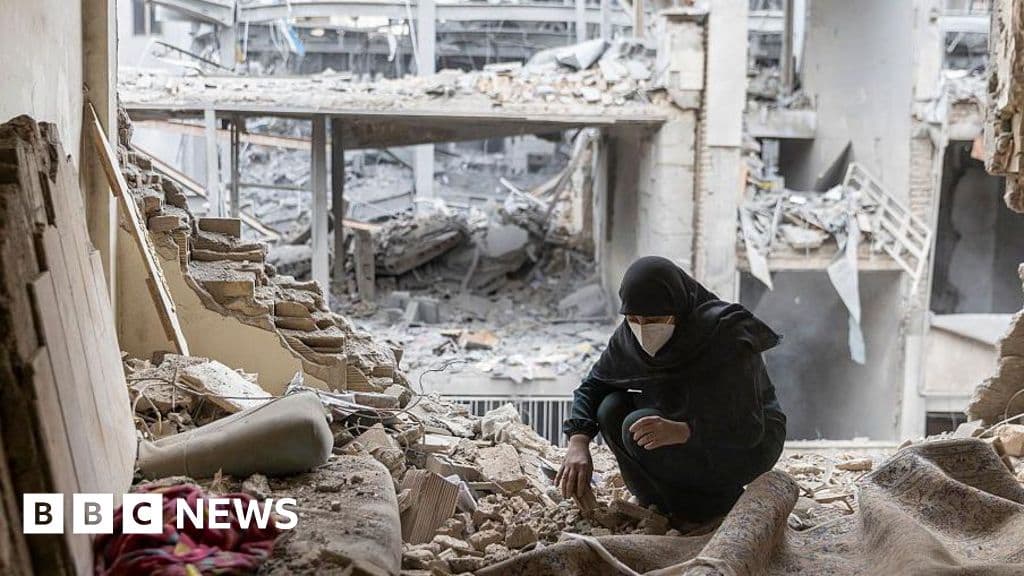
teleSUR said an analysis of satellite imagery of affected zones in Tehran found that “out of 2,816 buildings damaged, approximately 32 percent were connected to the military,” while “21 percent were civilian residential” and “19 percent commercial,” and it added that “2 percent” were governmental.
It also cited Oregon State University’s Conflict Ecology research group, saying radar imagery estimated that “between February 28 and April 8, U.S. and Israeli attacks destroyed or damaged 7,645 buildings across all of Iran,” including “60 schools and 12 health centers.”
teleSUR quoted Nazanin Shahrokni, a researcher at Simon Fraser University, saying, “In practice, you cannot draw a clear line between military targets and civilian life. Once the attacks begin, their impact spreads throughout this interdependent fabric.”
BBC, meanwhile, described the initial strikes as targeting “missile infrastructure, military sites and leadership in the capital, Tehran,” and it said Iran accused the US and Israel of attacking “a girls' school near an IRGC base in southern Iran on 28 February,” with Iran saying “168 people, including around 110 children, were killed.”
BBC also reported that “Expert video analysis shows a US Tomahawk missile hit a military base near the school,” citing BBC Verify.
CNN Arabic’s Sachs and Faris argued the legal basis was absent, writing that the war was “in flagrant violation of Article 2(4) of the Charter, without Security Council authorization, and without any legitimate claim of self-defense under Article 51.”
They also asserted that the US and Israel “openly assassinate Iranian leaders,” and they wrote that “more than 140 young girls” were killed “in their school in Manab.”
Regional spillover and counterclaims
Iran’s conflict with the United States and Israel was described across multiple sources as spreading into neighboring states and producing competing casualty and damage claims.
TRT عربي reported that “Nine Arab states have been damaged as a result of Iran's response,” citing official positions tracked by Anadolu Agency from the United Arab Emirates, Qatar, Kuwait, Bahrain, Oman, Iraq, Saudi Arabia, Syria, and Jordan.

It said that on Saturday Iran targeted “Qatar, Saudi Arabia, the UAE, Kuwait and Bahrain with hundreds of missiles and drones,” and it added that the attacks “caused damage to civilian assets including airports, ports, and various buildings.”
In the UAE, TRT عربي quoted the Dubai Media Office saying “debris from drones fell after being intercepted by air defenses over two residential complexes in the Emirate of Dubai,” and it said the office confirmed “two injuries.”
For Qatar, it said Lieutenant Colonel Nasser Mohammed Al Kubaisi told a press conference that armed forces detected “65 ballistic missiles and 12 drones coming from Iran,” and that “63 missiles and 11 drones” were downed before reaching targets, with “two missiles” reaching “the Al Udeid air base” and “one drone” targeting an “early warning radars.”
In Bahrain, TRT عربي said the Bahrain Defense Force stated it destroyed and shot down “45 missiles and nine drones,” including “Shahed-136 drones,” and it reported “three minor injuries” treated and discharged.
BBC described the broader geography differently, saying there have been strikes in “countries hosting US bases – Qatar, Bahrain, Jordan, the United Arab Emirates (UAE) and Kuwait,” and it added that “Iran has also been accused of attacking oil and gas facilities, shipping and civilian sites.”
The same BBC account said “At least 24 people have been killed across the Gulf so far,” and it listed deaths in the UAE, Kuwait, and among Oman, Saudi Arabia and Bahrain.
Voices, threats, and deterrence
The sources also show how leaders and military figures used direct language about deterrence, retaliation, and political messaging, with each side threatening escalation in different terms.
“Categorically rejecting the provisions of the statement, Esmaeil Baghaei, in a statement issued late on Thursday, called on the bloc to “adjust its approaches away from the influence of the one-sided and unconstructive positions of certain members”
PressTV quoted Iranian military attaché to Russia Sadeq Rezaei Moqaddam, who asserted that “Iranian Armed Forces have always been committed to moral principles and differentiated between military and civilian targets,” and he accused the US and Israel of “horrible war crimes” by “killing 170 students and teachers at an elementary school in the city of Minab.”
He said a memorial was held at “Tehran’s Book Garden” for the “martyred students of Shajareh Tayyebeh School in Minab,” and he argued that “The attacks on civilian infrastructure and educational centers represent the enemies’ strategic failure.”
Anadolu Ajansı reported that Iran announced the killing of senior leaders, including Lt. Gen. Mohammad Shirazi and Lt. Gen. Akbar Ibrahimzadeh, and it said the attacks “claimed hundreds of lives, including the Supreme Leader Ali Khamenei.”
In a separate Iranian-facing deterrence narrative, Tabnak quoted Sardar Hossein Eshtari saying, “We are not seeking war and we are not going to attack any country; however, if a country aggresses against Iran, we will land a heavy blow to its mouth,” and it added that “if the enemy acts irrationally, he will certainly receive a blow more crushing than the twelve-day war.”
On the Israeli side, Iran International reported that Israel’s army held security assessments chaired by Chief of the General Staff Eyal Zamir and said it was “closely monitoring developments in Iran,” while also stating, “if necessary, we know how to respond with force.”
The same Iran International report included Israeli Prime Minister Benjamin Netanyahu saying, “We support the brave and courageous citizens of Iran,” and it quoted Mohammad Bagher Qalibaf threatening that “Any American attack on our soil will be answered with an attack on Israel and American bases in the region.”
Finally, Mehr News Agency’s Baghaei warned neighboring governments that “Those regional governments that have in any way—whether by facilitating access, providing bases, or offering logistical or intelligence support—placed their territory and facilities at the disposal” of US and Zionist actions “bear international responsibility.”
More on Iran
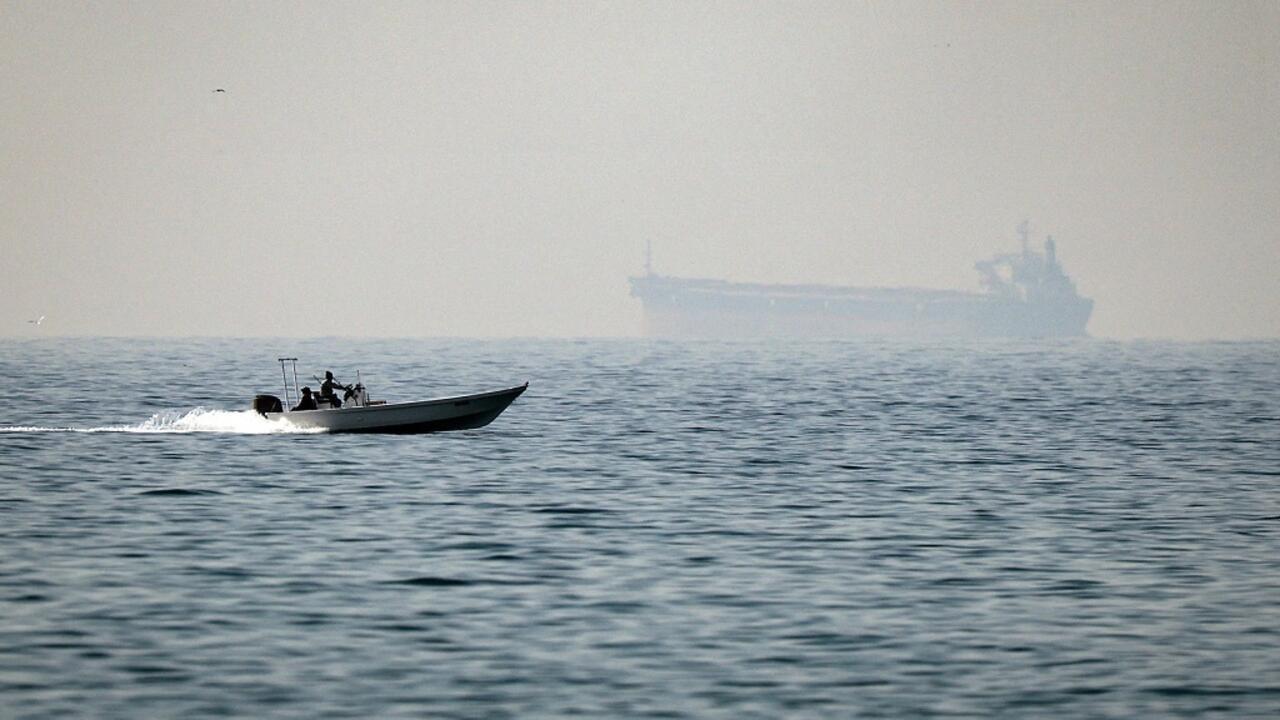
U.S. Naval Blockade of Iranian Ports Pressures Tehran in Strait of Hormuz Standoff
14 sources compared
Iran Grants Russia Strait Of Hormuz Transit Fee Exemptions, Ambassador Kazem Jalali Says
16 sources compared
Protester Throws Red Liquid at Exiled Iranian Crown Prince Reza Pahlavi in Berlin
15 sources compared
U.S. Naval Blockade Pressures Iran’s Maritime Trade as Strait of Hormuz Stays Closed
34 sources compared