Indiaupdated 1h ago3 min read
Police Detain Rahul Gandhi and Opposition MPs in New Delhi Over Gyanesh Kumar Resignation Demand
Police detained opposition lawmakers in New Delhi during protest for CEC resignation. Rahul Gandhi among those detained briefly, later released to resume march.
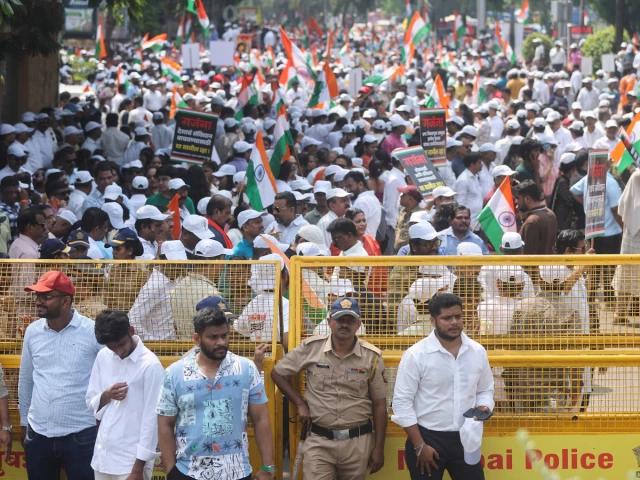
Delhi detentions and sit-in
Police briefly detained several opposition lawmakers in New Delhi as they tried to breach barricades during a protest march demanding Chief Election Commissioner Gyanesh Kumar resign over a controversial revision of voter lists.
Rahul Gandhi, along with Priyanka and other MPs, was forced into a police bus, then resumed the march and began a sit-in near Election Commission headquarters after being released.
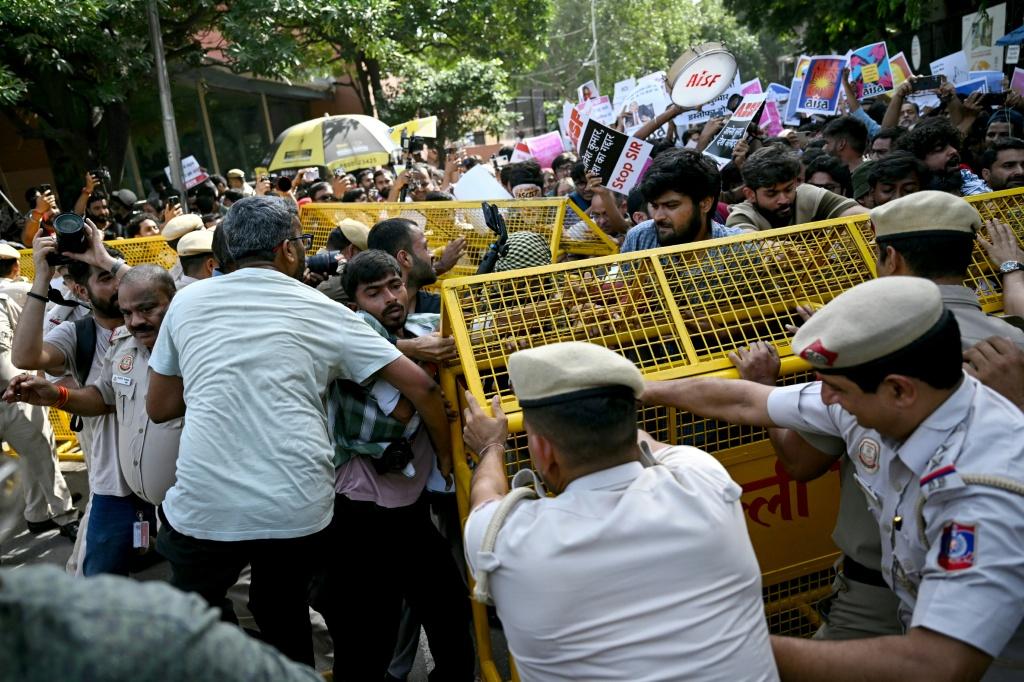
Additional Deputy Commissioner of Police Manjeet Sheoran told the BBC that officers picked up protesters from multiple points and took them to different police stations, while the police did not disclose how many lawmakers had been detained.
The BBC said the police did not disclose how many lawmakers had been detained, and the Reuters report said the march was aimed at demanding Kumar’s resignation over the voter-list revision controversy.
Rahul Gandhi’s protest slogan, “Gyanesh, it's done, bro. Time to resign,” appeared as the march moved roughly 1-km from parliament toward the Election Commission of India headquarters.
Accusations over voter lists
Congress President Mallikarjun Kharge told reporters as the march began that “The election commission is a puppet in the hands of the government,” while the BJP and the Election Commission rejected the allegation that the process could benefit Prime Minister Narendra Modi’s Bharatiya Janata Party.
The BBC said the Election Commission’s Special Intensive Revision began in Bihar in June 2025 before expanding, and the BBC reported that “More than 130 million names have so far been removed from draft voter lists nationwide.”

The BBC also said the controversy gathered momentum after an investigation by the Indian Express newspaper reported that election commissioners Sukhbir Singh Sandhu and Vivek Joshi had formally objected at least 14 times over a 10-month period.
Sambit Patra told reporters that “After failing multiple times, Congress leaders have decided to establish anarchy in the country and attack institutions,” and the Reuters report described the BJP’s framing of the protests as a political challenge to Modi.
The Supreme Court agreed on Monday to hear requests for intervention in the accusations against the poll body’s voter drive and the conduct of its chief, and the Reuters report quoted the court saying, “If there are decisions against the law ... We will take care of it.”
What comes next
The protests continued as opposition lawmakers said they were detained and prevented from reaching the Election Commission office, and Trinamool Congress MP Sagarika Ghose wrote on X that “We are being detained and taken to an unknown location.” The BBC reported that security was tightened around the Election Commission headquarters on Tuesday, with police barricading roads along the route between parliament and the commission’s office. The Supreme Court’s handling of the dispute shaped the immediate stakes, as the BBC said the court declined to suspend Kumar at this stage while it first heard the Election Commission’s response and examined relevant records.
The Reuters report said the march presented a fresh political challenge to Prime Minister Narendra Modi midway into his third term, just months after similar protests forced the resignation of his education minister over exam paper leaks. The AFP report said the demonstrations were backed by key opposition parties including the Cockroach Janta Party, and it quoted CJP chief Abhijeet Dipke calling for “Delhi Police must stop its crackdown on protesting students and activists.”