Indiaupdated 1h ago3 min read
Indian Police Detain More Than 1,000 Protesters, Including Cockroach Founder Abhijeet Dipke, In New Delhi
This article is an automated aggregation of coverage from news outlets. Our editorials offer in-depth analysis curated by the NewsCord team.
Police detained over 1,000 protesters, including Cockroach movement founders Abhijeet Dipke, in Delhi. Central Delhi internet blocked, metro restrictions imposed, thousands of police deployed.
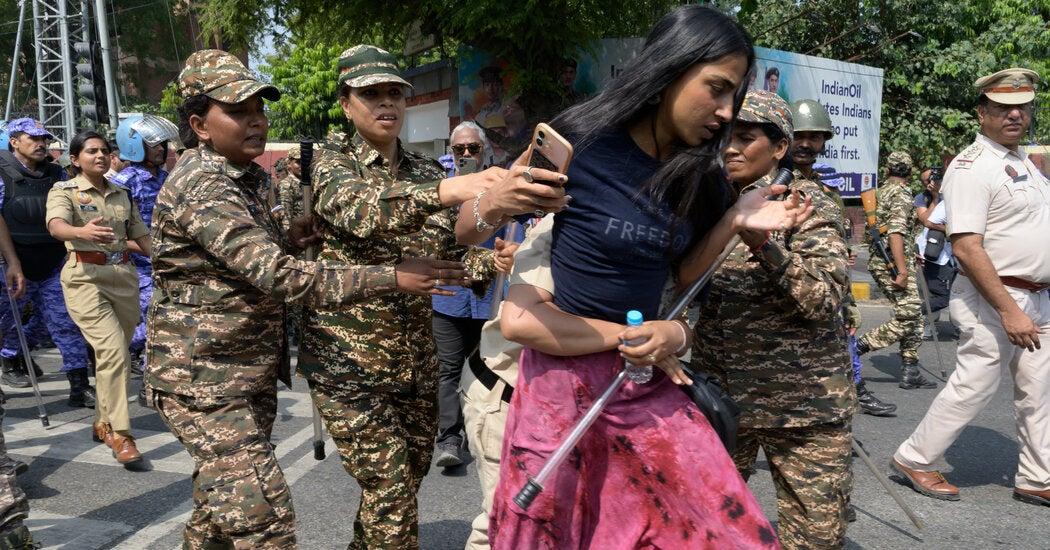
Delhi crackdown begins
Indian police detained more than 1,000 protesters, opposition politicians, journalists, student union leaders, lawyers and the founders of the “Cockroach” youth movement in New Delhi as authorities moved to quash a demonstration demanding the resignation of the election chief. The protests targeted Chief Election Commissioner Gyanesh Kumar over a revision of India’s Special Intensive Revision (SIR), and the satirical Cockroach Janta Party (CJP) had planned to gather thousands at Jantar Mantar in central Delhi. Security forces sealed off Jantar Mantar before the demonstration began, and the Indian capital went into lockdown with trains to New Delhi cancelled, mobile internet services suspended, and metro stations and markets shuttered.
BJP spokesman Sambit Patra dismissed the demonstrators as “anarchic elements,” saying, “Their flop show has been completely demolished,” while the police detained CJP founder Abhijeet Dipke, along with Saurav Das and Ashutosh Ranka, after they arrived from Mumbai. Delhi police also detained other CJP members including YouTuber and Modi critic Dhruv Rathee, and the opposition Congress party president Mallikarjun Kharge slammed Narendra Modi’s government after the detentions.

Injuries and transport limits
Police prevented the protest called by the Indian Gen Z movement known as the Cockroaches, and Antena 3 Noticias said at least two police officers and several protesters were injured during the operation. Authorities banned the gathering and ordered the more than 30,000 officers deployed to prevent any march, while the streets of the capital were left desolate and under heavy surveillance during the afternoon. Ajinkya Shinde urged citizens to keep the mobilization going after the detention of the main leaders of the CJP, writing, “Wherever the Police detains you, turn that place into your Jantar Mantar,”.
Police swiftly removed only a handful of protesters that reached Jantar Mantar, and the road the CJP had occupied during protests earlier this summer remained barricaded at both ends. Mobile internet services would remain suspended until 22:00 local time on Saturday within a four-kilometer radius around the Janpath and Kartavya Path crossing, and Delhi Metro Rail Corporation closed access to 45 stations from Friday night.

UN pressure and political stakes
The UN expressed concern over mass arrests of protesters, activists, lawyers, journalists, and opposition leaders in New Delhi and urged Indian authorities to release them immediately and unconditionally. Thameen Al-Kheetan, spokesperson for the Office of the UN High Commissioner for Human Rights, said, “Restrictions on peaceful protests should only be imposed when strictly necessary and proportionate,” while the UN reminded authorities that the right to peaceful assembly must be fully respected. The protests had been called to protest an exercise that has stripped 130m names from India’s electoral roll, and Delhi police denied permission for the protest to take place in the centre of the capital.
Abhijeet Dipke accused the government of being scared of young people, saying, “The mass crackdown on protesters and the shutdown of Delhi are not signs of strength but of a leader terrified of his own people,”. Police moved to break up the demonstration before it could begin, intercepting demonstrators on their way to Jantar Mantar, and restrictions on mobile internet and access to parts of the city added to the hurdles facing protesters.