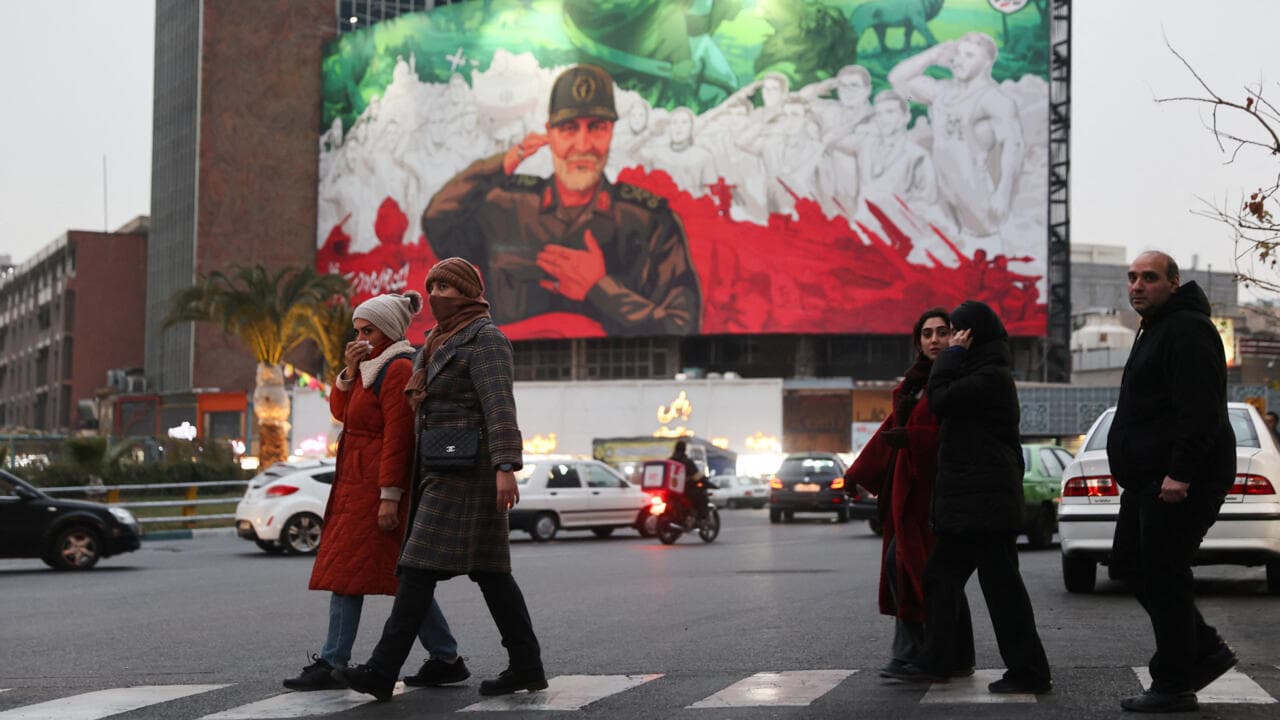
Protests in Iran: the broken trust between the regime and part of the population?
Key Takeaways
- Protests sweeping Iran broadened from economic grievances to political demands.
- Khamenei says economic demands are just; rioters must be put back in their place.
- Protests in Tehran amid high living costs reflect economic discontent fueling broader unrest.
Origins and spread
Protests in Iran have widened from Tehran to several regions amid the high cost of living, broadening to political demands.
“Protests in Iran: the breaking of trust between the regime and part of the population”
The Supreme Leader, Ayatollah Ali Khamenei, said on Saturday that the economic demands were 'just' while adding that 'rioters must be put back in their place'.
This is the first large wave of protests since those of autumn 2022, triggered by the death of Mahsa Amini.
Since Sunday, a mobilization born against the high cost of living, which started in Tehran, has spread to several regions of the country.
At the origin of the movement, Tehran's big merchants closed shops to denounce hyperinflation and the collapse of the rial, the national currency.
The protest then spread to universities and several mid-sized cities, notably in western Iran, where deadly clashes were reported on Thursday.
Economic crisis and sanctions
Iran's economy is under pressure, with hyperinflation and a collapsing currency.
Inflation reached 52% in December, according to official figures.
The dollar has surpassed 140,000 rials.
In September, the UN reinstated sanctions related to the Iranian nuclear program.
The result is an economy under pressure, a currency that has lost more than a third of its value in a year and inflation that reached 52% in December, according to official figures.
Since 2018, inflation has fluctuated at least between 30 and 40%.
The only country that continues to keep the Iranian economy afloat, especially since 2021, is China, which continues to buy oil from Iran.
Thanks to that, the economy had regained a bit of growth in recent years.
However, the authorities have never managed to address the inflation problem.
It is explained by the budget deficit.
On one hand, the state funds a system of direct subsidies, notably paid to the poorest, which weighs on the budget.
On the other, military spending is very high and explodes even more with the war against Israel.
This deficit is financed by money creation, which leads to inflation.
Added to that is enormous uncertainty linked to the war with Israel, which slows investment.
The IMF estimates near-zero growth for Iran in 2025.
We are thus facing a very deteriorated economic situation.
Political dynamics and trust
There is today a unity between the United States and Europe to apply sanctions against Iran, with the calculation that the population will eventually rise up and pressure the government.
“Protests in Iran: the breaking of trust between the regime and part of the population”
In this context, the European role is not very clear.
Can these movements really destabilize the regime of the Islamic Republic?
We are not seeing mobilizations as massive as those in 2022 or 2009.
There are not millions of Iranians in the streets.
The evolution of the situation will depend mainly on two factors.
The first is the attitude of the authorities.
Massoud Pezeshkian is considered a relatively moderate president.
The authorities are aware of the gravity of the political and economic climate and seek not to add fuel to the fire.
The official discourse is conciliatory: recognition of legitimate demands, willingness to dialogue, discussions soon to be organized with the bazaris or major merchants.
It remains to be seen whether this discourse will be heard.
For, on the other hand, the hardline currents of the regime favor another reading: that of external conspiracy, attributed to Israel or the United States, and advocate a harsher response to the protesters.
The second factor is the reaction of the population.
There is a large deficit of trust between the protesters and the authorities.
The question is whether the protesters will heed the president's offer to discuss.
For now, we are not sure.
What margins of maneuver do the Iranian authorities have?
The foreign exchange market is largely controlled by the Central Bank of Iran.
If the government wishes, it has the means to push down or at least stabilize the dollar rate.
The problem is the duration.
The authorities know they are entering a difficult political and economic period and hesitate to tap too quickly into their foreign currency reserves.
The continuation of Chinese purchases of Iranian oil will also be decisive, and one may think that it will continue.
But will that be enough to calm the anger of the population?
Behind these protests, there are also demands for political reforms.
Outlook and potential outcomes
Outlook hinges on whether authorities pursue dialogue or escalate, the extent to which sanctions pressure persists, and the population’s willingness to push for political reforms.
The evolution will depend on two main factors: the authorities’ attitude and the reaction of the population.
While not as massive as 2022 or 2009, the protests carry a potential for change only if the regime chooses to engage with legitimate demands and not dismiss them.
The role of the dollar, foreign sanctions, and continued oil purchases by China will influence the economy’s trajectory and the public’s patience, but underlying demands for political reforms remain a constant undercurrent.
More on Iran
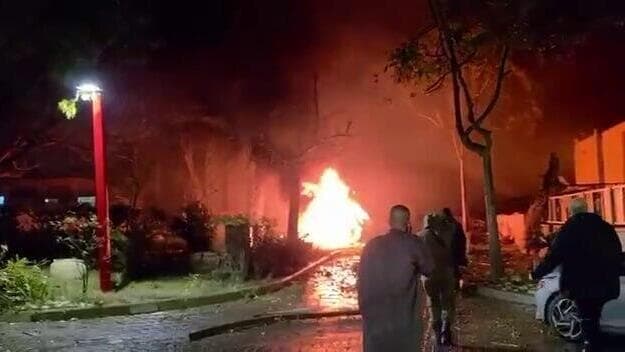
Iran Attacks Israeli Towns Dimona and Arad Near Israel's Main Nuclear Research Center, Dozens Wounded
43 sources compared
Iran Attacks Dimona in Retaliation for Natanz Strike
44 sources compared

Iran Attacks Diego Garcia with Long-Range Missiles, Targeting U.S.-UK Base
82 sources compared
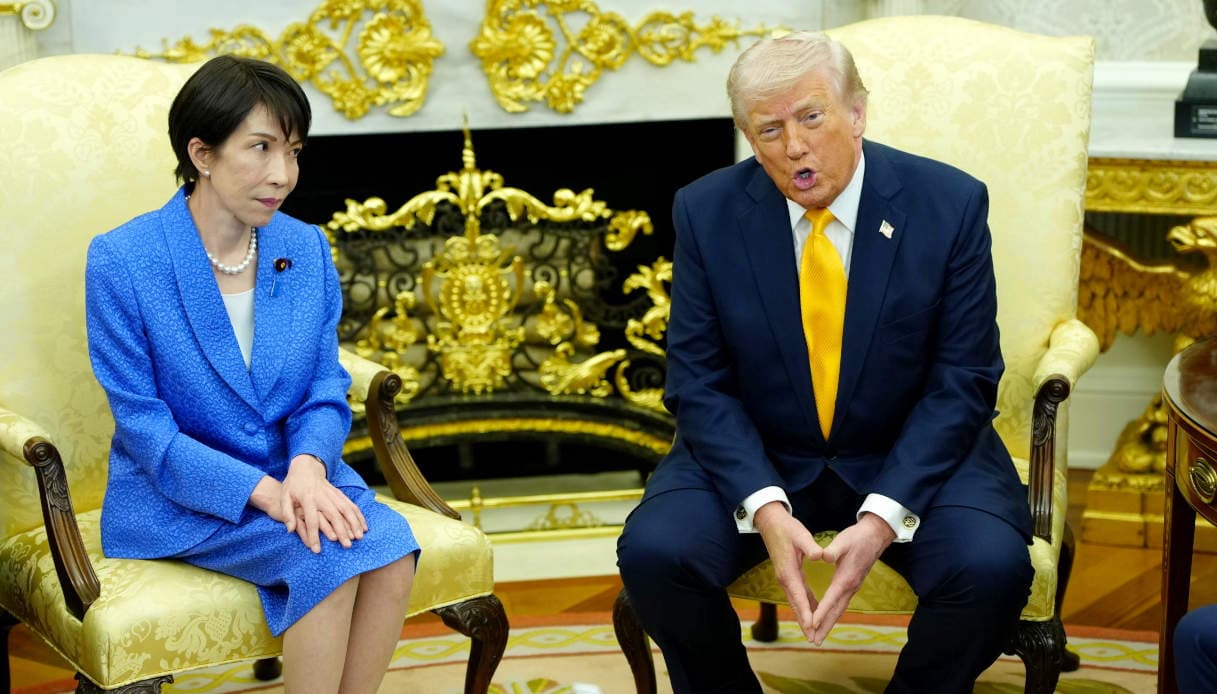
Trump Defends Iran War by Citing Pearl Harbor
12 sources compared