Tourism · 12 August, 2026 · 2 min read
Rare Total Solar Eclipse Sweeps Greenland, Iceland, and Northern Spain on Wednesday
Path of totality includes Greenland, Iceland, northern Spain, and parts of Portugal. Partial eclipse visible across much of Western Europe.
Which coverage highlights viewing logistics via official broadcasters.
7 of 8 outlets skipped it: reykjavik hotel rooms exceeded $1,000 and doubled vs 2025.
22outlets compared
Same story, two versions
tap a side to read it in full
New Scientist
“Thanks to our friends at The European Space Agency (ESA), you can watch their live broadcast”Read the original ↗
Discover Magazine
“Discoverwill follow a livestream from the Royal Observatory Greenwich”Read the original ↗
Steers readers to different trusted livestream sources.
Eclipse Turns Day to Night
A rare total solar eclipse is expected to sweep across parts of the Northern Hemisphere on Wednesday, with the Moon completely covering the Sun along a path that includes Greenland, Iceland, and northern Spain. The Guardian says the eclipse will be the first in mainland Europe in two decades, with the last event of this kind visible from the UK occurring in 1999, and it adds that the next total solar eclipse visible in the UK is not due until 2090.
In Spain, the eclipse is expected to peak between 20.26 and 20.33 local time depending on location, shortly before sunset, while the Royal Observatory Greenwich calculates that in London the partial eclipse will begin at 18.17 BST, reach its maximum at 19.13 BST, and end at 20.06 BST. The Guardian also quotes Dr Megan Argo of the University of Lancashire saying, "You have to be right in the middle of the shadow to see a total eclipse, and that is quite a narrow track on the Earth’s surface."

How to Watch Safely
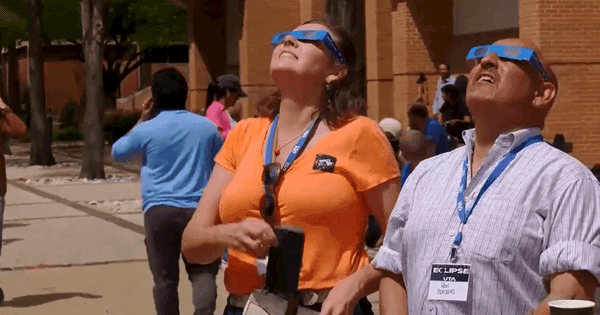
The Guardian stresses that viewers should not look at the sun with the naked eye or rely on sunglasses, and it recommends buying special eclipse glasses instead.
Royal Observatory Greenwich astronomer Dr Carys Herbert tells viewers, "It will be low on the horizon," and says people should find a spot with a view to the western horizon without buildings or trees in the way.

Discover Magazine says it will follow a livestream from the Royal Observatory Greenwich, where astronomers will use a telescope to show the partial eclipse from London, with the broadcast beginning at 12:10 p.m. DCT.
Discover Magazine adds that the observatory says the Moon will begin covering the Sun in London at 12:17 p.m. DCT and reach maximum coverage at 1:12 p.m. CT, when about 90 percent of the Sun will be obscured, before the eclipse ends at 2:06 p.m. CT.
Tourism and Travel Pressure
Tourism demand is rising around the eclipse, with Euronews reporting that excitement built in Spain where the eclipse's narrow path cuts diagonally from the northwestern Atlantic coast to the Mediterranean Sea.
Euronews quotes British astrophysicist and science communicator Graham Jones saying, "The path of totality is very narrow. It's only a couple of hundred kilometres wide," and it adds that Spain has government predictions of "the more than 446,000 extra tourists" bringing a "€347-million boost to the economy."
In Iceland, BigGo Finance says the event triggered a sharp spike in accommodation costs, with hotel rooms for Wednesday night exceeding $1,000, roughly double the rates recorded in 2025, according to data group Lighthouse Intelligence as reported by the Associated Press.
BigGo Finance also says totality lasted a maximum of 2 minutes and 18 seconds, and it notes that the eclipse was Iceland's first total solar eclipse since 1954 and the first visible from Reykjavík since 1433, a 593-year gap that fueled demand among international eclipse chasers.