Australia23 October, 20252 min read
Residents Use Garden Tools to Protect Tens of Millions of Migrating Red Crabs on Christmas Island
This article is an automated aggregation of coverage from news outlets. Our editorials offer in-depth analysis curated by the NewsCord team.
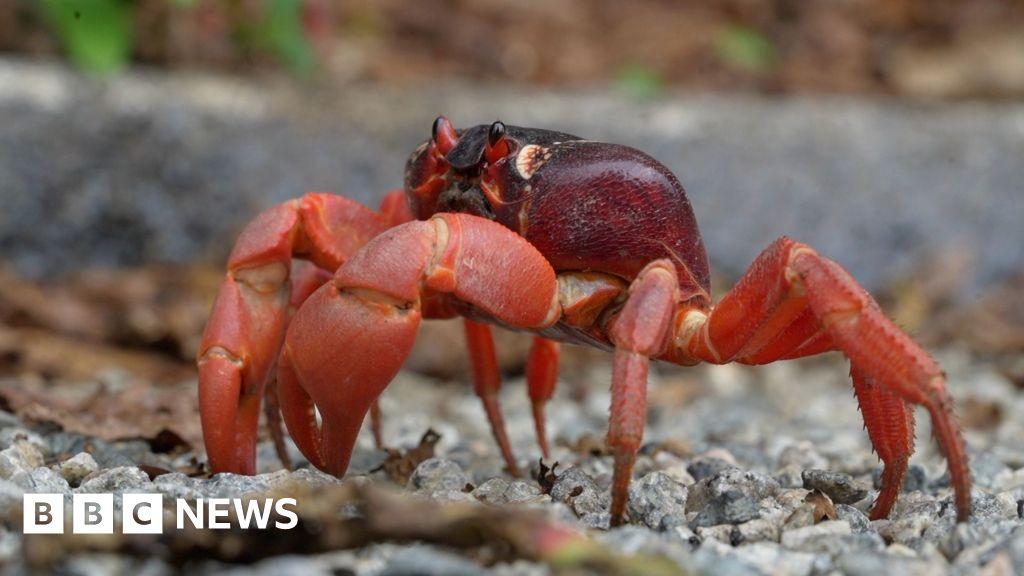
Up to 200 million red crabs migrate annually from forest to ocean on Christmas Island. Migration is triggered by the start of Southern Hemisphere summer rains.
7 outlets told this the same way.
Christmas Island Crab Migration
The annual red crab migration on Christmas Island surges with the start of summer rains, sending vast numbers of crabs from forest burrows to the sea to breed. Coverage varies on scale but agrees on the island-wide sweep: reports describe “tens of millions,” with some estimates “up to 100 million” crossing roads and gardens.
“Tens of millions of red crabs on Christmas Island, an Australian territory in the Indian Ocean, are undertaking their annual migration to the ocean to breed.”
Others simply note “millions” appearing everywhere, including inside homes and across driveways. The island’s roughly 1,200 residents respond by shepherding crabs off roads and away from vehicles—often with rakes or leaf blowers—to keep the migration flowing and the animals safe.

Crab Spawning Timing and Process
Coverage diverges on the precise timing and mechanics of spawning. AP News says males dig burrows where females lay and incubate eggs for two weeks before an expected release at high tide on November 14. ABC News and The Independent place the mass release around November 14–15 and tie it to the last quarter moon.
The Killeen Daily Herald gives a broader window—around mid-November during high tide. Across sources, larvae are said to spend roughly a month in the ocean before returning as tiny crabs.

Crab Conservation Efforts
Community protection methods are a defining theme. Residents routinely clear crabs from driveways and close roads at peak times. Conservation workers and locals use rakes, standard or backpack leaf blowers, and gentle herding to move crabs off traffic corridors and back toward safe routes.
“Residents often have to clear crabs from driveways to avoid harming them.”
Reports note that crabs will enter homes if doors are ajar, prompting people to sweep or waft them along rather than crush them. This approach is shaped by the island’s small, tightly knit population invested in the crabs’ safe passage.
Crab Migration Coverage
The spectacle and its challenges are framed differently across outlets. Kids News highlights the showpiece nature of the event, describing it as "spectacular" with dense swarms of up to 100 crabs per square meter and females releasing up to 100,000 eggs. They also mention popular viewing spots like Flying Fish Cove and Ethel Beach.
AP News, by contrast, focuses on the crabs' behavior and the logistics of their movement, noting how they cross obstacles and enter homes. The Killeen Daily Herald emphasizes the migration as a cherished communal ritual, calling it a "unique and valued natural event" and citing numbers up to 100 million crabs. ABC News and The Independent highlight the everyday disruptions caused by the crabs, which appear everywhere, even inside homes and driveways.