Syria26 June, 20263 min read
Rifaat Al-Assad’s Forces Stormed Tadmor Prison, Executing 600 To 1,200 Detainees
This article is an automated aggregation of coverage from news outlets. Our editorials offer in-depth analysis curated by the NewsCord team.
1980 Tadmor Prison massacre killed more than a thousand unarmed detainees in Palmyra. Rifaat al-Assad commanded units responsible for the Tadmor massacre.
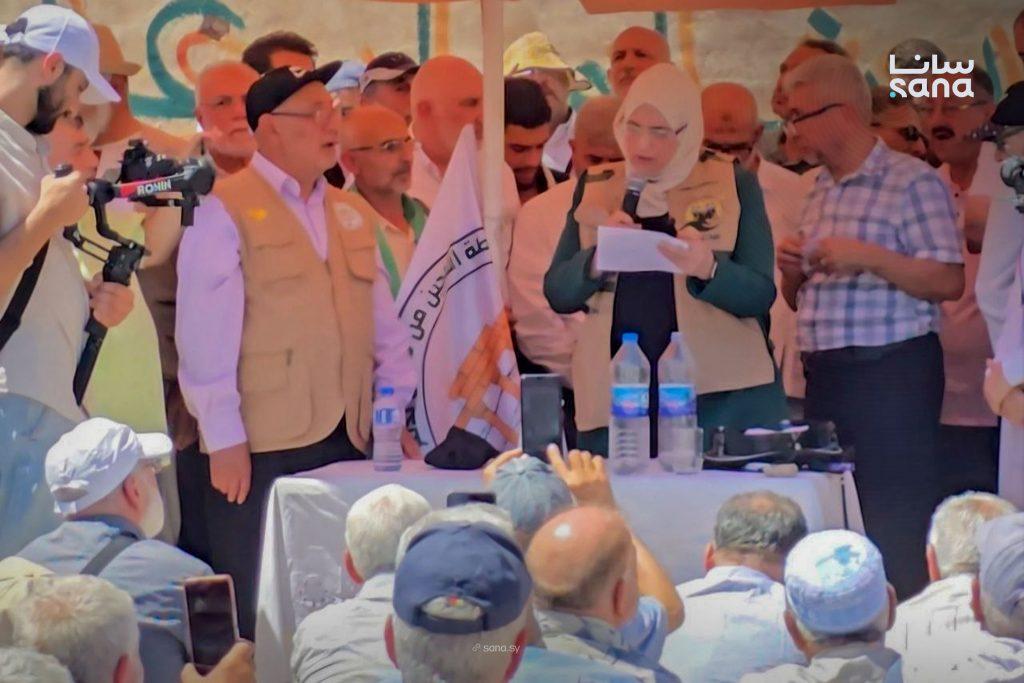
46th Anniversary in Palmyra
Survivors and relatives of former detainees at Tadmor Prison in the countryside of Homs Governorate marked the 46th anniversary of the 1980 massacre on Friday with an event titled “Tadmor Journey – From Memory to Justice.” The program, organized by the “Association of Tadmor Prison Survivors,” began with the participation of about 500 people from various provinces and included a sermon and the Friday prayer in the “Sixth Square,” which survivors call the “Execution Square.” Mohammad al-Najari, a former Tadmor prisoner from 1979 to 1992, recounted an execution in the “Workshop dormitory,” saying: “they forgot someone in the dormitory, and when they discovered him in the evening they executed him by closing the iron door on his head.”
SANA said the commemoration in Palmyra included a symbolic visit to Tadmur Prison and the Martyrs’ Cemetery in Wadi Uwaydah, with participation from representatives of the National Commission for Transitional Justice and the National Commission for Missing Persons. SANA also described the massacre as occurring on June 27, 1980, the day after an assassination attempt against Hafez al-Assad, when forces from the defense ministry commanded by Rifaat al-Assad stormed the prison and executed between 600 and 1,200 unarmed detainees.

Testimony, Torture, and Justice
Nasrin Begum is not part of this Syria material; instead, the Tadmor commemoration featured testimonies from former detainees and relatives about executions and torture inside the prison. Essam, the son of former detainee Mahmoud Issam Haj Mahram, told Syria Now that “Saturdays, Mondays and Wednesdays are the days of executions, by hanging,” and he said he could not forget that “the guard used to force the prisoners to lick his shoe, then strike them with it on their mouths and break their teeth.” SANA reported that Layla Kashki from the National Commission for Missing Persons emphasized the importance of participating in the commemoration to follow up on missing persons cases, uncover their fate, and achieve justice.
SANA also quoted Mohammad Hakim describing how he and his companions entered the prison “humiliated” but “today they are honored and dignified, by the grace of God.” The event’s framing in SANA tied commemoration to truth, justice and redress, with the National Commission for Missing Persons calling the massacre “an open wound in Syria’s national memory.”

Ruins, Daesh, and Aftermath
Anadolu said the Tadmor prison in Homs, once infamous under the deposed leader Bashar al-Assad, was filmed “today in ruins,” with many structures destroyed and interior damage visible in footage. Anadolu linked the 1980 massacre to units commanded by Rifaat al-Assad and said most victims were members of the Muslim Brotherhood, while also stating that in 2015 Daesh took control of Tadmor and destroyed the prison with explosives. Anadolu added that the area was targeted by Israeli airstrikes during attacks on the Tadmor neighborhood in Homs, and it described how Bashar al-Assad took refuge in Russia after anti-regime groups seized Damascus on December 8.
SANA said the Association of Tadmur Prison Survivors called on the Syrian government to convert Tadmur and Sednaya prisons into national museums to document the dark era of Syrian history and preserve the memory of victims. In the same SANA account, the National Commission for Missing Persons said commemorating the victims is essential for preserving national memory and that uncovering the truth about missing and forcibly disappeared persons is “a legal and moral obligation that contributes to truth, justice and non-recurrence.”