Australia01 May, 20267 min read
Riots Erupt in Alice Springs After Police Arrest Jefferson Lewis Over Kumanjayi Little Baby Murder
Jefferson Lewis, 47, arrested over the death of five-year-old Kumanjayi Little Baby. Hundreds of Indigenous protesters clashed with emergency workers outside Alice Springs Hospital.
Arrest Sparks Hospital Riot
Riots erupted in Alice Springs, in Australia’s Northern Territory, after police arrested a man suspected of murdering a five-year-old Indigenous girl named by her family as Kumanjayi Little Baby. Al Jazeera reported that about 400 people gathered at Alice Springs Hospital after the suspect, Jefferson Lewis, was taken there on Friday, following locals beating him until he was unconscious. The violence escalated as protesters clashed with emergency workers, with ABC images showing a crowd calling for “payback,” which refers to “traditional, mostly physical, punishment in Aboriginal societies.”
Police say they used tear gas to disperse the protesters, and police vehicles, ambulances and fire trucks were damaged in the chaos. The CBC similarly described “hundreds of protesters” clashing with Australian emergency services workers after Lewis was arrested and taken to hospital after being beaten unconscious by locals.
The Guardian added that police confirmed Lewis’s arrest in a brief statement just before 10pm local time on Thursday night, and that police vehicles and bins were set on fire while objects were thrown at police who responded with teargas. In the middle of the unrest, the Guardian reported that council workers were assessing damage on Friday morning, including fires smouldering in skip bins and a nearby service station that had been pulled apart.
Timeline, Missing Girl, Search
The unrest followed a rapid sequence of events beginning with the girl’s disappearance from her home on the outskirts of Alice Springs and culminating in her body being found during a search. Al Jazeera said the girl had been missing from her home on the outskirts of Alice Springs since late Saturday, and that her body was found on Thursday during a search by hundreds of people in dense bushland around the town. CBC reported that the girl “went missing from her home on the outskirts of Alice Springs on Saturday” and that her body was located on Thursday by “one of hundreds of people searching the dense bushland around the town.”
The Guardian described the arrest order for Lewis being issued on Sunday after the young girl was reported missing by her mother from the Ilyperenye (Old Timers) town camp, and it said the body was discovered by a police search and rescue team shortly before midday on Thursday after five days of searching. The Guardian also provided a detailed account of the mother’s timeline, saying Kumanjayi Little Baby was last seen by her mother at 11.30pm and that at 1.30am her mother found her missing and called the police.

It further said hundreds of volunteers and police officers searched a six square kilometre area of grass and scrubland around the camp, with “a further 20km sq” searched via helicopter. UPI added that police had established a crime scene a short distance from the home where Kumanjai Little Baby was abducted, and that police found a body they believed belonged to Kumanjai Little Baby on Thursday.
Officials Plead for Calm
Multiple leaders and officials appealed for restraint as the violence unfolded and after it subsided.
Northern Territory Police Commissioner Martin Dole told reporters that the violence erupted when Jefferson Lewis presented himself to police at a town camp, saying, “As a result of presenting himself, members of that town camp decided to inflict vigilante justice upon Jefferson.”
Dole also urged calm, telling the ABC in the CBC report, “I just call for calm across the community today ... I'd like to think that what we saw last night is an aberration.”
In the Guardian, Dole said, “Our job, our police swear an oath to serve and protect, we don’t get to choose who we protect,” and he added that the move to Darwin was “absolutely in relation to safety concerns – safety concerns for the hospital and medical staff, safety concerns for the police, and lastly safety concerns for Mr Lewis himself.”
Prime Minister Anthony Albanese appealed for unity, with Al Jazeera reporting he understood “people’s anger and frustration” but urged the community to come together.
Robin Granites, a senior Aboriginal elder and spokesperson for the family, appealed for the community to let justice proceed, saying, “This man has been caught, thanks to community action, and we must now let justice take its course while we take the time to mourn Kumanjayi Little Baby and support our family,” and adding, “Now is not the time to be heroes on social media or make trouble.”
Northern Territory Chief Minister Lia Finocchiaro announced a day-long ban on takeaway alcohol and said more police would be arriving from Darwin, while the CBC and Al Jazeera both described tear gas and damage to emergency vehicles during the clashes.
Different Outlets, Different Emphases
While all the reports describe violence around the arrest of Jefferson Lewis and the hospital confrontation, they frame key details differently, including how they characterize the crowd’s actions and the scope of damage. Al Jazeera emphasized the crowd’s “payback” calls and said police used tear gas to disperse protesters who “threw projectiles and lit fires,” injuring police officers and medical workers, and damaging police vehicles, ambulances and fire trucks. The CBC similarly highlighted tear gas and damage, but it added that “Police fired tear gas to disperse the angry crowd, who threw projectiles and lit fires,” and it quoted Dole saying, “There is absolutely no excuse for violence against emergency services that are just doing their job.”
The Guardian focused more on the aftermath and the physical scene, describing council workers assessing damage on Friday morning, with “fires smouldered in skip bins” and “a nearby service station had been pulled apart,” including that “Every window, including the door, had been smashed.” The Greek Herald, drawing on the Sydney Morning Herald, described the scenes as “absolute anarchy,” and it said officers used tear gas and rubber bullets after projectiles were thrown, with cars set alight and damage to “four of the town’s five ambulance vehicles.”
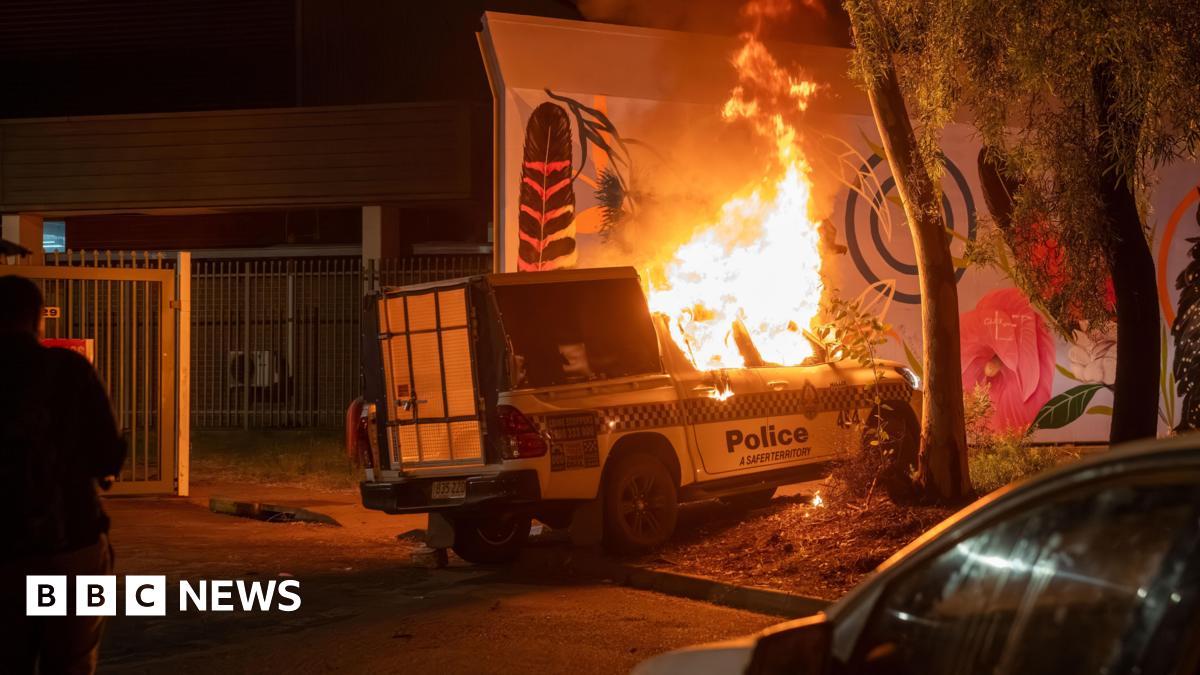
UPI provided a different damage inventory, saying “at least one police vehicle was destroyed,” “three or four sustained significant damage,” “at least three of the region's five ambulances were knocked out of commission,” and that “several fire rescue vehicles needed repairs.” 9News and AAP News both emphasized the family’s call for calm and “sorry business,” with 9News quoting Granites: “It is now time for sorry business,” and AAP quoting him: “What has happened this week is not our way.”
Aftermath, Alcohol Ban, Charges
In the aftermath of the clashes, authorities moved Jefferson Lewis to Darwin and prepared for further legal steps while imposing alcohol restrictions in Alice Springs. Al Jazeera reported that Dole said Lewis had been moved to the territory capital Darwin in the early hours of Friday morning for his safety, and that he is likely to be charged in the coming days. The Guardian similarly said police commissioner Martin Dole told ABC TV that Lewis had been transported to Darwin by police air wing and was in police custody, and that the move was not for medical reasons but “absolutely in relation to safety concerns.”
9News reported that Chief Minister Lia Finocchiaro announced that no takeaway alcohol would be sold in Alice Springs on Friday, and that sales would be limited to between 11am and 2pm tomorrow, while also saying extra police would be travelling to Alice Springs from Darwin to bolster local officers. CBC and Al Jazeera both described a day-long ban on takeaway alcohol and additional police arriving from Darwin, with Al Jazeera adding that alcohol restrictions were already enforced in the town on certain days of the week to reduce crime.

UPI said Dole expected more people involved to be detained throughout the day and quoted him: “Just let me say that the behavior that we saw last night cannot be explained away, excused or accepted,” and it also quoted, “There is absolutely no excuse for violence against emergency services that are just doing their job.” The Guardian described ongoing forensic testing and said Dole anticipated charges would be laid “today or tomorrow,” while also noting that the unrest had been “quelled” and there was “a sense of calm at the moment across Alice Springs.”