China04 November, 20253 min read
Russia and China Sign 15 Agreements to Deepen Strategic Partnership Amid Global Power Struggle
Xi Jinping and Mikhail Mishustin signed 15 agreements to deepen economic and strategic cooperation. Agreements focus on expanding trade, investment, energy, agriculture, aerospace, and digital economy sectors.
22 outlets told this the same way.
China-Russia Strategic Partnership
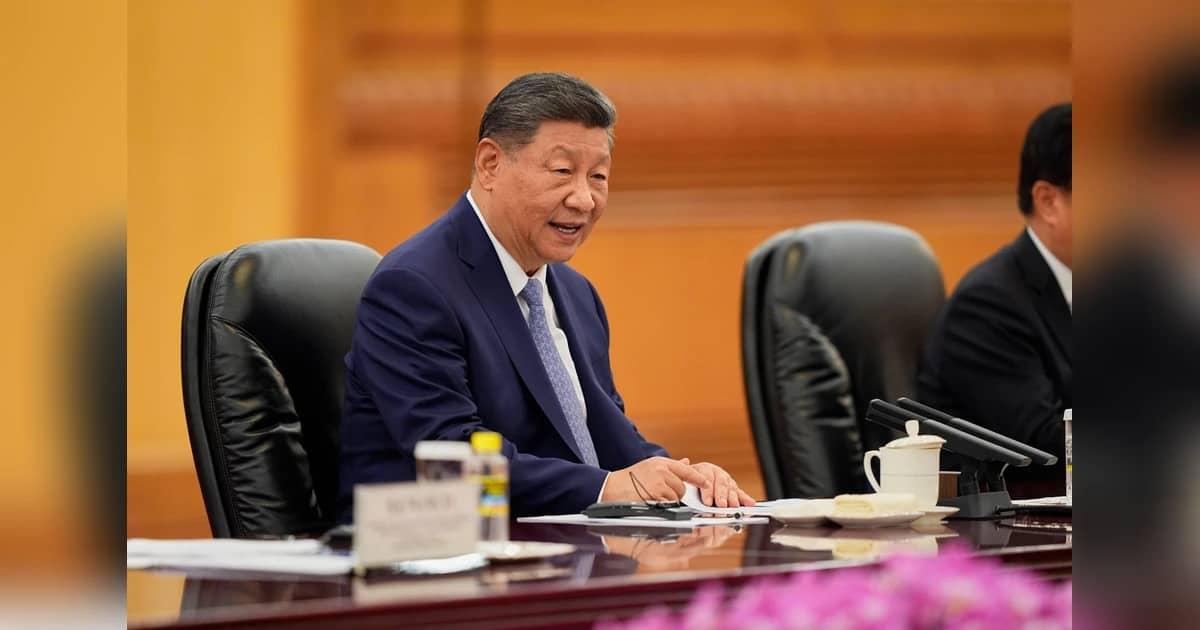
China and Russia moved to deepen their comprehensive strategic partnership during Mikhail Mishustin’s visit. Meetings in Beijing and Hangzhou emphasized expanded cooperation across traditional and high-tech sectors amid a shifting global power balance. Sources report Xi Jinping and Mishustin focused on energy, agriculture, aviation and aerospace, artificial intelligence, the digital economy, and green development.
“On November 4, 2025, Chinese President Xi Jinping and Russian Prime Minister Mikhail Mishustin met in Beijing to discuss enhancing China-Russia cooperation in economic, technological, and strategic areas.”
Beijing described the relationship as a “strategic choice” and highlighted record bilateral trade of $240 billion. Multiple outlets also note plans to align China’s forthcoming 15th Five-Year Plan with Russia’s development strategies.

They aim to boost mutual investment and people-to-people exchanges. This positions the partnership as resilient despite external pressures and sanctions dynamics.
China-Russia Partnership Agreements
Agreements and a joint communique anchored the visit. Chinese and Russian readouts say Li Qiang and Mishustin signed a joint communique identifying the two as priority partners and witnessed agreements on customs and satellite navigation. Other coverage adds maritime development and training specialists for polar navigation to support the Northern Sea Route.
Chinese and Russian statements repeatedly stress non‑bloc, non‑confrontational principles, shared strategic coordination, and closer investment ties. While some headlines elsewhere cite a larger package, the sources here specify multiple agreements and areas but do not enumerate a total count, leaving the exact number of accords unclear.

Geopolitical Cooperation and Trade
External pressures and competing blocs shape much of the coverage. Asian outlets emphasize Taiwan policy and a close political alignment. The Vibes notes that the cooperation is a response to external pressures and that Russia reaffirmed its support for the One-China policy and opposition to Taiwan independence.
“China and Russia have agreed to strengthen their cooperation, particularly in trade and technology, as a response to external pressures.”
This position is echoed by The Star and The Straits Times. West Asian coverage focuses on sanctions and decoupling dynamics. Al Jazeera reports that China helped Russia mitigate Western sanctions but that trade has recently declined due to U.S. influence.
Yeni Safak highlights efforts to reduce dependence on Western markets by using Central Asian routes. Together, these reports depict a partnership consolidating under geopolitical strain while attempting to diversify away from U.S.-centric systems.
China-Russia Strategic Cooperation
Policy integration and sectoral depth are recurring themes in China-Russia relations. Chinese and Russian readouts emphasize aligning China’s 15th Five-Year Plan with Russia’s economic and social development strategies. They focus on expanding mutual investment and coordinating efforts in energy, agriculture, aviation/aerospace, artificial intelligence, the digital economy, and green development.
Coverage also highlights people-to-people exchanges, “priority partner” status, and humanitarian efforts within the broader agenda. Analysts note that Russia is interested in China’s AI-driven manufacturing, with Hangzhou recognized as an innovation hub, reinforcing the technology-focused aspect of the partnership.
China-Russia Strategic Cooperation
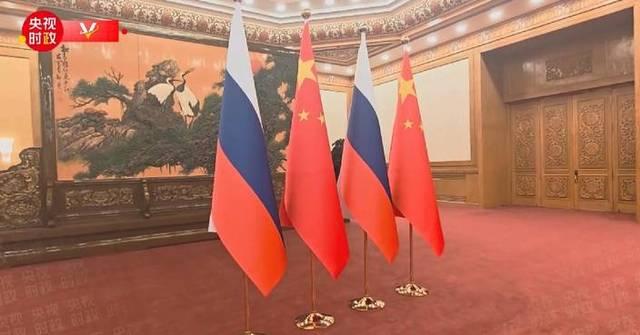
Multilateral and strategic theaters feature prominently in the cooperation between China and Russia. Sources cite coordination in BRICS and the SCO, Arctic affairs and the Northern Sea Route, lunar missions, and new land corridors through Central Asia. Some outlets also stress ideological and historical elements, including commitments to combat World War II historical revisionism and to maintain a non-bloc posture.
“They also committed to combating World War II historical revisionism, promoting security and stability, cooperating in international organizations, and strengthening partnerships within BRICS, SCO, Arctic affairs, and lunar missions.”
A few reports include adjacent developments or U.S.-linked angles, such as rare earth supply contracts or a postponed Trump-Putin summit. These aspects underscore how the China–Russia axis is observed within broader geopolitical and geoeconomic narratives.