Russia · 29 August, 2026 · 3 min read
Russia Controls Northern Sea Route as Dubai Tower, PanStar Acro Sail to Europe
Dubai Tower launched Asia-to-Europe service via the Arctic, docking Felixstowe as start. PanStar Acro sails from Busan to Felixstowe, joining Arctic corridor expansion.
6 outlets told this the same way.
Outlets did split on EU Lifts Sanctions on Alisher Usmanov and Mikhail Fridman, Extending Sanctions on 3,000 Others →
5 of 6 outlets skipped it: irtysh River route could avoid Western chokepoints and sanctions.
6outlets compared
Russia steers Arctic corridor
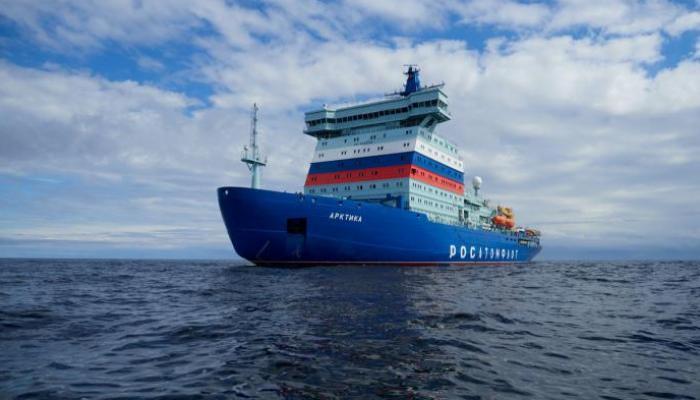
Two mid-sized cargo ships, the Dubai Tower and the PanStar Acro, slipped their moorings in Qingdao and Busan and headed toward Europe via the Arctic rather than the Suez Canal, highlighting a corridor that Russia controls through the Northern Sea Route. The Arctic route is estimated to be navigable for around three or four months, with the season extending from August to October, and Kjell Stokvik of the Centre for High North Logistics estimates it can reduce transit times by up to 40 per cent. Russia’s leverage is tied to navigation permits issued by Rosatom, the nuclear company owned by the Kremlin, which the Asian report says generates increasing sums for Moscow at a time of acute economic pressure.
The Maritime Executive describes a scheduled service set to complete its voyage to the UK via the 5,600km Northern Sea Route in about 20 days, with Sea Legend’s first of eight scheduled this season. In the same framing, the route’s strategic importance is presented as extending beyond infrastructure because Russia’s control over who can navigate it and under what conditions can shape trade patterns as northern waters open.

China, ports, and permits
China established the first scheduled cargo service between Asia and Europe via the Arctic Ocean, and the Maritime Executive says the ship set off from Ningbo on 15 August as the first of eight scheduled this season by Sea Legend. The same report says South Korea’s Vice-Oceans Minister Nam Jae-hon called the route "bound to become an alternative" to Middle Eastern shipping routes, while it also notes experts have cautioned that using Russian-provided services like icebreakers could expose operators to violating Western-imposed sanctions. In parallel, the South China Morning Post frames the proposed Irtysh River gateway as a way to avoid Western naval blockades, foreign coastguard surveillance and sanctions by the United States, citing observers.
The Irtysh route is described as running 4,248km from China’s western Xinjiang Uygur autonomous region through Kazakhstan into Russia’s Ob River and ending in the Arctic Ocean. Against that backdrop, the Asian report on the corridor emphasizes that Rosatom’s navigation permits give Russia a role that can extend beyond infrastructure, providing leverage over a maritime corridor whose importance could grow as climate change opens northern waters.
Trade-offs and regional stakes
While the corridor is presented as shortening journeys and avoiding the risk of armed attacks encountered in other strategically important waters, the Sri Lanka Guardian warns that increased maritime traffic could bring more pollution and greater pressure on Arctic biodiversity. Javier Arnaut of the University of Greenland-Ilisimatusarfik is quoted in both the Sri Lanka Guardian and El País as warning that cargo ships face the risk of colliding with mammals and other species in an area where communities depend heavily on fishing. El País also ties the stakes to Russia’s control, saying Rosatom, the Kremlin-owned nuclear company, issues navigation permits that can generate increasing sums for Moscow at a time of acute economic need.
The Maritime Executive adds that from November to July only ships with reinforced hulls can pass through the route, and it says Sea Legend has bought or leased smaller vessels that may still need to be accompanied by icebreakers. The same sources frame consequences for other countries, with the Sri Lanka Guardian saying Egypt could suffer if Arctic shipping becomes an established alternative to Suez, and El País describing a structural limitation because there are no intermediate ports for layovers on the Arctic route.