Britain
Russia Destroys Over 1.5 Million Books in Kharkov Attack on Ranok Warehouses
Culture under fire
The RTVE.es report says Russia destroyed more than 1,5 millones de libros solo en julio, including an attack this weekend when the Russian army fired its launchers at the warehouses of the editorial Ranok in the city of Járkov.

Across the sources
BBC frames attacks as deliberate on hospitals; France 24 relies more on official attributions
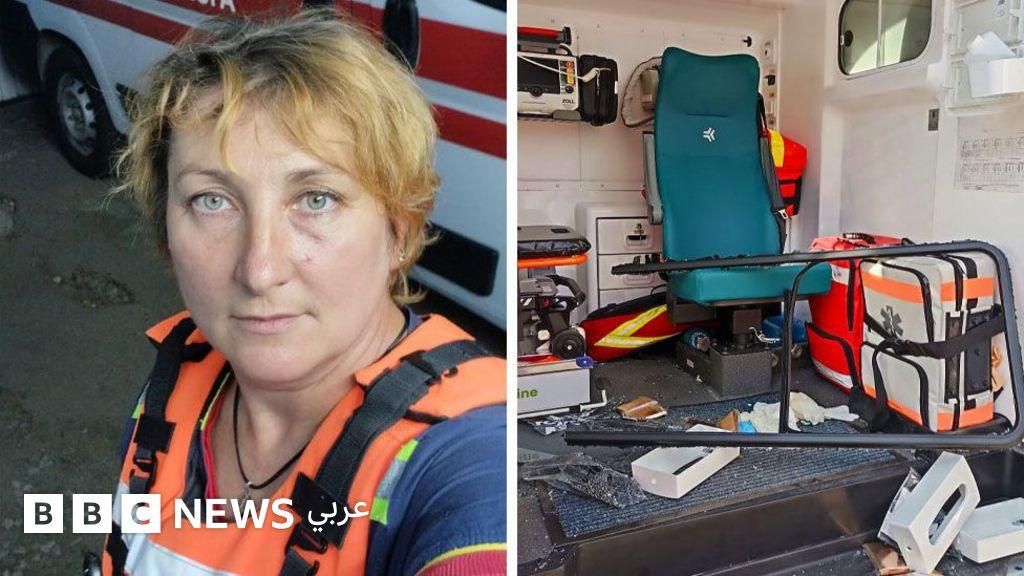
Hospitals and ambulances in Ukraine are increasingly subjected to Russian missile and drone strikesRead the original ↗
Russian authorities said a fire broke out at the Ilski oil refinery in the Krasnodar region of RussiaRead the original ↗
Read the source excerpts alongside the original reporting.
At a glance
- Ranok publishing warehouses in Kharkiv were destroyed by Russian strikes.
- More than 1.5 million books were destroyed in July.
- The incident signals ongoing cultural losses amid Russia's attacks on Ukraine.
RTVE.es adds that two impacts landed within three minutes, ten meters apart, with two rocket-propelled grenades carrying 100 kilos of explosives, and that more than eight million books were destroyed by the fire caused by the attacks.
The same report says that between 24 and 25 de julio, the festival Frontera held its third edition in the city of Lutsk in the region of Volinia, near the border with Polonia and Bielorrusia, bringing together Ukrainian novelists and poets and international guests including the holandés Joris Luyendijk, the español Juan Antonio Bernier, and the fotoperiodista portugués João Pina.
RTVE.es quotes festival founder Ella Yatsuta saying, "Luego tuvimos que hacer una pausa de tres años por la invasión y volvimos a celebrar Frontera en 2024."
RTVE.es also quotes writer and soldier Valerii Puzik: "La cultura es sin duda la fundación de nuestro futuro," as he opened the event with the line that each war text and each voice matters.
Attacks and casualties
Deutsche Welle reports that at least two people died and four were injured in an attack with cohetes de Rusia against the city of Izyum in the east of Ucrania, according to the governor of Járkov, Oleh Syniehubov.
DW says the fire being extinguished covered 400 metros cuadrados, and that the administration of Izyum said Russian forces used lanzacohetes múltiples firing municiones de racimo.
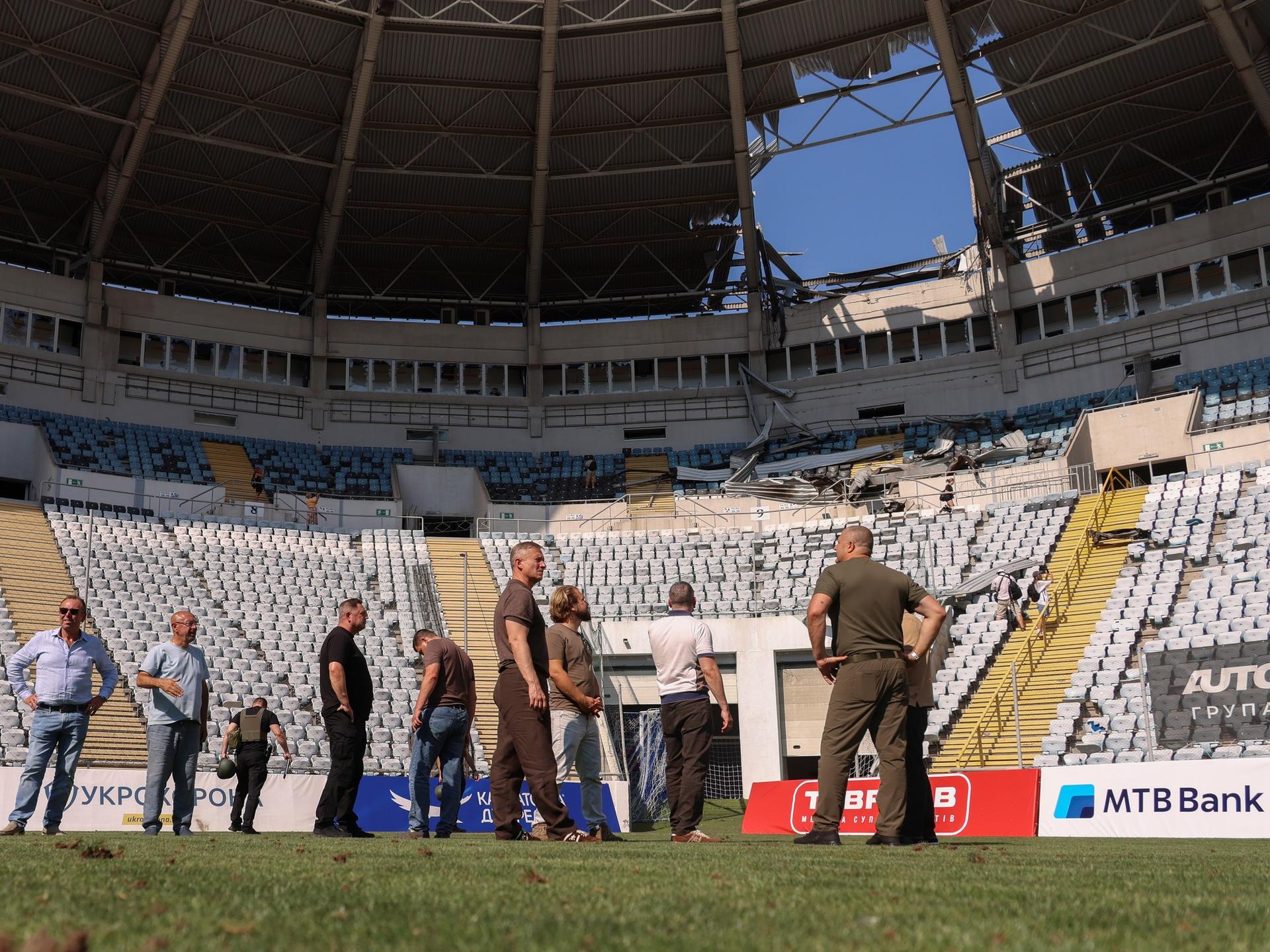
DW also reports that in the south of Ucrania, a Russian bombardment reached the football stadium Chornomorets in the center of the port city of Odesa, where two people were injured and the roof, glazing, and stands were destroyed.
France 24, citing regional military officials, says three people were killed, including a child, as Russian air strikes targeted the northeast of Kyiv, with the head of the Kyiv regional military administration Teymur Tekatchenko saying strikes were observed at three locations in the Borispol district.
France 24 adds that the Russian Defense Ministry said air defense systems destroyed 397 Ukrainian drones over several regions, including the annexed península de Crimea and the mar Negro.
Medical workers targeted
In a BBC piece, Ukrainian nurse Ina Litvinienko described how, while headed to Kherson to treat a woman injured in a drone attack by Russia, an FPV-style drone collided with the ambulance and then another drone chased her.
The BBC quotes Litvinienko saying, "I panicked. I grabbed my first aid bag and started running," and she added, "I knew that if I stopped, I would die."
The BBC reports that Dr. Yaron Habicht, WHO representative in Ukraine, said: "That means about two attacks per day," while noting that since Russia’s invasion in February 2022 WHO has recorded 3,118 attacks on the health care sector.
The BBC also says that in 2024 the number of attacks rose by 30 percent and by a further 20 percent last year, and that this trend is expected to continue this year.
The BBC further reports that the organization shares coordinates of its facilities with both Moscow and Kyiv, and that Habicht said, "This has become common, but it should not be."
Explore the original reporting
Compare all 12 sources
How each outlet frames it
Every outlet we compared, the headline it ran, and a link to the original article.
Western Mainstream
I ran because I knew that if I didn't, I would die. Russian drones targeting medics in Ukraine
08 August, 2026
Russian attacks in the Ukrainian region of Kherson leave at least two civilians dead
08 August, 2026
Three people were killed, including a child, as Russian air strikes targeted the north of Kyiv.
08 August, 2026
Other
New Russian attack on Ukraine: two injured and damage and fire at a football stadium
07 August, 2026
Latin American
Ukraine attacks southern Russia with 400 drones and damages two refineries
08 August, 2026
Asian
Russian attacks kill 4 in Ukraine, including a 3-year-old, as defenses fall short
08 August, 2026
West Asian
Three dead, including a child, in a Russian ballistic attack on Kyiv.
08 August, 2026
Turkey tightens navigation in the Black Sea as fighting intensifies between Russia and Ukraine
08 August, 2026
Bloomberg: Turkey restricts navigation in the Black Sea due to attacks between Russia and Ukraine
08 August, 2026
Read stored source text: BBC
“I ran because I knew I would die” ... Russian drones chase medics in Ukraine - Author: Abduljalil Abdulrasulov - Role: From Kyiv - Published - Reading time: 5 minutes Ukrainian nurse Ina Litvinienko always makes sure to wear her bright orange protective vest when she is on an emergency mission. On one day in June, while she was headed to Kherson to treat a woman injured in a drone attack by Russia, a FPV-style drone collided with the ambulance she was in. Moments later, she heard a buzzing in the sky, and another drone was heading straight for her at high speed. She recalls: “I panicked. I grabbed my first aid bag and started running. I was screaming and calling for help; I knew that if I stopped, I would die.” After a chase that lasted about 10 minutes, the drone finally moved away. Police soon arrived and moved her to a safe place. But what she described as a “forest chase” or “safari chase” did not end. The drones targeted two additional vehicles that had arrived to take the injured woman to the hospital. Hours later, a third police car finally got her out of the area. Following another attack earlier this week, Ukrainian President Volodymyr Zelensky called for stepping up pressure on Russia to stop what he described as deliberately targeting civilians. Hospitals and ambulances in Ukraine are increasingly subjected to Russian missile and drone strikes, even though the Geneva Conventions—international rules governing the laws of war—mandate the protection of medical facilities and health workers from all parties to the conflict. Dr. Yaron Habicht, WHO representative in Ukraine, says: “This has become common, but it should not be.” Since Russia’s invasion of Ukraine in February 2022, WHO has recorded 3,118 attacks on the health care sector. Habicht says: “That means about two attacks per day.” Since 2023, the number of attacks on health care has risen steadily. In 2024, the number rose by 30 percent, followed by a further 20 percent last year. This trend is expected to continue this year. A recent report by Médecins Sans Frontières found that Russian forces systematically target Ukrainian medical facilities, often deliberately. The report says the rate of attacks on health care indicates it is a persistent feature of the war, not a consequence of broad military offensives. Last month, Russian missiles hit a hospital in Kherson, causing severe damage to the building and killing a doctor. Olena Tymoshynko, the hospital director, believes the attack was deliberate and told BBC: “It was not just one missile, but three missiles struck the hospital within minutes. It cannot be an accident.” Moscow also often employs a tactic known as a “double strike,” targeting the same site twice in a short period. Many believe the second strike is deliberate to target rescue teams and medics arriving to save survivors from the first strike. During a recent broad Russian airstrike on Kyiv, seven people were killed, including a police officer and a volunteer, after the same site was struck a second time. More recently, Russian forces have begun targeting humanitarian organization warehouses. In the last month alone, warehouses belonging to three UN agencies, including WHO, were damaged in air raids. Habicht says the organization shares coordinates of its facilities with both Moscow and Kyiv specifically to protect them from attacks. While missile strikes and drone attacks can be random at times, drone strikes by FPV drones are usually deliberate. A drone operator can see the target directly through a live feed from the aircraft’s camera, so targeting an ambulance means—as explained by Robin Meldrum, MSF coordinator in Ukraine—that the attack was deliberate. Dr. Ina Litvinienko says she wore clearly identifiable medical clothing, and the ambulance she was in bore clear signs of its medical function. She believes the drone operator deliberately chose to target them. According to WHO, attacks on ambulances account for 20 percent of total attacks on the health care sector in Ukraine, suggesting they may be part of a systematic strategy. These ongoing attacks have increased the isolation of civilians living near the front lines from health care services. Older people dominate those who remain in these areas, and many suffer chronic illnesses. Even if they survive air raids and shelling, not receiving medicines or regular medical tests puts them at risk of slow death. Ambulances may also become unable to reach them if security risks are too high. Dr. Litvinienko and her colleagues continually monitor social media for potential threats. She says: “It’s very scary. Every time we transport a patient to the hospital, we can only pray. These drones can appear from anywhere; they can even hack drone defense networks.” In some cases, police patrols are sent instead of ambulances. As the range of FPV drones expands and Ukraine and Russia continue to develop longer-range drones, mobile clinics run by various health organizations have been forced to move operations farther from front lines. Meldrum says: “Two years ago, we could reach 5 to 8 kilometers from the front line. Now we don’t go anywhere within 30 kilometers, and that range is continuing to grow.” In the last 18 months, MSF has halted its regular visits to about 80 villages near front lines where they provided health care, Meldrum says. MSF also recently suspended ambulance services in Sloviansk, a major city in eastern Ukraine. Meldrum says: “We do not feel protected in this environment, nor under the way Russia is waging war.” He adds: “We do not feel that the laws of war are being respected.”
Read stored source text: Clarin
More than four years into the war sparked by Russia’s invasion of Ukraine, and as explosive drones clash with airstrikes, a new Russian bombardment this Friday created wreckage at a well-known football stadium in Odesa, in southwestern Ukraine. The attack caused injuries to two people when the explosion’s impact caused significant damage to the Chornomorets football team’s stadium, where this afternoon one could see the large hole opened in the roof covering the pitch. "The roof, the glazing, and the stands of the stadium were destroyed," reported the State Emergency Service on its social networks. It also clarified that the disaster caused the grass on the field to catch fire and to burn. Health authorities indicated that "according to preliminary information, two people were injured" during the attack. They also highlighted that a team of psychologists from the State Emergency Service was on site working with victims and stadium workers. The Chornomorets Stadium, home of the football team of the same name, is one of the largest in Ukraine, with a capacity of 34,164 spectators, according to Kyiv Independent. Before the Russian invasion in 2022, it hosted UEFA competitions and international matches of the Ukrainian national team. In that context, the club told its supporters that the Ukrainian Premier League round 2 match that was due to be played this Saturday against Kolos was postponed to one of the reserve dates. "All of you have seen the damage that the enemy has caused to our stadium, the sporting showcase of Odesa," the club added, stressing that it was "another act of terror against a peaceful Ukrainian city." They also stated that there are many things that cannot be done through the club’s official information resources, and authorities confirmed that "the match may still be played" at a later date to be defined. In that regard, Chronomets officials expressed hope that the match would be held in Odesa and that fans could attend. And in this gesture of hope, they told supporters not to rush to return their tickets, as they remain valid. See also Clarín Newsletter
Read stored source text: Deutsche Welle
Dos personas murieron y cuatro resultaron heridas en un ataque con cohetes de Rusia contra la ciudad de Izyum, en el este de Ucrania, informó el viernes (07.08.2026) el gobernador de Járkov, Oleh Syniehubov. Se estaba extinguiendo un incendio que abarcaba 400 metros cuadrados, señaló el funcionario a través de Telegram. Según la administración militar de Izyum, las fuerzas rusas utilizaron lanzacohetes múltiples que dispararon municiones de racimo, las cuales son particularmente peligrosas para la población civil. Izyum se encuentra a unos 30 kilómetros de la línea del frente. La ciudad quedó bajo control ruso durante varios meses tras la invasión a gran escala de Ucrania por parte de Rusia en 2022 y fue liberada en septiembre de 2022. En la región vecina de Sumy, 10 personas resultaron heridas en un ataque con drones contra un mercado. Impacto en estadio central de fútbol de Odesa En el sur de Ucrania, un bombardeo ruso alcanzó el estadio de fútbol Chornomorets —sede del club de primera división del mismo nombre— en el centro de la ciudad portuaria de Odesa. Dos personas resultaron heridas en ese ataque, que causó importantes daños en el estadio. "El techo, el acristalamiento y las gradas del estadio quedaron destruidos. El impacto causó un incendio en la hierba seca cercana", informó el Servicio de Emergencias del Estado en sus redes sociales. El Estadio Chornomorets, sede del equipo de fútbol del mismo nombre, es uno de los mayores de Ucrania, con un aforo de 34.164 espectadores, según el medio Kyiv Independent. Antes de la invasión rusa a Ucrania en 2022, el centro deportivo albergó competiciones de la UEFA y partidos internacionales de la selección ucraniana. gs (dpa, efe)
Read stored source text: DW
"En el centro logístico de la compañía de Yekaterimburgo, en la región de Sverdlovsk, trabajan los bomberos: se desató un incendio debido a un ataque", informó este viernes (7.08.2026) Wildberries en su canal de Telegram. Según la empresa, ante la inminencia del ataque "se llevó a cabo una evacuación con antelación". En las últimas dos semanas, las Fuerzas Armadas ucranianas han llevado a cabo repetidos ataques con drones contra la infraestructura de Wildberries, el mayor mercado online de Rusia. Hasta el 3 de agosto de 2026, 12 de los 15 almacenes más grandes de la compañía de comercio electrónico se han visto afectados en diversas regiones. Siete de ellos aún no habían reanudado su actividad, según informó el portal de investigación independiente ruso Agentstvo. Wildberries: el grueso de la mercancía almacenada no resultó dañado "Gracias a la rápida acción de los servicios de emergencia, las fuentes de fuego en la instalación logística fueron controladas", anunció Wildeberries en un mensaje posterior al ataque de este viernes 7 de agosto, al señalar que el grueso de la mercancía almacenada no resultó dañado pese al ataque. El gobernador local, Denís Pasler, informó en Telegram que las defensas antiaéreas "aniquilaron ocho drones" durante la noche. "Tres drones cayeron sobre el techo de un centro logístico. El personal fue evacuado, no hubo víctimas", confirmó. 800 empleados evacuados El representante del presidente ruso en los Urales, Artiom Zhoga, señaló en Telegram que en total fueron evacuados 800 empleados, y calificó este ataque como un intento del "régimen criminal de Kiev de dañar nuestras regiones y sembrar el pánico". El canal ucraniano Exilenova+ publicó fotos y videos del ataque, en los que se observan columnas de humo sobre la instalación, pero no tan densas como en otras ocasiones. Según el Ministerio de Defensa de Rusia, durante la pasada noche las defensas antiaéreas "interceptaron y aniquilaron 203 drones ucranianos de ala fija" sobre 17 regiones rusas, la anexionada península de Crimea y el mar Negro. Wildberries asegura mercancías contra ataques de drones y sabotajes En este contexto, el gigante de comercio electrónico ruso habilitó este viernes seguros para las mercancías contra ataques de drones, atentados terroristas o sabotajes, según señaló la empresa en su portal oficial. "Al igual que con otros riesgos, la cobertura del seguro incluye la entrega, el almacenamiento en el punto de recogida y la logística de devoluciones en caso de que un pedido sea rechazado, devuelto o no recogido", agregó. "La compensación máxima para este nuevo tipo de riesgo es de hasta 50.000 rublos [cerca de 610 dólares] por artículo del pedido, con un máximo de 100.000 rublos [1.220 dólares] por cada caso de seguro. La cantidad exacta será calculada por la compañía de seguros después de la reclamación y depende de las particularidades de cada evento asegurado", indicó. rml (efe, dpa, reuters, actualizado a las 11:01 CET)
Read stored source text: EFE
Berlin (EFE) – A series of Russian attacks, using drones and artillery shelling, left at least two civilians dead and 24 injured in the last 24 hours in the Ukrainian region of Kherson, according to Oleksandr Prokudin, head of the regional Military Administration, on Telegram. Russian forces attacked critical and social infrastructure as well as residential areas in settlements across the region. Specifically, seven high-rise buildings and eleven private homes were damaged. The occupiers also destroyed a church, a shop, a hair salon, a gas station, an agricultural building, school buses, agricultural machinery, and private cars. In the Dnipropetrovsk region there were also a total of 10 drone attacks, in which one person was injured, according to Oleksandr Ganzha, head of the regional Military Administration. The attacks, according to the same source, affected six districts in the region. Ukraine strikes the south and southwest of Russia with 400 drones. Separately, Ukraine attacked two refineries in the south and southwest of Russia during the past night as part of an operation with nearly 400 drones, according to local authorities and independent media. “One of the companies in the Samara region was struck tonight by Ukrainian drones,” Vladislav Fedorishchev, governor of this region in southwestern Russia, reported on MAX, the Russian messaging network, without specifying the objective. According to the governor, “rescue services are currently mitigating the consequences. Emergency services are working at the site of the drone crash.” The Ukrainian Telegram channel Exilenova+ and the independent Russian channel Astra indicated that the attack caused a fire at the Sizrán refinery, owned by the Russian state-owned Rosneft. This facility has been the target of several Ukrainian attacks in recent times. Additionally, in the southern Krasnodar region, a fire broke out at the Ilsk refinery, according to local authorities on Telegram. Five people were injured as a result of the incident. The Russian Defense Ministry reported on Saturday the downing of 397 Ukrainian fixed-wing drones over several Russian regions, the annexed Crimean peninsula, and the Sea of Azov.
Read stored source text: France 24
Three people were killed, including a child, as Russian air strikes targeted the northeast of the Ukrainian capital, Kyiv, according to regional military officials cited on Saturday. In recent months, Moscow has repeatedly struck Kyiv with a barrage of ballistic missiles that are difficult to intercept. Conversely, Russian authorities said a fire broke out at the Ilski oil refinery in the Krasnodar region of Russia, confirming that five people were injured by a drone attack attributed to Ukraine. The head of Kyiv regional military administration, Teymur Tekatchenko, said that three people, including a child, were killed by a Russian strike that hit the area around the Ukrainian capital on Saturday. He added that strikes were observed at three locations in the Borispol district near the capital, and three more people were injured in the attack. Read also: At least 17 dead and dozens injured in Russian strikes on Kyiv. The Kyiv mayor’s office said fires broke out in two areas of the Ukrainian capital following an air-raid warning. Reuters eyewitnesses heard several blasts reverberating through the city center. Moscow has notably intensified its strikes on the Ukrainian capital in recent months, launching a volley of ballistic missiles that are hard to intercept during swift attacks. Russia claims Ukrainian strike on Russian oil refinery. Meanwhile, local authorities said on Saturday that a fire had broken out at the Ilski refinery in the Krasnodar region of Russia, and five people were injured by a Ukrainian drone attack. In a separate incident, the regional governor said drones targeted an industrial facility in the Samara region, without specifying the nature of the facility. The Russian Defense Ministry said air defense systems destroyed 397 Ukrainian drones over several regions during the night. France 24 / Reuters / AFP.
Read stored source text: La Vanguardia
The Ukrainian army continues attacking Russia with drones after launching this week the second-largest offensive since the war began in 2022. Last night it launched nearly 400 drones against two refineries in the south and southwest of the country, according to local authorities and independent media. At the same time, Russia has bombarded Kyiv and the surrounding region, causing four fatalities, including a child. The governor of Samara, Viacheslav Fedoryshev, announced that the Russian region had been targeted by Ukrainian forces, though he did not specify which infrastructures were damaged. He did note, however, that emergency services were working at the site of the drone crash. The Ukrainian Telegram channel Exilenova+ and the independent Russian channel Astra indicated that the attack caused a fire at the Sizrán refinery, belonging to the Russian state company Rosneft, an installation that has already been the target of several Ukrainian strikes in recent times. In addition, in the southern Krasnodar region, a fire broke out at the Ilsk refinery, according to local authorities. Five people were injured as a result of the incident, they added. Repeated Ukrainian attacks on oil facilities have caused fuel shortages in the country. Russia says it has shot down 397 Ukrainian drones. For its part, the Russian Defense Ministry reported on Saturday the downing of 397 Ukrainian drones over several Russian regions, the annexed Crimean peninsula, and the Sea of Azov. Additionally, a drone struck a vessel transporting weapons for the Ukrainian army east of Odesa, according to Reuters citing a Russian news agency. Separately, the Russian army bombarded the Ukrainian capital at dawn on Saturday and the region around Kyiv, killing four people, including a child, according to local officials. Residents face constant drone and missile bombardments that Kyiv’s weakened air defenses struggle to counter amid Moscow’s large-scale invasion that has already lasted four years. Among the latest attack’s fatalities are two grandparents and their 3-year-old grandson, who died after several Russian drones destroyed their home in the Brovarsky district northeast of the Ukrainian capital. Three other members of the same family and a neighbor who came to help were hospitalized. The attack left the house in rubble and destroyed outbuildings and cars. Ukrainian President Volodymyr Zelenskiy reported that at least one more person died in the attack on civilian infrastructure. In his daily briefing, Ukraine’s air force stated that it had shot down or intercepted 135 of the 151 drones launched by Russia during the night and none of the six ballistic missiles fired by Russia due to the shortage of interceptors Patriot, the main Western-supplied weapon used against this kind of missile. The Russian army has bombarded civilian areas of Ukraine, although Moscow insists its forces only attack military facilities. Foreign Minister Andrii Sybiha announced that a passenger train in the Ukrainian Sumy region was also attacked, and there were attacks in Chernihiv and Dnipropetrovsk regions. “We urge our partners to take concrete measures to strengthen Ukraine’s air shield and increase the cost of prolonging this war for Moscow,” the minister said on the X platform. The Russian Defense Ministry confirmed an attack on a fuel depot in Kyiv and noted that another nocturnal target was a plant that produces components for Ukrainian Flamingo missiles.
Read stored source text: RTVE.es
Ucrania se defiende del ataque ruso a su cultura - El festival Frontera es una iniciativa de una ONG ucraniana que busca reivindicar la lengua y la cultura en pleno conflicto - Rusia ha destruido más de 1,5 millones de libros solo en julio Este fin de semana, el ejército ruso giró sus lanzacohetes hacia los almacenes de la editorial Ranok, en la ciudad de Járkov. Una de las editoriales más importantes del país. Según los propietarios, entrevistados por la prensa local, se trató de un ataque dirigido. Dos impactos en un intervalo de tres minutos, a diez metros de distancia, dos granadas propulsadas por cohete con 100 kilos de explosivos. Según la editorial, las pérdidas son masivas. Más de ocho millones de libros han quedado destruidos a causa del incendio provocado por los ataques. De esos ejemplares, más de 600.000 eran libros de texto para los niños que empezarían pronto las clases. Los ataques contra las librerías, las imprentas y también contra las editoriales se han sucedido con frecuencia en estos cuatro años de conflicto. Según Kiev, se trata de un ataque deliberado de Rusia contra la cultura, la lengua y la identidad ucraniana. Por eso, un grupo de intelectuales, activistas y amantes de la cultura pelea por mantener en medio del conflicto el festival de literatura Frontera, una herramienta para promover el acervo del país en plena invasión. Entre el 24 y el 25 de julio, Frontera celebró su tercera edición desde que comenzó la guerra en la ciudad de Lutsk, en la región de Volinia, cerca de la frontera con Polonia por el oeste y Bielorrusia por el norte. Una reunión de los principales novelistas y poetas de Ucrania y también invitados internacionales, como el holandés Joris Luyendijk, el español Juan Antonio Bernier o el fotoperiodista portugués João Pina. "La primera edición del festival, en 2018, estaba centrada en la literatura, estaba pensada como un encuentro entre escritores; el primer objetivo fue formar una comunidad de lectores y presentar otro tipo de literatura", explica Ella Yatsuta, fundadora de la ONG Frontera, impulsora de este festival. "Luego tuvimos que hacer una pausa de tres años por la invasión y volvimos a celebrar Frontera en 2024. El objetivo había cambiado, el festival se convirtió en un instrumento para hablar de cosas importantes, empezamos a invitar a voluntarios, a activistas, a militares, a intelectuales. El objetivo es mostrar cómo Ucrania sigue desarrollándose en tiempos de guerra, mostrarnos al extranjero, hablar de literatura ucraniana", cuenta. El festival está pensado como un encuentro de los principales rostros de la literatura en ucraniano del país. Dos días de conferencias, mesas redondas y también firmas de libros y recogidas de fondos para los voluntarios en el frente. Un festival sobre literatura pero que está completamente atravesado por el conflicto. Valerii Puzik es escritor, guionista, artista... y también soldado. Fue el encargado de abrir el evento: "Cada texto sobre la guerra importa. Cada voz importa y debemos aprender a escuchar todas esas voces". "La literatura, el cine, el teatro, la música... no son soft power, sino un arma completamente equipada. La cultura es sin duda la fundación de nuestro futuro", dijo. Gran parte de las conversaciones estuvieron centradas en la importancia de la identidad ucraniana en un momento en el que Rusia no solo ocupa el territorio, no solo ataca edificios y asesina civiles, también quema libros y atenta contra la industria cultural del país. "En julio, Rusia ha quemado más de un millón de libros, ha lanzado misiles contra almacenes, contra imprentas... Muchos militares son ucranianos, muchos han fallecido durante la invasión, en el frente", dice Yatsuta, que reivindica este festival como forma de combatir esta agresión, como forma de apoyar el mercado y dar a conocer que a pesar de las duras condiciones, en Ucrania sigue produciéndose literatura, arte. "No solo lanzan misiles a las imprentas, es que en los territorios ocupados queman libros de historia, de lengua ucraniana, matan a los escritores y los torturan", lamenta la traductora Victoria Dorofeeva, fundadora de la editorial Espania, especializada en la traducción de libros de literatura en español al ucraniano. "Es otro campo de batalla. Ellos siempre han querido imponernos su cultura y su lengua", dice Dorofeeva, que ve en festivales como este una forma de responder desde la retaguardia. Además de Puzik, muchos escritores que han estado en el frente participaron en los dos días del festival, como el escritor de fantasía Pavlo Deverianko o el artista plástico Oleksandr Boichenko. También la conocida poeta Lyuba Yakimchuk, autora de Albaricoques en el Donbás. "Este festival es una muestra del deseo propio de los ucranianos hacia su lengua y su cultura, mira cuánta gente hay en este festival, comprando libros, queriendo conocer a los autores y comunicarse con ellos", dice. Dos días de literatura que son un oasis para estos escritores, para los organizadores y también para todos los casi 3.000 visitantes que pasaron ese fin de semana por la ciudad de Lutsk, como forma de acercarse a la cultura y a la literatura ucraniana, como forma también de responder a la agresión rusa desde la palabra.
Read stored source text: South China Morning Post
Russian attacks kill 4 in Ukraine, including 3-year-old, as defences fall short The child and his grandparents were among the dead after the latest attacks. Kyiv says around 9,000 drones and missiles were fired in July Four people, including a child, were killed in Russian attacks on the Ukrainian capital, Kyiv, and the surrounding region, local officials said on Saturday, as Ukraine hit another oil refinery in Russia. Residents endure regular drone and missile barrages that Kyiv’s depleted air defences are struggling to counter amid Moscow’s four-year-old full-scale invasion, while repeated Ukrainian strikes on oil facilities have caused fuel shortages and rattled Russians. Two grandparents and their three-year-old grandson were killed after multiple Russian drones destroyed their home in the Brovary district of the Kyiv region, northeast of the Ukrainian capital, Kyiv, early on Saturday. Three other members of the same family and a neighbour who came to their aid were hospitalised, local authorities said. The attack reduced the house to rubble and wrecked outbuildings and cars.
Read stored source text: Al-Sharq Al-Awsat
A local official said on Saturday that Russia launched an overnight assault on the Ukrainian capital Kyiv, killing at least three people, including a child. Timor Tkachenko, head of Kyiv’s military administration, added that at least three more were injured in the attack targeting the Obolon area, noting that a residential building, cars, and other buildings were damaged. The Agence France-Presse reported early Saturday hearing about ten explosions in Kyiv, following a warning of ballistic missile attacks. Kyiv’s military administration had previously urged residents to take shelter after a warning of aerial attacks in Kyiv due to detected ballistic missile activity. Moscow has intensified its attacks on the capital in recent months, striking Kyiv with volleys of ballistic missiles that are hard to intercept, with the blasts echoing across the city. On Wednesday, at least 17 people were killed in Russian airstrikes on Kyiv and the surrounding region. Ukrainian air defenses were unable to intercept any Russian missiles due to a shortage of interceptor missiles, which President Volodymyr Zelenskyy has urged Western allies to supply. The Ukrainian president, who has been on multiple foreign trips to garner international support for his country, arrived in Serbia on Friday evening for the first visit by a Ukrainian leader to a country traditionally allied with Moscow in the Balkans. He is scheduled to meet with his counterpart Aleksandar Vučić on Saturday to discuss economic and security issues. At the end of July, Zelensky visited Washington to meet President Donald Trump in an attempt to obtain Patriot missiles, the only weapon capable of intercepting the latest Russian missiles. According to the Financial Times, Trump refused the request due to a depletion of American stock amid the war with Iran. This new Russian attack on Kyiv comes as U.S. Senate members, by a wide margin, approved new sanctions on Russia on Friday, targeting especially its revenues from the energy sector.
Read stored source text: Al-Dawlah al-‘Arabiyya
Summary A report said Turkey has imposed restrictions on the movement of commercial ships in the Black Sea amid growing security concerns, at a time when Russia and Ukraine were exchanging attacks on oil facilities and infrastructure. Russian strikes on the Kyiv region also killed a three-year-old child, his grandfather, and another person, according to Ukrainian authorities. Bloomberg News reported on Saturday, citing sources familiar with the matter, that Turkey decided to impose restrictions on the movement of commercial ships entering the Black Sea amid rising security concerns; Reuters could not immediately verify the report. This came as Interfax quoted the Russian Defense Ministry on Saturday as saying that a Russian military drone attacked yesterday a cargo ship carrying weapons for the Ukrainian armed forces in the Black Sea east of Odesa. No details of damage were provided. Reuters could not independently verify the reports, and there was no statement from the Ukrainian side yet. Mutual attacks Meanwhile, local authorities announced today that a fire broke out at the Ilski oil refinery in the Krasnodar region of Russia, and five people were injured in a drone attack by Ukraine. The Ukrainian General Staff said today that the Ukrainian army targeted the Russian Ilski and Sezran oil refineries during overnight attacks, causing fires in both. In a separate incident, the governor of Samara Oblast, Russia, said drone strikes targeted an industrial facility in Samara region, but did not specify the nature of the facility. The Russian Defense Ministry said air defense systems destroyed 397 Ukrainian drones over several regions overnight. Reuters could not independently verify field reports from either side of the conflict. The Russian Defense Ministry said today that its forces had gained control of the village of Ivanivka in the Kharkiv region of Ukraine. Attack on Kyiv On the battlefield, Ukrainian President Volodymyr Zelensky said today that Russian drones killed a three-year-old child and his grandfather in a village in the Kyiv region, while another person was killed in a nighttime ballistic missile attack on the capital. The Ukrainian Air Force said that Russia fired six ballistic missiles and 151 drones at Ukraine overnight. Zelensky wrote on Telegram: “Europe, America, and Ukraine have long wanted to end this war... only (Russian President Vladimir) Putin does not want that, clinging firmly to his ballistic missiles and drones to keep the war going. We must apply more pressure.” Today, the Ukrainian Air Force said that air defenses shot down 135 drones, but could not intercept ballistic missiles. Kyiv regional administrator Timor Tkachenko said Russian strikes were detected at three sites in the Provarsky district near the capital, adding that 10 homes and commercial and production facilities were damaged. Zelensky said that one house in the village of Boyivka, about 30 kilometers from Kyiv, caught fire after the Russian drones killed the child and his grandfather. He added that his parents, a 15-year-old brother, and a neighbor were injured. Officials reported fires in three Kyiv neighborhoods and damage to commercial and storage facilities. Explosions There were about 10 explosions heard in Kyiv early on Saturday, according to a journalist for Agence France-Presse, following a warning of potential ballistic missile attacks. Earlier, Kyiv's military administration urged residents to take shelter after a “warning of airstrikes in Kyiv due to detected use of ballistic missiles.” Meanwhile, Ukrainian President Zelensky announced on Friday that he had arrived in Serbia, the first visit by a Ukrainian leader to the Balkan country, traditionally an ally of Moscow, since Russia’s invasion of Ukraine began in 2022. Zelensky wrote on X (formerly Twitter): “I arrived in Serbia with my team,” adding that he would hold “important discussions” with Serbian President Aleksandar Vučić and Prime Minister Ana Brnabić. He said they would discuss strengthening economic ties between the two countries, relations with the European Union, and other areas of mutual benefit, as well as security issues. Serbian Energy Minister Dubravka Đodić Handanović welcomed Zelensky at Belgrade Airport, according to photos he posted on X, before he had dinner with his Serbian counterpart. He affirmed that “Ukraine remains ready to work constructively for mutual benefit and on the basis of mutual respect.” Serbia’s authorities did not announce a schedule for the visit, which had been planned for Saturday. Vučić and Zelensky were set to hold official talks on Saturday at the presidential palace, followed by a joint press conference, according to the Serbian presidency. An Ukrainian official had announced the visit on Thursday, saying, “We must keep Serbia away from the Russian camp.” Read more This section contains related articles, placed in the Related Nodes field “Slap in the face” The official, who asked not to be named, called the visit a “slap” to Moscow, adding, “No longer can anyone claim that Serbia is protected by Russia and that Zelensky does not visit it.” Zelensky has been expanding overseas trips to rally support for his country in the face of the Russian invasion, but he has not visited Serbia since taking office in 2019. Belgrade did not join European sanctions on Moscow after the 2022 invasion of Ukraine and has maintained close ties with Moscow in the energy sphere. Vučić’s stance on Thursday was that Serbia “set its position four and a half years ago, about five years, and has not changed it since.” He added that “this stance will remain as is for the foreseeable future.” Vučić visited Ukraine to attend a regional summit last year and visited Kyiv this year. The Serbian president promised to provide assistance to Ukraine but avoided signing a joint statement of support for Kyiv’s war efforts. “Fictional provocation” Separately, the Russian Embassy in Berlin rejected what it suspected to be a drone attack on a major air cargo center in Germany this week, calling it a “fictitious provocation” and another example of making accusations against Russia without evidence. In a statement published on its website in German and Russian, the embassy said: “The embassy expresses concern over a new wave of anti-Russia hysteria in Germany.” Germany’s federal prosecutor recently opened an investigation into what is suspected to be a drone attack that targeted a major civilian and military cargo airport in eastern Germany, warning of a threat to national security. Airport workers discovered the drone late Tuesday at Leipzig/Halle Airport, a NATO-important air cargo and logistics hub in eastern Germany that also hosts a base for several Antonov An-124 giant cargo aircraft operated by Ukrainian carrier Antonov Airlines. Neither the German government nor other officials have publicly blamed any foreign country for the incident, but some lawmakers pointed fingers at Russia.
Read stored source text: Aajil
Skip to content Newsletter Subscribe Follow us: Home ‹ Global Media ‹ News Global Media Bloomberg: Turkey restricts navigation in the Black Sea due to attacks between Russia and Ukraine !Editorial Team Published on Saturday, August 8, 2026 · 2:19 PM !Bloomberg: Turkey restricts navigation in the Black Sea due to attacks between Russia and Ukraine Summary AI Turkey has decided to restrict navigation in the Black Sea amid rising attacks between Russia and Ukraine, according to Bloomberg. Ukraine announced that it shot down 135 drones out of 151 and 6 ballistic missiles launched by Russia last night. Three people were killed, including a child, and three others were injured in Russian attacks on the Kyiv region. Russia’s Defense Ministry confirmed carrying out a high-precision, joint strike targeting an industrial facility and a fuel depot in Kyiv as part of its special military operation. Turkey decided to restrict navigation in the Black Sea due to the attacks between Russia and Ukraine, according to Bloomberg. This comes amid escalating tensions between Russia and Ukraine days after reciprocal targeting. Follow the story: Russian defense targets two cargo ships in the Black Sea loaded with weapons and military equipment Ukraine announced it shot down 135 drones out of 151 and 6 ballistic missiles launched by Russia last night, while three people were killed, including a child, in the Kyiv region and three others were injured in Russian attacks. The Russian Defense Ministry had announced that its armed forces carried out overnight a large-scale strike with precision-guided missiles targeting an industrial facility and a fuel depot in Kyiv, as part of the special military operation. Discuss the news with AI What was in the news Location Turkey or Ukraine Bloomberg-Freeman Kyiv Black Sea (0) Newsletter Top news delivered to your inbox every morning. Ask the News Smart assistant answers from context only Ask anything about this news What is the main idea of the news? What are the key numbers and statistics? How does this affect it?