Ukraine War05 October, 20252 min read
Russia Launches 550 Drones in Deadly Overnight Attack Across Ukraine Killing Five
This article is an automated aggregation of coverage from news outlets. Our editorials offer in-depth analysis curated by the NewsCord team.
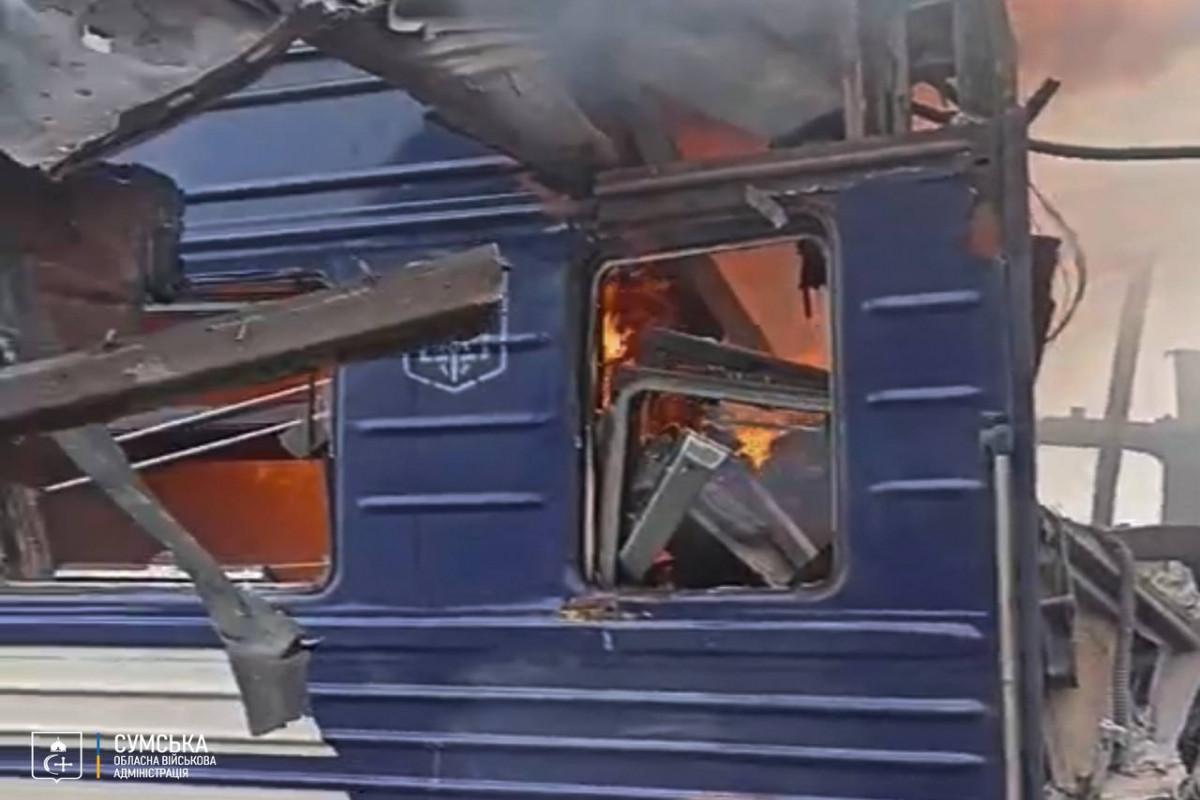
Russian drone strike on Shostka railway station injured at least 30 people, including children. Two passenger trains were hit, causing a carriage to catch fire and significant damage.

58 outlets told this the same way.
Outlets did split on Russian Attack Kills At Least 33 On Two Buses In Kramatorsk →
Russian Attack on Ukraine
In a significant escalation of the ongoing conflict, Russian forces launched a large-scale overnight attack on Ukraine. They deployed approximately 550 munitions, including 496 drones and 53 missiles. Ukrainian President Volodymyr Zelenskyy reported that the attack resulted in at least five deaths and ten injuries across multiple regions.
“Russian forces launched a large-scale overnight attack on Ukraine, firing around 550 munitions including 496 drones and 53 missiles.”
The strikes had significant impacts in western cities like Lviv, where four people died. The attacks targeted both civilian and critical infrastructure, including gas pipelines and power supplies.
Over 73,000 customers were left without electricity in Zaporizhzhia due to the damage. Ukraine's air defenses managed to intercept the majority of the incoming drones and missiles, but the damage was still extensive.
Overview of Recent Attacks
The Russian Defense Ministry described the strikes as a massive precision attack targeting Ukraine’s military-industrial complex and energy infrastructure. The attack employed advanced weapons like Kinzhal hypersonic missiles and strike drones. NATO responded by scrambling jets and putting air defenses on alert in Poland, though no airspace violations occurred.
Meanwhile, Russia claimed to have shot down 62 Ukrainian drones during the same period. Ukrainian President Zelenskyy called for stronger air defense measures and urged Western nations to pressure Russia into ceasing attacks. He suggested that a unilateral ceasefire in the air could pave the way for diplomacy.
Energy Infrastructure Conflict
The attack caused major damage to Ukraine's energy infrastructure, resulting in widespread blackouts. In the northern Chernigiv region alone, about 50,000 households lost power. Ukrainian officials condemned the strikes as acts of terrorism targeting civilians.
“A recent series of Russian drone strikes in Ukraine has caused significant casualties and damage, including at least 30 injuries and power outages affecting around 50,000 households in the northern Chernigiv region.”
Russia claimed that the targets were related to military objectives. In response, Ukraine's military said it targeted a large oil refinery in Russia’s Leningrad region.
Ukraine also vowed to increase attacks on Russian energy infrastructure. This cycle of retaliation has further heightened tensions between the two countries.
Journalist Deaths in Ukraine Conflict
The international community has reacted with concern over the escalation. French President Emmanuel Macron expressed deep sorrow over the death of French photojournalist Antoni Lallican, who was killed in a drone attack near Druzhkivka in Donetsk.
This incident marks the first journalist death by drone in the conflict, highlighting the increasing dangers faced by media personnel in the region. UNESCO reports that at least 17 journalists have been killed in Ukraine since the invasion began in February 2022, with the conflict showing no signs of abating.

Ukrainian Conflict and International Response
As the conflict continues, Ukrainian President Zelenskyy has called for stronger international action beyond verbal condemnations. He urged European and US leaders to take decisive measures to end the violence, emphasizing that only force can halt Russian aggression.
“Ukrainian President Volodymyr Zelensky condemned the attacks as deliberate terror against civilians and called for stronger international action.”
The ongoing attacks have not only targeted military and energy infrastructure but have also severely impacted civilian life, with frequent power outages and disruptions to essential services. The situation remains tense, with both sides accusing each other of targeting civilian infrastructure and military-supporting sites.
