
Ukraine War · 01 September, 2026 · 3 min read
Russian Missiles Shake Kyiv’s Obolon Schoolyard as Air Raid Alert Sounds on Sept. 1
Overnight Russian missiles hit Kyiv, triggering air raid alert on the first day of school. In Obolon, students arrived to schoolyard amid alert; some classes moved to basements.
How school safety operations adapt during air raids.
8 of 9 outlets skipped it: russia destroyed printing presses and 12 million books.
9outlets compared
Same story, two versions
tap a side to read it in full
CNN foregrounds a classroom-in-basement change; AP highlights parents quickly reaching shelters
School Day Under Fire
Russian ballistic missiles shook Kyiv overnight as an air raid alert sounded during the first day of school in the capital’s Obolon district, dispersing parents and children gathered in a schoolyard.
AP reported that hours after the missiles, balloons floated above the schoolyard before “within seconds, an air raid alert sounded,” and children’s laughter and music gave way to distant explosions.
In the same period, President Volodymyr Zelenskyy reacted to the attack on Sept. 1, telling journalists, “There's another alert right now, unfortunately. The Russkis are just complete scumbags,” and he said the Russians “make children participants in the war.”
The New Voice of Ukraine said more than 8,000 schools across Ukraine would operate in person starting Sept. 1, with another 2,211 using a mixed format and remote learning organized at 1,306 institutions.
The New Voice of Ukraine also reported that on Sept. 1, Russian forces attacked Kyiv and the oblast as schools held opening ceremonies and classes, and air defenses were activated in Kyiv in response to an attack by jet-powered attack drones.
Shelters, Formats, and Numbers
Ukraine’s education system is adapting the start of the school year to security conditions, with the Ministry of Education and Science saying the format for each school is determined based on the local security situation and the availability of bomb shelters. The New Voice of Ukraine reported that over 8,000 schools (about 70%) would hold in-person classes, while another 2,211 (about 19%) would use a mixed format, and remote learning would be organized at 1,306 institutions (11%). Ukrinform reported that Iryna Borzova said schools are permitted to operate in person only if they have a bomb shelter, and she estimated that “approximately 2.2 million students will study in person.”
Ukrinform also said Borzova warned that it was impossible to accurately predict the number of students who would study in person because of air-raid alerts, and she said parents can submit an application to transfer their child to remote learning while the child’s place at the school is retained. In Kyiv, CNN reported that the Ukrainian Global School decided it was no longer sustainable for students to go down to underground shelters whenever an air raid siren rang, and it told parents in a letter that “there’s no need to run anywhere, interrupt classes, or wait for hours to resume learning.”C
Attacks on Books and Learning
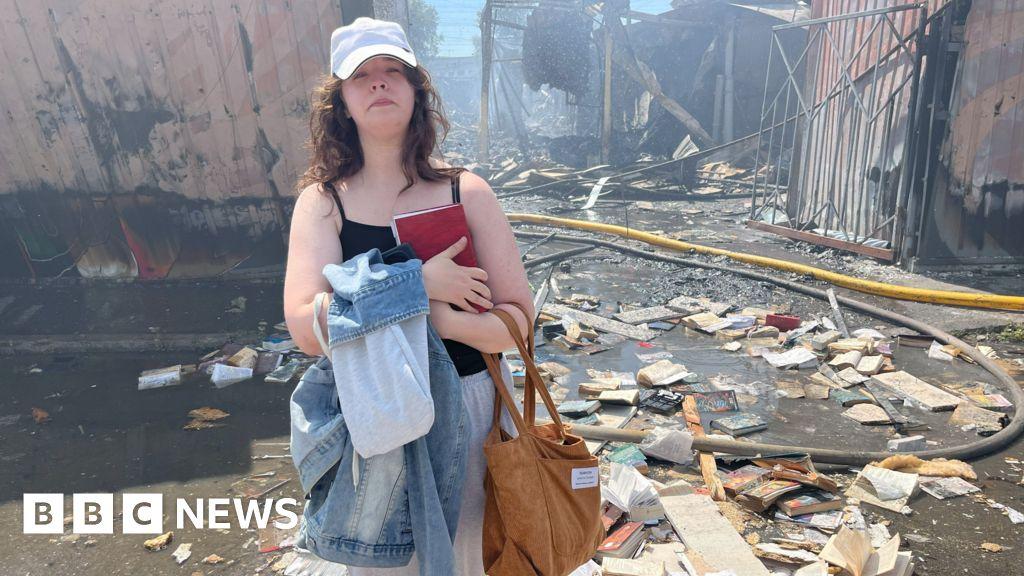
Beyond classrooms, Russian strikes have also hit the material infrastructure of education, with the BBC reporting that a Kyiv printing press was hit during the night by a Russian missile as production ramped up to deliver 1.3 million books. The BBC said the attack destroyed 12 million books ahead of Ukraine’s first week back at school, and it quoted commercial director Viktoria Haidai saying, “I believe it is deliberate on the part of the Russian Federation.” The BBC reported that repairs for the Dormition Cathedral at Kyiv-Pechersk Lavra were predicted to cost $11.2 million (£8.2m) and take two years, after a drone attack set a large section of the roof ablaze.
UNITED24 Media said Ukrainian Parliament Commissioner for Human Rights Dmytro Lubinets reported that since the start of the full-scale invasion, Russian attacks had damaged 4,650 educational facilities across Ukraine and 423 had been completely destroyed. UNITED24 Media added that Lubinets said his office received 644 education-related appeals in 2026 alone, and he framed the new academic year as “what Ukrainian education should look like during the war and what needs to be done to ensure that the right to education remains real for every child.”