Technology and Scienceupdated 1h ago2 min read
Russia’s Cosmos-2612 Approaches ICEYE-X36 Within 100 Meters in Low Earth Orbit
This article is an automated aggregation of coverage from news outlets. Our editorials offer in-depth analysis curated by the NewsCord team.
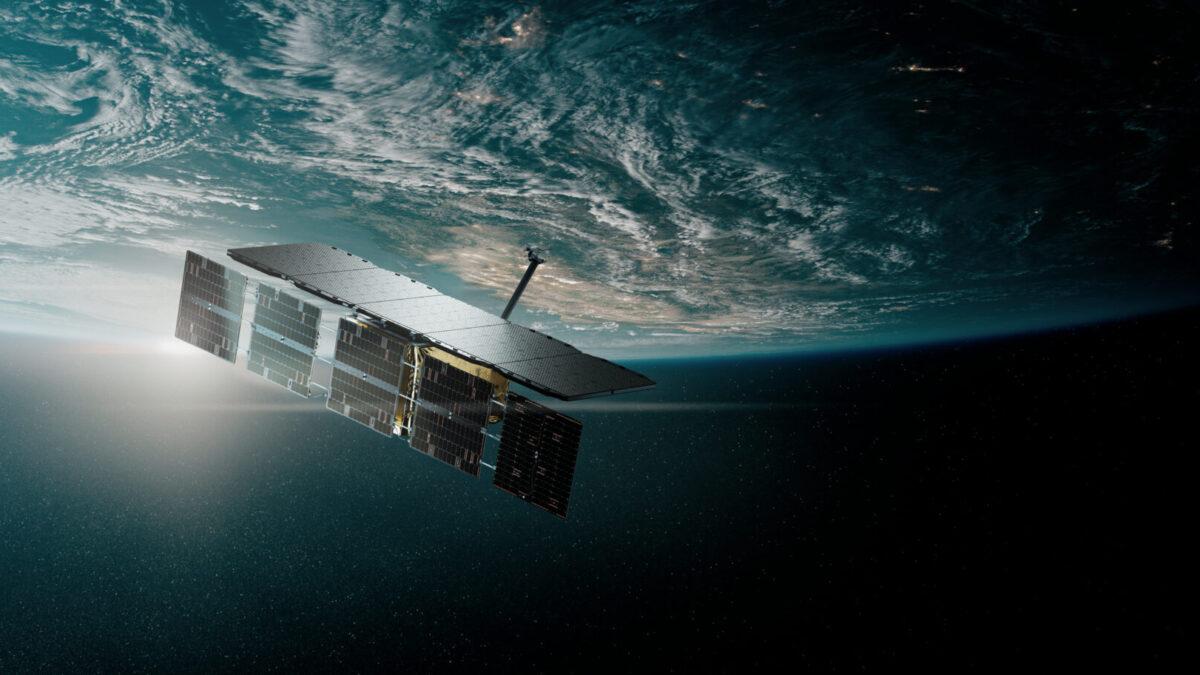
Cosmos-2612 approached ICEYE-X36 within 100 meters on Oct 18, 2026. The proximity involved orbital shadowing of a US-registered reconnaissance satellite aiding Ukraine.
Close pass in orbit
A Russian military satellite, Cosmos-2612, approached ICEYE-X36 within less than 100 meters in low Earth orbit on October 18, according to orbital tracking data analyzed by Agence France-Presse. Cosmos-2612 approached ICEYE-X36 on October 18 and the Russian device changed its trajectory for weeks before ending up in the same orbit.
Cosmos 2612 may have passed within a few hundred meters of ICEYE-X36 during the close approach on October 18, and Dutch satellite tracker Marco Langbroek said the spacecraft may have approached within a few hundred meters at approximately 01:35 UTC. Jonathan McDowell reported on October 17, 2026 that Cosmos 2612 was "stationkeeping within 5 km or less of ICEYE X36," describing it as the first rendezvous, to his knowledge, between two active satellites in low Earth orbit without one owner’s approval.
Tracking, uncertainty, monitoring
LeoLabs said the behavior justifies continued monitoring, and CNN en Español quoted LeoLabs as saying, "While the intention remains uncertain, the behavior justifies continued monitoring." Jonathan McDowell said the actions could mark the first time a spacecraft approached another without permission, and it quoted him as saying, "the first time a spacecraft approached another without permission."
Langbroek found no orbital evidence that ICEYE-X36 had been struck or disturbed, while it also said only its operators or users could establish whether it remained fully operational. ICEYE said on Monday, "We are aware of the situation and are monitoring it closely," and it added that the company said its constellation architecture is designed to ensure continuity and resilience.

Why it matters
The encounter appears to be the closest known deliberate and uninvited interaction between two active spacecraft in low-Earth orbit, with some estimates putting the distance at within 30 meters. Victoria Samson, head of space policy at the Secure World Foundation, said, "Russia and Ukraine are literally at war with each other," and she added, "And so it’s kind of tinting how you view Russia’s activities here."
LeoLabs said the Russian satellite moved between positions ahead of and behind the ICEYE satellite, at times coming within roughly 500 metres, and it said LeoLabs added that the estimate was uncertain and that by Monday it had begun to move away. Samson warned that unsolicited rendezvous and proximity operations might be interpreted as aggressive or even as an act of war, and it said Samson noted that there are few official international regulations related to these types of maneuvers.