
Russia Orchestrated Coordinated Drone Campaign Over Europe Using Shadow Fleet Vessels, IISS Says
Key Takeaways
- IISS says Russia likely orchestrated a coordinated drone campaign over Europe from 2024 to 2026.
- Drones were launched from shadow fleet vessels, disrupting civilian aviation and testing NATO defenses.
- Campaign logged 144 suspected sightings across NATO states, targeting nuclear facilities and other sites.
Shadow ships and drone incursions
A report by the International Institute for Strategic Studies said Russia was “highly likely” to have orchestrated a coordinated drone campaign over Europe between August 2024 and February 2026, using “shadow fleet” vessels as launch and recovery platforms.
“It is highly likely that the Kremlin conducted a drone campaign over Europe between August 2024 and February 2026, the International Institute for Strategic Studies (IISS) assessed in a report, which also finds that Russian-linked vessels and the shadow fleet likely served as launch and recovery platforms”
The IISS report analyzed 144 drone incursions into the airspace of 12 NATO countries and Ireland from August 2024 and February 2026, with researchers saying the campaign aimed at identifying weaknesses in European air defense systems.
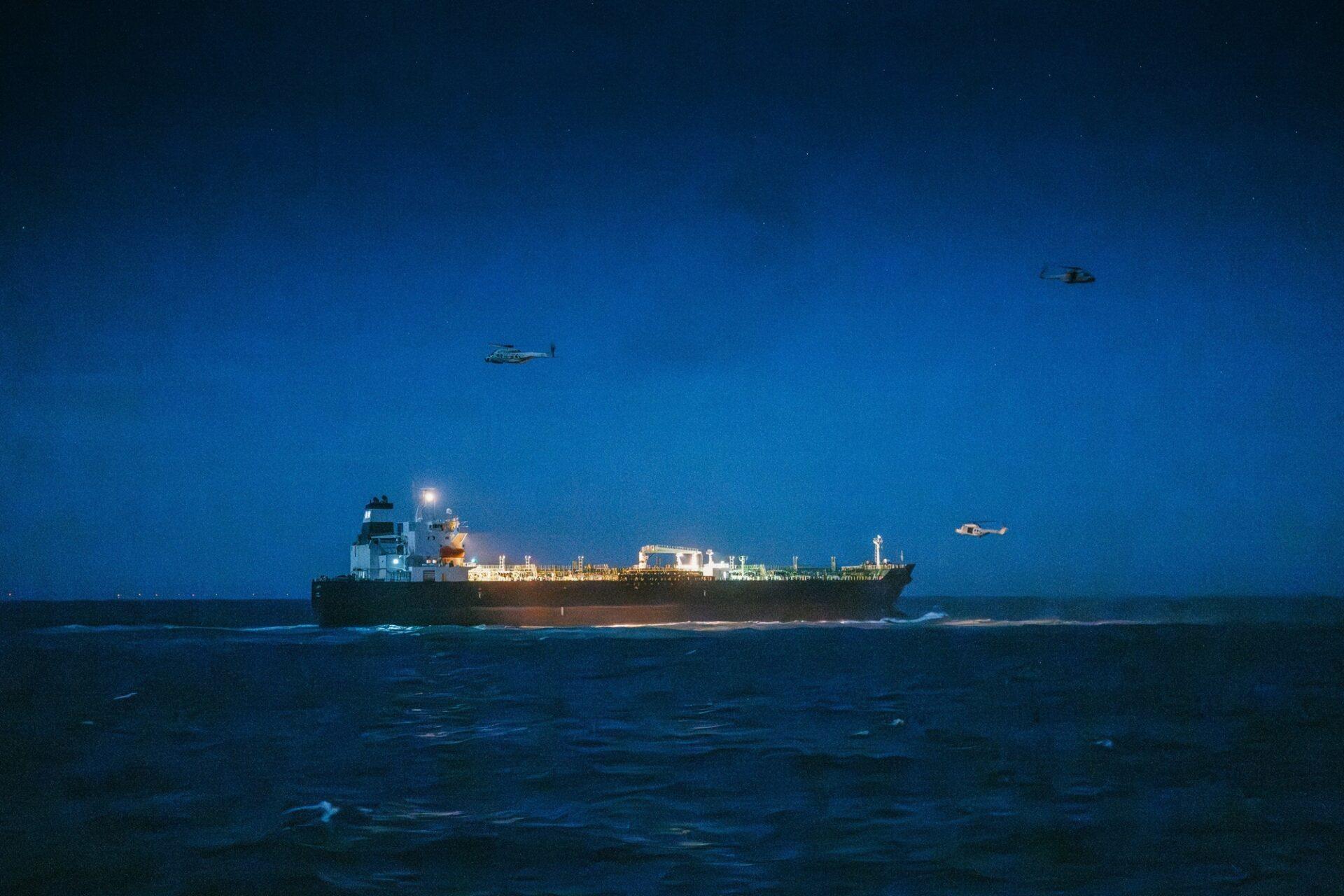
The incidents were described as forcing repeated closures of major commercial aviation hubs, and the IISS said roughly half of all recorded drone incidents involved military facilities.
The report said drones penetrated airspace around nuclear facilities in Europe, including bases hosting US nuclear weapons and a French ballistic missile submarine base, while also disrupting military operations.
In a separate account, AP said the report was shared with it before publication and described the campaign as repeatedly disrupting civilian aviation while monitoring military sites and testing the air defenses of NATO nations.
Officials weigh attribution and response
Danish Prime Minister Mette Frederiksen described the incidents in her country as “the most serious attack on Danish critical infrastructure to date,” while NATO’s deputy supreme allied commander, Air Chief Marshal John Stringer, told AP that it is up to each alliance member to decide how to respond.
The IISS report said European governments have largely avoided directly blaming Russia, and it quoted report co-author Charlie Edwards saying, “We consider it likely that Russia-linked vessels and its shadow fleet were used as maritime platforms for launching or recovering drones.”

Sweden’s military representative to NATO, Lt. Gen. Jonny Lindfors, told AP that it is “a tough decision” to shoot a drone down because it could cause civilian casualties.
Stringer said the activity fits a pattern consistent with Russian behavior since the invasion of Ukraine in 2022, while AP reported that only Sweden had blamed Moscow directly when a military drone flew toward a French aircraft carrier from a Russian spy ship.
In the same AP account, Lindfors said it is “almost impossible” to attribute the drones to one nation or actor, even as the IISS said the campaign exposed gaps in detection, decision-making, and legal authority.
Strategic failure and next steps
The IISS report characterized Europe’s response as “uneven” and “fragmented,” describing slow attribution and “often disproportionate” response options, and it said the campaign represented “a strategic failure of allied air defense.”
The report warned that Europe’s existing air defense systems were designed to counter missiles, bombers, and combat aircraft rather than “relatively low-cost UAVs and deniable incursions,” and it said the aggregate pattern could not be adequately explained by misidentification, hobbyist activity or opportunistic harassment alone.
AP reported that the IISS said the Russian campaign was designed to fall below the threshold of triggering discussions for a collective NATO response, while also noting that the report did not examine incursions along NATO’s eastern flank.
In response to the incidents, Denmark and other European countries said they would boost their drone defenses, and AP cited Denmark’s Defense Command saying the armed forces “could have been in a stronger position” to respond to drone sightings and identified shortcomings in equipment.
The IISS also said the campaign’s enabling mechanism remained intact as long as Russian-linked ships could loiter in international waters and deploy drones with impunity, and it argued that the “path to a credible European response requires legal clarity.”
More on Russia

EU Tightens Steel Safeguards And Parcel Rules Against China From July 1, 2026
10 sources compared
Putin-Linked Graceful Sails Past Denmark With Russian Naval Escort on June 29
10 sources compared
Putin Tells United Russia Congress Russia Faces Difficult Period Amid War in Ukraine
14 sources compared

U.S. Authorizes Iranian Oil Sales Through August After Talks in Switzerland
18 sources compared