Crypto22 July, 20263 min read
S&P Dow Jones Indices And Pantera Capital Launch S&P Pantera Digital Asset Index With Ether, BNB, Solana
This article is an automated aggregation of coverage from news outlets. Our editorials offer in-depth analysis curated by the NewsCord team.
Institutional-grade, fundamentals-focused digital asset index launched by S&P and Pantera. Weights assets by protocol revenue and profitability thresholds verified on-chain by Artemis.
S&P’s revenue-based index
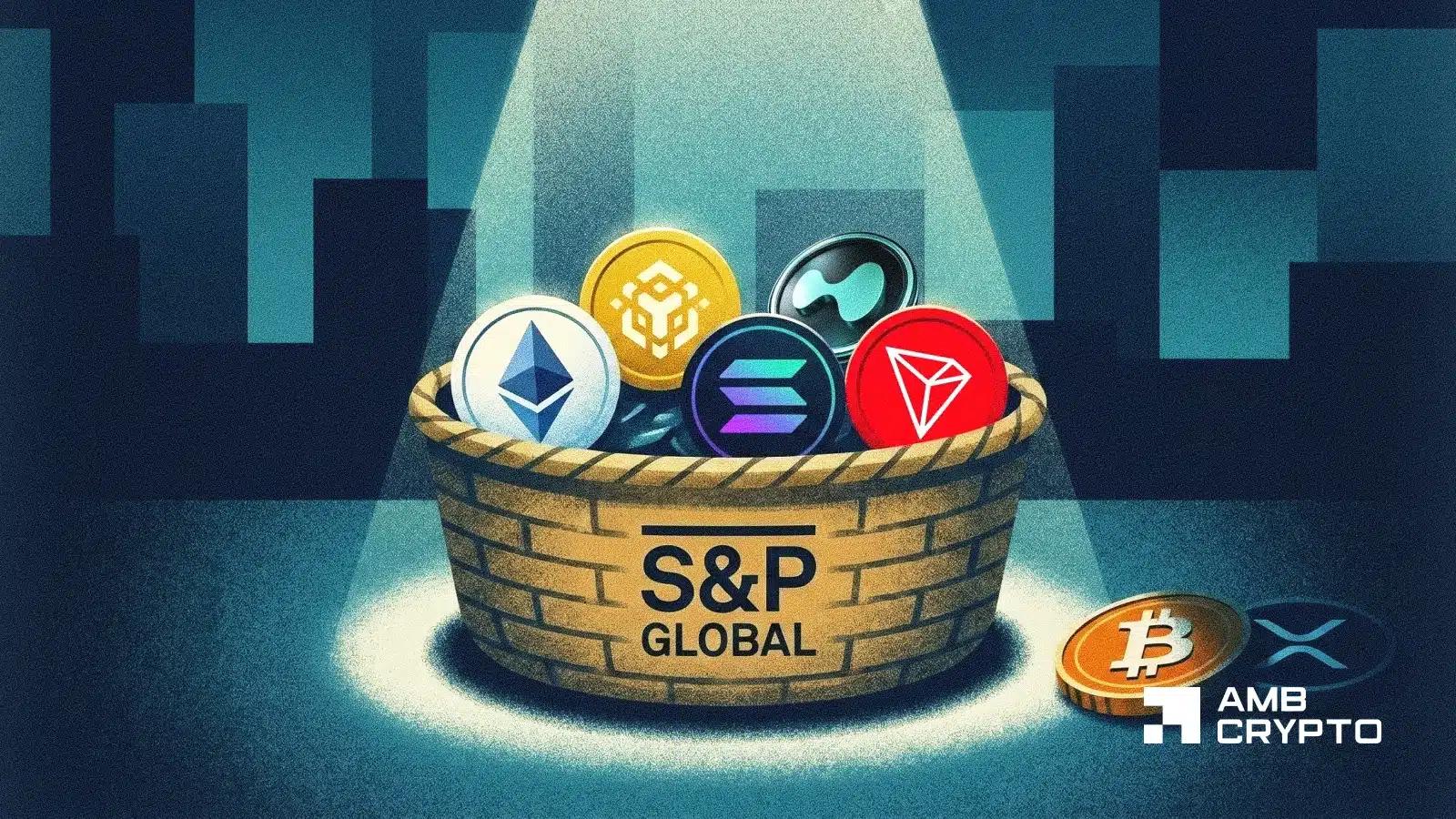
S&P Dow Jones Indices and Pantera Capital launched the S&P Pantera Digital Asset Index on July 21, 2026, a new 18-constituent benchmark that selects and weights digital assets based on revenue generated by their underlying blockchain networks rather than price momentum. The index’s initial basket includes Ether (ETH), Binance Coin (BNB), Solana (SOL), Tron (TRX), and Hyperliquid (HYPE) as its five largest current holdings, with the largest holding capped at 35% and all other holdings capped at 20%. DailyCoin says the index weighs assets by adjusted market capitalization and uses a minimum market capitalization of $500 million plus liquidity requirements above 0.5, while excluding meme coins and inactive projects.
Cathy Clay, CEO of S&P Dow Jones Indices, framed the launch as a shift toward fundamentals, saying, "we bring that same discipline to digital assets". Pantera Capital said the 18 constituents generated a combined $3 billion in annualized protocol revenue over the trailing two quarters, and the index rebalances quarterly effective after the close on the third Friday of March, June, September, and December.
Bitcoin and XRP excluded
Multiple outlets highlighted that Bitcoin and XRP are not included in the S&P Pantera Digital Asset Index, with LCX Exchange noting that Bitcoin (BTC) and XRP (XRP) were identified as the largest non-constituents compared with the S&P Cryptocurrency Broad Digital Asset Index. Coinpedia reported that Bitcoin and XRP were left out because they do not meet the revenue-based methodology, while describing the index as excluding Bitcoin and meme coins and focusing on assets with measurable revenue, liquidity, listing standards, and sufficient market history. The index starts from the S&P Cryptocurrency Broad Digital Asset Index and then applies eligibility tests, including a market capitalization above $500 million and a liquidity ratio above 0.5 for new constituents, plus a $250 million market-cap threshold for existing constituents.
DailyCoin said the index ranks eligible assets by trailing two-quarter revenue and adds assets until they represent up to 99% of revenue generated by the eligible universe, while also requiring positive revenue in the previous two fiscal quarters. Cathy Clay said the index uses a "fundamentals-driven, economics-based framework built for diversified portfolios," positioning it as a benchmark that can support institutional comparisons across a broader token set.
What it means next
The launch is positioned as a rules-based benchmark for institutional allocation, and S&P says it can serve as a reference for active strategies and as a possible base for future index-linked investment products. Coinpedia said the index is currently only a benchmark, not an investment fund, and that no ETF tracking has been launched, while Pantera said it has begun discussions with asset managers about potential ETFs and other products based on the index. TradingView described TRON’s inclusion as placing the asset inside a traditional-market benchmark rather than only within crypto-native listings, and said the change reflects availability in a recognized index rather than evidence of new capital flows or broad adoption by itself.
“The index is currently only a benchmark, not an investment fund, and no ETF tracking has been launched.”
CryptoRank added that the index uses quarterly protocol revenue and profitability thresholds verified on-chain by Artemis, and that the basket generating over $3 billion annualized revenue across the past two quarters is intended to offer a potentially less volatile, more transparent benchmark. Dan Morehead said the biggest friction point in crypto has not changed, telling investors, "it's knowing how to allocate," as the index aims to separate economically active digital assets from more speculative segments.