Full story
IAEA access lost
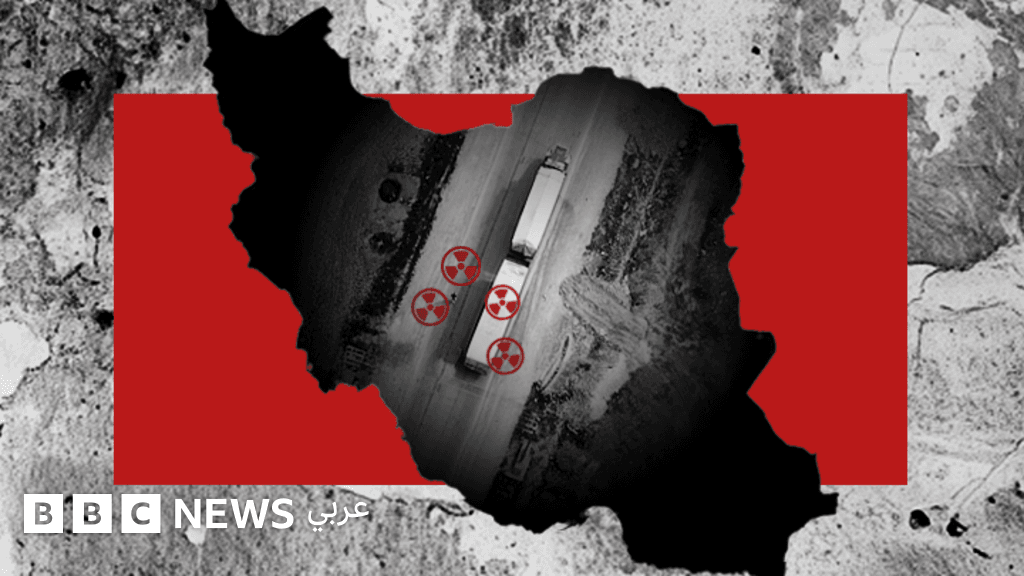
Satellite images released in March show a flatbed truck carrying several suspicious blue barrels in a desert area, escorted by three security vehicles to the entrance of the underground tunnel complex in Isfahan, the bunkers that are part of Iran’s nuclear facilities.
“Where is Iran hiding its enriched uranium, and what is the fate of its stock”
Olli Heinonen, the former head of the Safeguards Department at the IAEA, joked on social media after the French newspaper Le Monde published the photographs: “Not time to get excited? Transfer of large load precious high enriched uranium in daylight?”
Since the U.S. and Israeli strikes against Iran’s nuclear and military facilities in June 2025, inspectors from the UN nuclear agency have only set foot in Iran to monitor sites that were not targeted, and since February of this year, after the start of the full-scale war, not even that.
Rafael Grossi, director general of the IAEA, said three days after the start of the bombings: “While there has been no evidence of Iran building a nuclear bomb, its large stockpile of near-weapons grade enriched uranium and refusal to grant my inspectors full access are cause for serious concern.”
Grossi added, “the Agency will not be in a position to provide assurance that Iran’s nuclear program is exclusively peaceful,” as the dispute centers on hundreds of kilograms of uranium enriched to 60% and the question of where it is now.
Where the uranium is
The dispute over Iran’s enriched uranium has become a “puzzle” because, after the destruction of nuclear facilities by military strikes and the suspension of IAEA inspectors' access, no independent party has yet been able to determine the amount of the stock remaining, its condition, or its exact location.
Reza Thabti’s BBC explainer says the dispute centers on hundreds of kilograms of uranium Iran has enriched to a purity of 60 percent, a level that is still not sufficient for weapon use but is “technically only a short step away” from the 90 percent enrichment level required for a nuclear bomb.

In the same BBC account, the IAEA said Iran was the only militarily non-nuclear state in the world to reach this level of enrichment, and it described Fordo as the main center for 60 percent uranium enrichment while Natanz played a secondary role.
The New York Times, as quoted by الجزيرة نت, says Grossi believes the bulk of the stock is located at the Isfahan nuclear complex, where “deep facilities and tunnels carved into the mountainside” make access or destruction “an extremely complex task.”
The BBC further notes that, before the June 2025 attacks, the IAEA had placed an underground storage facility for nuclear materials in Isfahan under an enhanced safeguards approach, but the site of production does not necessarily indicate where the materials are stored.
Talks, ceasefire, and risk
As the ceasefire appears on the verge of collapse, President Trump said at the NATO summit on July 8 that he believed the interim truce had ended, threatened further attacks, and suggested the U.S. Navy could reinstate its blockade of Iranian ports.
“For years, the citizens of Iran have heard words like yellowcake, centrifuges, UF6, enrichment, and the like in the news—terms that often recall crisis, instability, sanctions, and war, and a situation that has, to date, darkened and unsettled the lives of at least two generations of Iranians”
The Council on Foreign Relations’ tracker frames the uranium dispute as part of the wider conflict, while the BBC and other reporting describe how the IAEA’s lost physical access has left the fate of Iran’s enriched uranium “one of the most important and most opaque aspects” of the program.
In a separate account, سكاي نيوز عربية reports that IAEA chief Rafael Grossi told the Financial Times that Kazakhstan expressed willingness to host Iran’s stockpile of enriched uranium at levels close to those needed for military use if Washington and Tehran reach an agreement.
Grossi said the fate of about 440 kilograms of uranium enriched to 60 percent is among the most complex issues in undisclosed talks, and the report adds that Tehran has indicated it would not hand over the stock while sources said negotiators discussed diluting the enrichment or moving it within a framework aimed at extending a fragile 60-day ceasefire.
DW reports that Grossi said in late April 2026 that the bulk of Iran’s highly enriched uranium probably remained at the Isfahan nuclear complex, and it quotes a Deutsche Welle Persian interview with Roland Wolf warning that “Uranium hexafluoride is a chemically very reactive and volatile substance that poses many risks in long-term storage due to chemical changes.”